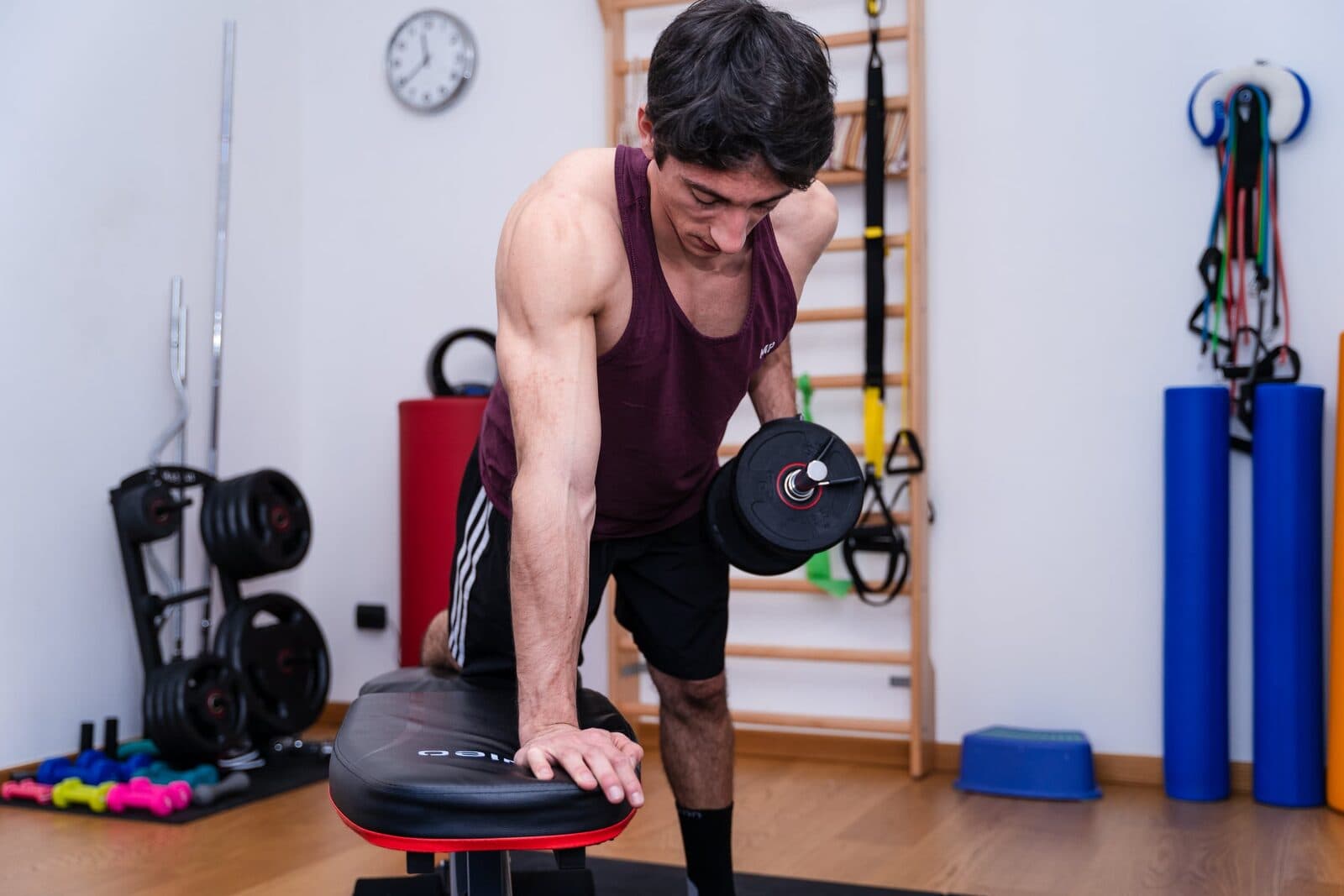

Muscle activation: the process of "waking up" your muscles before training to maximise their involvement in the exercise. Activation creates a mind-muscle connection that improves the quality of every repetition. It is not generic warming up but targeted preparation of the muscles that are about to work.
Activation is especially important for muscles that tend to be "asleep" in modern life, such as the glutes after hours of sitting. This complete guide will teach you everything about muscle activation: why it matters, how to do it for each muscle group and how to fit it into your pre-workout routine.
⚠ Important: read this before continuing
The exercises and advice in this article are general guidance and may not suit your situation. Every person has a unique clinical history: what works for others could be counterproductive for you.
Want a professional's opinion? Start with the questionnaire: you sign up and see who will follow you, a physiotherapist on the Italian professional register chosen for your case, to whom you write in chat. If you would rather hear their voice, the first consultation is free and we look at your situation together.
What it is, and what has really been measured
By "muscle activation" we mean a short series of targeted exercises, done before training, to prepare the muscles you are about to use.
It is worth separating what has been demonstrated from what is simply claimed.
What has been demonstrated is warming up. The systematic review of 32 high-quality studies found a performance improvement in 79% of the criteria examined, and no indication that warming up is harmful. On this the ground is solid.
What is ambiguous is the distinction between "activation" and warming up. The most recent meta-analysis on the acute increase in performance after a conditioning activity explicitly notes that its distinction from the effects of general warming up remains ambiguous, and that the experimental designs used so far have important limitations. In other words: whether an "activation" block does more than simply warming up well has not been established.
What has not been demonstrated is injury prevention. The review dedicated to this question found five high-quality randomised studies: three showed a significant reduction in risk, two did not. The authors conclude that the evidence is insufficient.
And "sleeping glutes"?
It is the most repeated explanation in the gym: the glutes would be inhibited by tight hip flexors, and need to be "woken up".
The model is suggestive but does not hold up: the link between shortened hip flexors and glute inhibition has not been demonstrated, nor has the link between pelvic alignment and pain. We wrote about this in correct posture.
What really happens is simpler and more useful: doing a few light sets of a movement before loading it makes you perform that movement better. Not because the muscle was asleep, but because you are rehearsing the motion.
So does it make sense to do it?
Yes, for two reasons that do not need the story of sleeping muscles.
It lets you rehearse the movement at low load. The first repetitions of a squat are always the worst: doing them without weight moves the problem outside the set that counts.
It costs very little. Five minutes, no documented risk, and a benefit on performance that is well documented on the warm-up side.
What should not be done is treat it as a therapy: if a muscle does not work well under load, the problem is the load and the progression, not the alarm clock.
The sequence that makes sense
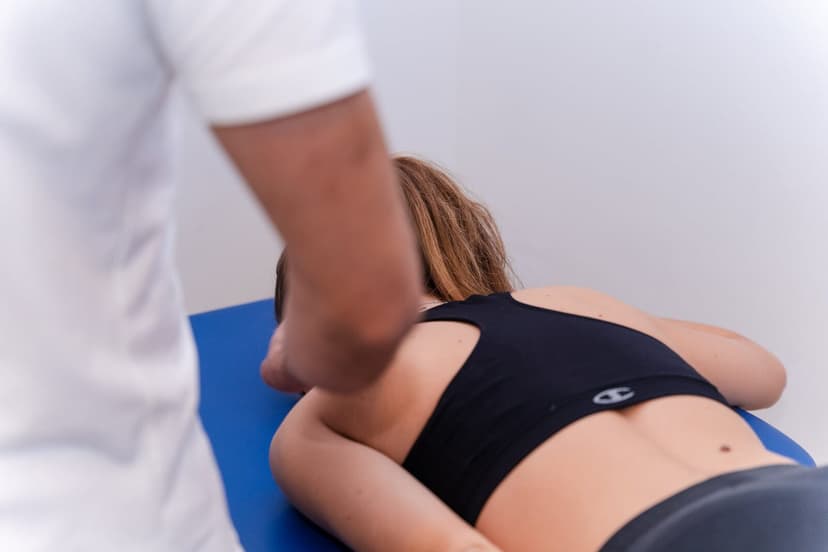
Five minutes of general activity to raise the temperature, then mobility where it is needed, then a few light sets of the movement you are about to do, then the workout.
For the glutes
Glute activation is the most common because the glutes are often inhibited.
Why the glutes "fall asleep": Sitting for hours shortens the hip flexors and reciprocally inhibits the glutes. Activation is essential before squats and deadlifts.
Glute bridge: Lying on your back, knees bent, press your heels and lift your pelvis by contracting the glutes. The classic glute activation. 15-20 repetitions with a pause at the top.
Clamshell: On your side, knees bent, open the upper knee like a clam shell. Activation for the gluteus medius. 15-20 per side.
Donkey kick: On all fours, extend one leg backwards while contracting the glute. Activation for the gluteus maximus. 12-15 per side.
Monster walk: With an elastic band above the knees or around the ankles, walk sideways. Dynamic activation. 10 steps in each direction.
For the core
Core activation prepares the stability of the trunk.
Dead bug: Lying on your back, arms towards the ceiling, knees at 90 degrees. Extend one arm and the opposite leg while keeping your back on the floor. Activation for stability. 10-12 per side.
Bird dog: On all fours, extend the opposite arm and leg. Core activation in quadruped position. 10-12 per side.
Plank with breathing: A short plank (20-30 seconds) focusing on diaphragmatic breathing. Combined activation.
For the back
Back activation before pulling exercises.
Band pull-apart: With a band in front of you, open your arms by pulling the band towards your chest. Activation for the rhomboids and middle trapezius. 15-20 repetitions.
Scapular retraction: Standing or lying down, squeeze the shoulder blades together without raising the shoulders. Activation for posture. 15 repetitions with a pause.
Band face pull: Pull the band towards your face with your elbows high. Activation for the rear deltoid and rotator cuff. 15 repetitions.
For the shoulders
Shoulder activation before pressing and overhead movements.
External rotations with band: Elbows at your sides, rotate the forearms outwards against the resistance. Activation for the rotator cuff. 15-20 repetitions.
YTWL: Form the letters with your arms lying prone. Activation for all the shoulder stabilisers. 8-10 per shape.
Wall slide: Back and arms against the wall, slide your arms up and down. Activation for mobility under load. 10-12 repetitions.
For the legs
Leg activation beyond the glutes.
Terminal knee extension: With a band around the knee pulling backwards, extend the knee. Activation for the vastus medialis. 15 per leg.
Short wall sit: 20-30 seconds against the wall. Activation for the quadriceps.
Isometric leg curl: Lying on your back, heel on the floor, push as if bending the knee. Activation for the hamstrings. 3×10 seconds per leg.
Before specific exercises
Specific activation for common exercises.
Before the squat: Glute bridge, clamshell with band, light goblet squat. Activation also prepares the glutes and core.
Before the deadlift: Glute bridge, bird dog, hip hinge with a stick. Activation prepares the glutes, the posterior chain and the movement pattern.
Before the bench press: Band pull-apart, shoulder rotations, scapular push-up. Activation prepares the shoulders and stabilisers.
Before pull-ups: Band pull-apart, scapular retraction, scapular pull-up. Activation prepares the back.
Parameters
How to dose the activation.
Intensity: Low. Activation must not tire you, only "wake" you up.
Repetitions: 10-20 per exercise are enough. Activation is brief.
Pause: Contractions with a pause at the point of maximum activation are more effective. Activation benefits from pauses.
Total duration: 5-10 minutes. Activation is not a workout in its own right.
When it is especially important
Situations in which activation is crucial.
After long periods of sitting: If you come from hours at a desk, glute activation is essential.
For "dormant" muscles: If you do not "feel" a muscle during an exercise, activation can help.
Before technical exercises: Squats, deadlifts and overhead presses require many coordinated muscles. Activation prepares them.
In rehabilitation: After injuries, some muscles are inhibited. Activation retrains them.
Teletherapy for muscle activation
A physiotherapist can identify which muscles are inhibited in your case and create a personalised muscle activation routine.
With Ri-Hub you can access qualified physiotherapists comfortably from home, for just 29,90 euros per session. Guided activation identifies your specific problem areas.
The physiotherapist can assess your movement patterns, identify the "sleeping" muscles and teach you targeted activation.
Conclusion
Activation is an investment of a few minutes that improves the quality of the whole workout. Muscles that are "awake" work better, protect the joints and make every repetition more effective. It is not optional, especially for people who spend hours sitting.
Build activation into your pre-workout routine. Your body and your performance will thank you. Consider Ri-Hub teletherapy for a personalised muscle activation programme.
Sources
- Effects of warming-up on physical performance: a systematic review with meta-analysis, J Strength Cond Res, 2010
- Does warming up prevent injury in sport? The evidence from randomised controlled trials, J Sci Med Sport, 2006
- Optimizing Post-activation Performance Enhancement in Athletic Tasks: A Systematic Review with Meta-analysis, Sports Medicine, 2025
- Post-activation potentiation: a systematic review and meta-analysis, Sports Medicine, 2016
Last source check: September 2026.
You might also be interested in:
Stay in touch with us
Join our dedicated Facebook group: we answer all patients, give practical advice and clear up the most common doubts.
Need a consultation?
Start with the Ri-Hub questionnaire: a few questions about your case, you sign up, and you see who will follow you: a physiotherapist on the Italian professional register, to whom you can write in chat whenever you like. If you prefer to talk it over by voice, the first consultation is free, lasts twenty minutes and commits you to nothing: it arrives with your written message already read, and together you decide whether and how to continue.