"Natural anti-inflammatories" is a search that almost always starts from the same need: to take fewer medicines. It is a legitimate need, and it is worth approaching with data rather than promises.
Turmeric, which has the most evidence
Among natural remedies for joint pain, turmeric is the one studied most.
There is a 2024 Bayesian network meta-analysis on the efficacy and safety of curcumin in knee osteoarthritis, and a 2022 systematic review with meta-analysis on curcumin and Curcuma longa extract in arthritis.
Two practical points that change the result:
- turmeric powder from the kitchen has very low bioavailability: studies use standardised extracts, not a teaspoon in milk;
- it should be discussed with your doctor if you take anticoagulants or have problems with the bile ducts.
The others, in order of how much we know
- Omega 3: well studied, with a more defined role in rheumatoid arthritis than in osteoarthritis. At high doses they affect blood clotting;
- Ginger: some studies on joint pain, with very variable amounts and formulations. The same caution as with turmeric applies with anticoagulants;
- Devil's claw: traditionally used for musculoskeletal pain, with studies of uneven quality. Not recommended with gastric ulcer;
- Boswellia: studied mainly in osteoarthritis, limited evidence;
- Vitamin D: deficiency should be corrected because it is a problem in its own right, but supplementing in people who are not deficient is not an anti-inflammatory.
For the category as a whole, the useful piece for calibrating expectations is the meta-analysis published in the British Journal of Sports Medicine on dietary supplements in the treatment of osteoarthritis.

"Natural" does not mean "without effects"
This is the most costly misunderstanding.
An active ingredient that has an effect also has interactions. Turmeric and ginger can interfere with anticoagulants; devil's claw is not recommended in the presence of gastric ulcer; high-dose omega 3 affects blood clotting.
If you take medicines, especially anticoagulants, antiplatelets or antidiabetics, the question must be asked of your doctor or pharmacist. It is not a formality.
Natural versus drug: it is not the same race
An anti-inflammatory from the pharmacy acts within days, with a much more marked effect. Natural remedies have smaller effects, measured over weeks or months.
In an acute, painful phase, replacing the drug with turmeric usually just means suffering for longer. The reverse makes more sense: use the drug for the time needed, as indicated by your doctor, and in the meantime build what reduces the need to take it again.
What works better than any supplement
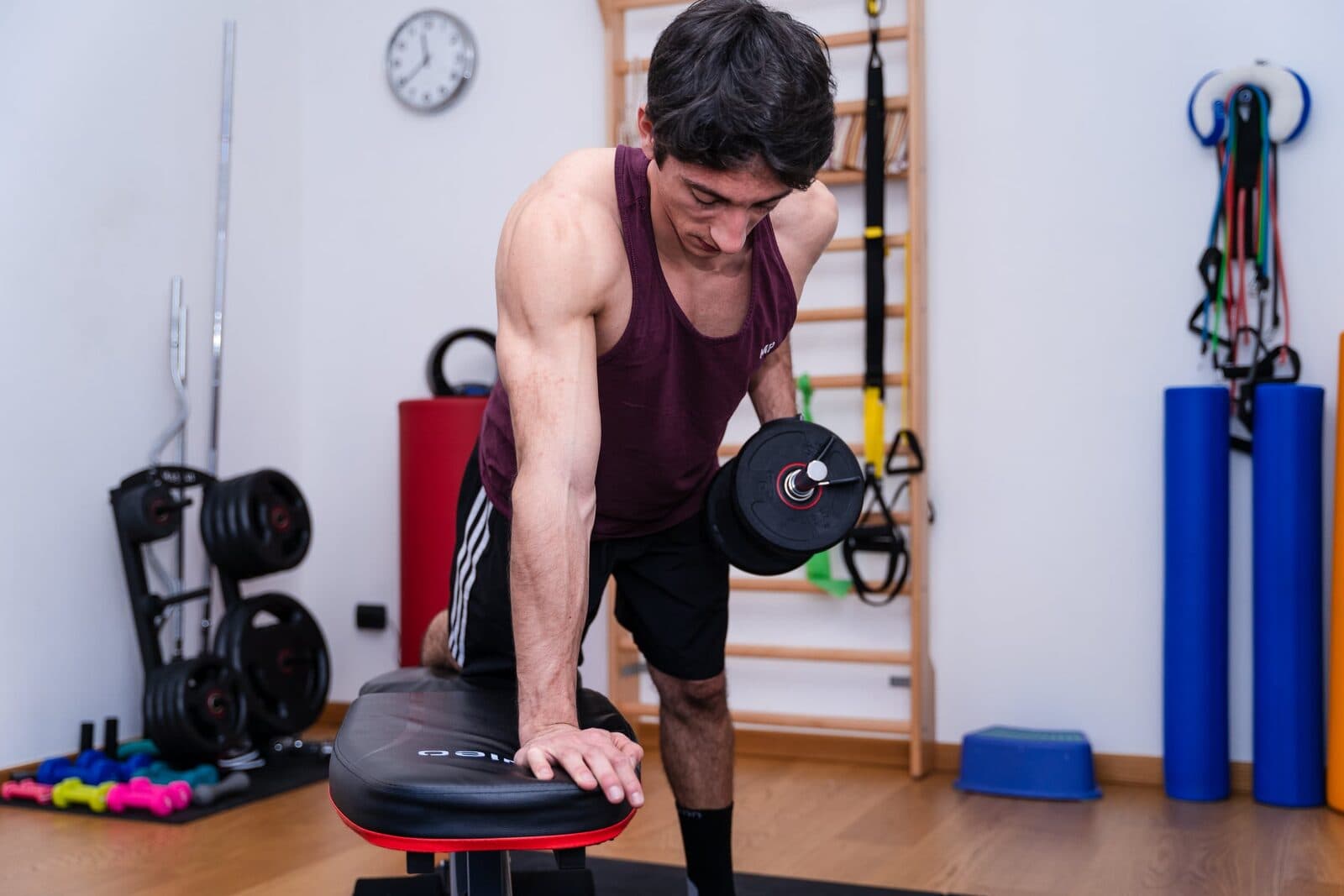
Movement. In osteoarthritis and most musculoskeletal pain, exercise is the intervention with the most solid evidence, and it is the only one that acts on load capacity rather than on the symptom alone.
It is also the only one that, months later, leaves something behind: a joint that tolerates more. Supplements, when they make sense, sit on top of that, not in its place.
Getting support
Looking for alternatives to medicines is reasonable. The most effective one is not bought at the herbalist.
With Ri-Hub the first consultation is free: a physiotherapist on the Italian professional register sets up the programme that really reduces the need for painkillers, and tells you frankly what to expect from the rest. Subsequent sessions cost 29,90€.
If you are also considering collagen, what the studies say is in Collagen for joints: does it really help?.
If the problem is knee osteoarthritis, the active pathway is in Knee osteoarthritis: exercises to live well with arthritis.
If you are wondering whether to use heat or cold, the practical answer is in Ice or heat: which to use and when.
Sources
- Efficacy and safety of curcumin therapy for knee osteoarthritis: A Bayesian network meta-analysis, Journal of ethnopharmacology, 2024
- Efficacy and Safety of Curcumin and Curcuma longa Extract in the Treatment of Arthritis: A Systematic Review and Meta-Analysis of Randomized Controlled Trial, Frontiers in immunology, 2022
- Dietary supplements for treating osteoarthritis: a systematic review and meta-analysis, British journal of sports medicine, 2018
Last source check: September 2026.