Understanding the problem
Where does back pain really come from?
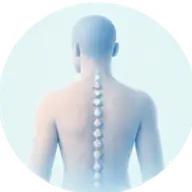
In 80% of cases low back pain is "non-specific": there is no single identifiable damaged structure. The pain arises from a combination of factors — overload, prolonged postures, core strength deficits, emotional stress management, poor sleep.
The good news: non-specific also means highly treatable. Muscle, disc and ligament are tissues that adapt to load. The problem is the pattern: same movements, same position, same stiffness for weeks. Changing the pattern = unlocking the pain.
The key point: resting in bed for more than 1-2 days worsens back pain. The back needs to move — the right movement, dosed by the physiotherapist.
The 4 most frequent causes
- Sedentary lifestyle: 7-9 hours a day sitting load the weight of the torso onto the intervertebral disc
- Incorrect lifting: bending with the back instead of the legs is the cause of acute episodes
- Weak core: deep abs and "switched-off" glutes leave the lumbar spine exposed
- Emotional management: prolonged stress increases muscle tension and sensitizes the nervous system
Specific symptoms
Do you recognize yourself in any of these cases?
"Back pain" is generic. Identifying the specific type allows the physiotherapist to choose the right exercises.
Localized low back pain
Dull or sharp pain in the lower back, without radiation
Sciatica
Pain that runs from the buttock down the thigh to the foot
Pain when seated
Back that "locks up" after hours at the desk or in the car
Pain with movement
Difficulty bending, picking up objects, getting up from a chair
Morning stiffness
Back locked just after getting up, eases after 20-30 min
Common mistakes
5 things that make back pain worse.
We see these mistakes in almost every patient who comes to the first visit. Pattern correction is half the work.
Prolonged bed rest
Lifting weights bending with the back
Lumbar belt/brace used all the time
Cracking your back yourself
MRI before even trying physiotherapy
Free consultation
When a physiotherapist can make the difference.
Basic exercises help everyone, but a personalized path is essential if:
- The pain has lasted more than 6 weeks and does not respond to self-treatment
- You have sciatica with pain down the leg or tingling in the foot
- The pain gets worse at night or wakes you up
- You feel leg weakness or loss of sensation
- You have a diagnosis of herniated disc, protrusion or stenosis
On Ri-Hub the first visit is free: 30 minutes on video call. No purchase obligation.
FAQ