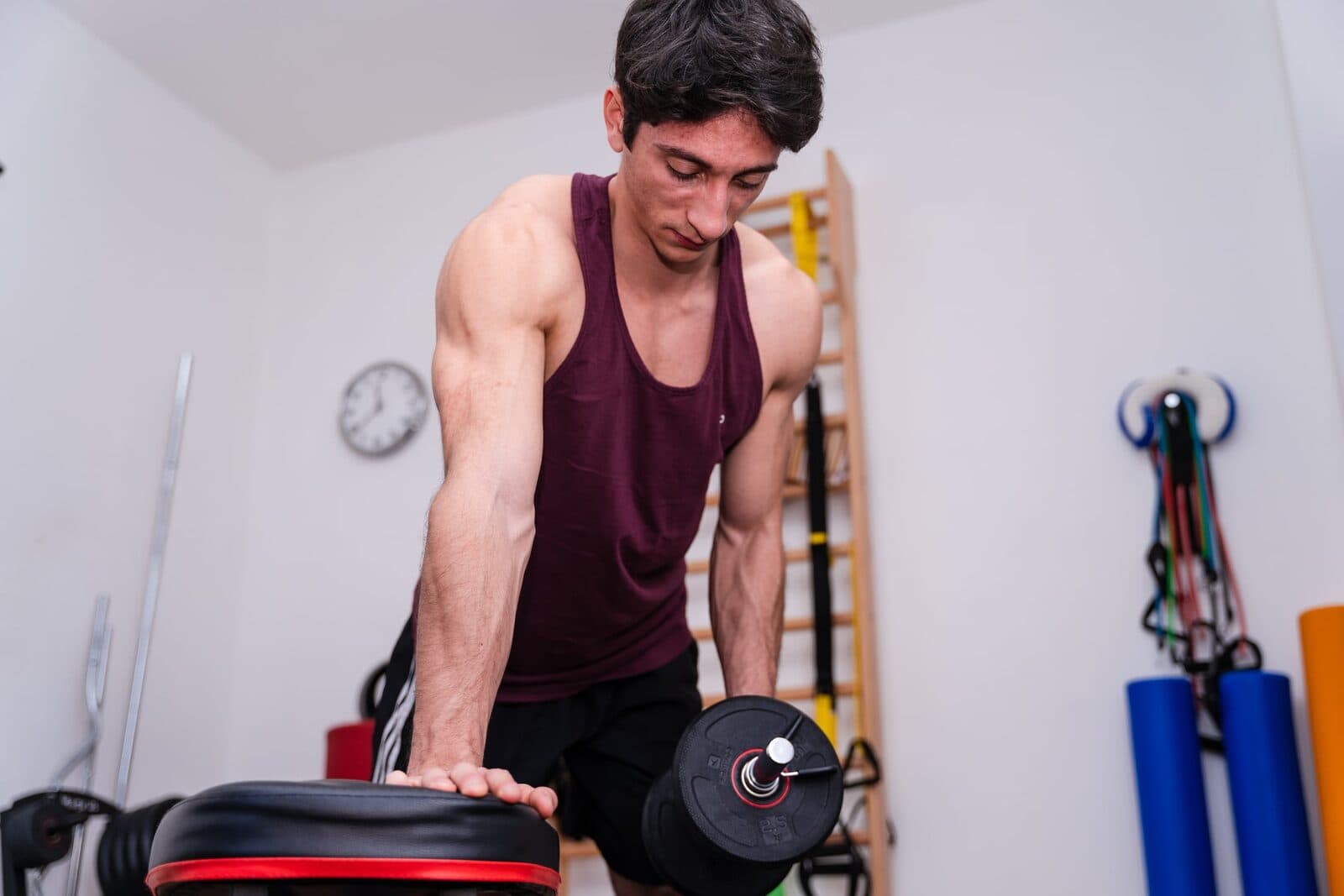
Gluteus medius tendinopathy: it is one of the most frequent causes of pain on the side of the hip, and also one of the most often mistaken for something else. In this guide you will find what really happens to the tendon, how to recognise it, which exercises have supporting evidence and, above all, how solid that evidence is.
A clarification up front, because it changes how it is treated: the correct term today is tendinopathy, not tendinitis. The tissue is almost never simply inflamed: it is a tendon that has become disorganised under a load it could not sustain. For years this pain was labelled "trochanteric bursitis"; today the suffering of the gluteal tendons is considered the main local source of lateral hip pain.
⚠ Important: read this before continuing
The exercises and advice in this article are general guidance and may not be suitable for your situation. Every person has a unique clinical history: what works for others could be counterproductive for you.
Want a professional's opinion? Start from the questionnaire: you register and see who will follow you, a physiotherapist registered with the Albo chosen for your case, whom you write to in chat. If you prefer to hear a voice, the first consultation is free and we look at your situation together.
First of all: when lateral hip pain is not a tendon problem
Pain on the side of the hip is almost always a benign musculotendinous problem. Almost. Some situations need to be assessed by a doctor before you start any exercise:
- Pain that appeared after a fall or a trauma, especially if you cannot bear weight on the leg or if the pain is in the groin: a bone problem must be ruled out.
- Sudden loss of strength when moving the leg out to the side, with marked limping appearing from one day to the next: it may indicate a full-thickness tendon tear, which is managed differently from a tendinopathy.
- Fever, night sweats, unexplained weight loss, or a personal history of cancer.
- Constant pain even at rest, that never changes with position or movement: tendon pain, by contrast, is typically related to load.
- Tingling, numbness or weakness running down the leg, especially if accompanied by back pain: the picture may start in the spine.
- A stiff hip that moves little, with pain more in the groin than on the side: points towards the joint, not the tendon.
None of these signs automatically means something serious. It means that a clinical eye is needed before the exercise plan.
Anatomy and function, explained properly
The gluteus medius is a fan-shaped muscle that starts from the iliac bone and inserts, together with the gluteus minimus, on the greater trochanter: the bony prominence you feel on the side of the pelvis.
Its job is not so much "lifting the leg out to the side" as keeping the pelvis level while you stand on one leg. And you stand on one leg with every step. If this system does not hold, the pelvis drops on the opposite side (this is the Trendelenburg sign) and walking becomes wobbly.
The gluteal tendons run in close contact with the greater trochanter and with the fascia that covers them, the iliotibial band. This closeness is the key to all the reasoning about compression you will find further on.

Who it affects, with the real numbers
Gluteus medius tendinopathy falls within the broader picture of greater trochanteric pain syndrome. In a population study of 3,026 adults aged 50 to 79, this syndrome was present on one side in 15.0% of women and 6.6% of men, and on both sides in 8.5% of women against 1.9% of men. Being a woman was associated with a roughly threefold higher risk.
The same study found associations with tenderness of the iliotibial band, with knee osteoarthritis (especially on the same side) and with lower back pain.
A fact that should be stated because it contradicts a widespread belief: in the full statistical model, body mass index was not associated with the condition (comparing people with a BMI of 30 or above with those below 25). Weight is often cited among the causes, but in that analysis, once age, sex, iliotibial band tenderness, knee osteoarthritis on both sides and back pain were taken into account, the association did not hold. Losing weight is good for many reasons; presenting it as the cure for this pain is not supported by that data.
What the research really says about exercise
This is the central point, and it deserves to be told in full rather than dismissed with "exercise works". On gluteus medius tendinopathy the evidence exists, but it has to be read in its entirety.
The reference study is the randomised trial LEAP, published in the BMJ in 2018. It involved 204 people aged 35 to 70 (167 women, mean age 54.8 years) with lateral hip pain lasting more than three months and gluteal tendinopathy confirmed on MRI. Three groups: load management education plus exercise (14 sessions over 8 weeks led by a physiotherapist), a single cortisone injection, or waiting without treatment.
At 8 weeks, reported success was achieved by 51 people out of 66 in the exercise group, 38 out of 65 with cortisone and 20 out of 68 in the waiting group. Mean pain was 1.5 in the exercise group, 2.7 with cortisone and 3.8 in the waiting group (scale 0-10).
At 52 weeks, success was reported by 51 out of 65 in the exercise group, 36 out of 63 with cortisone and 31 out of 60 in the waiting group. Pay attention to this passage, which is often left out: at one year exercise remained ahead of cortisone on perceived overall improvement, but on pain intensity the two strategies no longer differed significantly (mean difference −0.26; 95% confidence interval from −1.06 to 0.55). On pain, both still did better than doing nothing.
A 2024 meta-analysis of 6 randomised trials and 733 patients concludes in favour of exercise as the first treatment, but uses a precise word and uses it four times: compared with a control group, in the long term exercise "slightly" reduces pain and severity of the condition and "slightly" improves function and perception of change. Compared with cortisone, the demonstrated advantage concerns long-term overall improvement. No serious adverse events were reported; the authors themselves note that the conclusions rest on few studies.
And there is an earlier systematic review, from 2017, that should be mentioned for honesty: across 8 studies and 696 patients it concluded that high-quality research is lacking on this condition, and that for pain cortisone injection showed superior results up to 3 months compared with home training, radial shockwave therapy and usual care. Note: in that review the only "exercise" comparator was a programme done at home alone, not a guided pathway, which is exactly the difference the LEAP trial later measured.
What we take from this, in practice:
- Exercise is the first reasonable choice, and over the long term it holds up better than the alternatives.
- The benefits are real but measured, not miraculous: the literature speaks of improvements from slight to moderate.
- In the best study, the exercise was guided: 14 meetings over 8 weeks, with individual progression. The version "downloaded sheet done alone" is not the same thing that was tested.
- Cortisone is not the enemy: it can help in the most acute phase. Simply, in direct comparison with a guided programme it already loses at 8 weeks, and at one year it does not hold up on overall improvement.
An important tip: before trying these exercises, make sure you have received a correct diagnosis. People often think they have one problem, but the real cause of the pain is another. Performing the wrong exercises can make things worse instead of better.
Symptoms: how it presents
The picture of gluteus medius tendinopathy is fairly recognisable.
Pain on the side of the hip. It is the cardinal symptom: localised over the greater trochanter, sometimes radiating along the outer face of the thigh down to the knee (rarely further down). If you suffer from generic lateral hip pain, this is one of the first hypotheses to consider.
Pain on pressure. The area is tender to the touch. In a study of 65 people with lateral hip pain, the absence of tenderness on palpation of the greater trochanter made the diagnosis unlikely (sensitivity 80%): if it does not hurt when you press there, it is probably not that.
Pain standing on one leg. In the same study, pain appearing within 30 seconds of single-leg stance was the most informative test: specificity 100%, enough to move a conventional starting probability of 50% to a post-test probability of 98%. This is why putting your trousers on while standing or simply waiting in a queue become uncomfortable actions.
Night pain. Lying on the painful side is typically unbearable; but the healthy side often bothers you too, because the upper leg falls inwards and pulls on the tendon of the other side.
Pain walking and on stairs. It gets worse with long walks, uphill and on steps, that is, when the gluteus medius has to work harder to stabilise.
Pain getting up from a chair and after periods of sitting, especially from low seats or with the legs crossed.
Weakness and limping. In more advanced cases a deficit of abduction strength appears, with a wobbling gait.
Diagnosis: the clinical examination comes first
The visit. The diagnosis of gluteus medius tendinopathy is built mainly on the clinical examination: palpation of the greater trochanter, single-leg stance test, abduction strength test and manoeuvres that load or compress the tendon. In most cases these are enough to get your bearings.
Ultrasound and MRI. They serve to confirm, to estimate the extent of the damage and, above all, to distinguish a tendinopathy from a full-thickness tear, which has different implications.
There is, however, a limit to be aware of. In the diagnostic study cited above, 20 participants out of 65 (31%) had an altered tendon on MRI despite testing negative on the clinical tests. Imaging and symptoms do not always match: a "bad" report does not by itself explain your pain, and it should not push you into hasty interventions. You treat the person, not the MRI.
Causes and factors that matter
The change in load. It is not so much "too much" in absolute terms as the rapid increase: walks suddenly doubled, returning after a period of inactivity, a move, a new job on your feet. The tendon adapts, but slowly.
Compression. This is the model that currently guides treatment: when the thigh moves inwards past the midline (crossed legs, leaning on one hip, the side you sleep on), the gluteal tendons are squeezed against the greater trochanter. It is a solid mechanical reasoning, consistent with clinical experience, but it must be called what it is: a model proposed in a clinical orientation article, not a cause-and-effect relationship demonstrated by controlled studies. In the LEAP trial the part of education on reducing compression was included in the winning package, but together with exercise: we do not know how much it matters on its own.
The strength that is missing. A gluteus medius that struggles to stabilise the pelvis puts more load on its own tendon and on the nearby structures. This is also the reason why strengthening is the centre of the treatment, not a side dish.
Sex and age. The condition is markedly more frequent in women, and is described as particularly common after menopause. Be careful, however, with a detail that is often reversed: in the population study cited above, within the 50-79 age range, age was not significantly associated with the condition. So it is not true that "the more years you have, the greater the risk": the factor that counts is sex. The role of hormonal changes on tendon quality remains a debated hypothesis in the literature, not a mechanism demonstrated in this specific condition.
The rest of the chain. Knee osteoarthritis and lower back pain are associated with the condition in the population study. A difference in limb length or an arthritic hip can alter the way the pelvis stabilises.
The exercises
In gluteus medius tendinopathy the goal is not to "loosen" anything: it is to restore the tendon's capacity to bear load, starting from tolerable levels. In the LEAP trial the programme was progressive and individualised, and this is the model to imitate.
A practical rule: mild pain during the exercise is acceptable if it settles within a few hours and the next day you are not worse. If in the morning the hip is more painful than usual, you have asked for too much.
1. Wall isometric. Standing with your healthy side to the wall, push your painful side against a resistance (or the wall from the opposite side) without moving. 30 seconds, 3 repetitions per side. It is the gentlest entry point, often tolerated even in irritable phases.
2. Side isometric abduction. Lying on your healthy side with a pillow between your knees, push the painful leg upwards against a fixed resistance. 30 seconds. No movement, no compression.
3. Bridge. Lying on your back, knees bent, lift the pelvis keeping it level. 15 repetitions. It engages all the hip musculature without bringing the thigh inwards.
4. Modified clamshell. On your side, with a pillow between your ankles or between your knees to prevent the upper leg from falling inwards. Open the knee upwards, 20 repetitions. The pillow is not a detail: it is precisely there to remove the compression.
5. Controlled lateral abduction. On your healthy side, lift the painful leg keeping it slightly behind the line of the body, without rotating the pelvis. 15 slow repetitions.
6. Lateral step up. On a low step, step up sideways, making sure the pelvis stays level and the knee does not fall inwards. 15 repetitions.
7. Monster walk. Band above the knees, side steps with knees slightly bent. 20 steps per direction. To be introduced when the previous ones are well tolerated.
8. Single-leg stance. Standing on one leg, pelvis level, for 30 seconds. It is at the same time an exercise and a test: the time you can maintain without pain is a good indicator of your progress.
The repetitions indicated are usual starting points, not dosages validated by a study. Progression, how much load, how often, when to move up a level, is the part that in the research was managed by a professional.
Managing the day: what to avoid
These indications derive from the compression model and were part of the load education in the LEAP study. They have not been tested individually, so consider them sensible precautions, not absolute rules.
Sleeping on the painful side. If you can, change sides; and if you sleep on the healthy side, put a pillow between your knees so the upper leg does not slide inwards.
Crossing your legs when seated, and sitting on very low surfaces with the hips very flexed.
Leaning on one hip while standing, with the pelvis shifted to the side. It is the "waiting" posture that almost all of us adopt without noticing.
Stretches that bring the leg inwards, such as the classic iliotibial band stretch with legs crossed: they close the space exactly where the tendon is already compressed.
Steep climbs and long walks in the most irritable phase: not for ever, only until the tendon again tolerates that load.
The other treatments, with the evidence they have
Alongside exercise, several options are proposed for gluteus medius tendinopathy. Here is what supports them.
Ice and relative rest. They can make the worst days more manageable. "Relative" is the important word: stopping completely does not help a tendon.
Anti-inflammatory drugs. They may be useful in the acute phase, but their role should be discussed with your doctor, also because the problem is more degenerative than inflammatory.
Cortisone injection. It has a clear profile: relatively quick relief. In the 2017 systematic review it was superior on pain up to 3 months, but the comparison was with home training, radial shockwave therapy and usual care, not with a guided programme. When the comparison was actually made, in the LEAP trial, exercise followed by a physiotherapist beat cortisone already at 8 weeks, and at one year it stayed superior on overall improvement. Reasonable as a bridge to make rehabilitation possible, questionable as a sole solution.
Shockwave therapy. A 2024 meta-analysis of 8 randomised trials and 754 patients found, compared with the other treatments it was compared against, a reduction in pain at 2-4 months (standardised mean difference −0.431; confidence interval from −0.82 to −0.039, with very heterogeneous results across studies) and a functional improvement at 6 months that however did not exceed the threshold of clinical relevance. The same authors point out that 7 of the 8 studies had high risk of bias. In plain terms: it may help in the short term, it is not a shortcut that replaces active work.
PRP (platelet-rich plasma). In a double-blind randomised trial of 80 enrolled participants (mean age 60 years, 9 women for every man) with chronic symptoms, a single ultrasound-guided intratendinous PRP injection gave a better functional score than cortisone at 12 weeks (74.05 against 67.13; p = 0.048). Among the participants actually assessed at that deadline, 32 out of 39 in the PRP group (82%) reached the clinically important difference, against 21 out of 37 in the cortisone group (56.7%). At 2 and at 6 weeks, instead, the two treatments did not differ. It is a single study, with a 12-week follow-up and with full-thickness tendon tears excluded: promising, not yet conclusive.
Surgery. Rarely necessary. It is considered mainly for full-thickness tendon tears or after the failure of a conservative pathway carried out seriously.
Recovery times: why I do not give you precise numbers
Many articles list reassuring timeframes, "6-8 weeks in mild cases", "3-6 months in moderate ones". You will not find them here because no literature supports them: there are no studies that stratify the prognosis of gluteal tendinopathy by severity with reliable timelines.
What can be said honestly is this. In the LEAP trial the programme lasted 8 weeks and already at that point the difference compared with waiting was clear, with the benefits still present at 52 weeks. In the PRP study, participants arrived with an average duration of symptoms of more than 14 months: chronicity, in this condition, is the norm rather than the exception. Anyone who has had pain for years starts from further back, but that does not exclude them from improvement.
A tip: stop measuring your progress only by pain. How many minutes you walk before it appears, how long you can stand on one leg, how many nights you sleep without waking: these are more stable and less moody indicators.
Prevention
Keep your glutes strong, even when they do not hurt. It is the strategy most consistent with what we know about tendons in general.
Increase activity gradually, especially walks and climbs after periods of stopping.
Look after compressive positions during the day and at night, with a pillow between your knees if you sleep on your side.
Do not ignore the rest of the chain: knee and back are associated with this condition in population data.
In summary
Gluteus medius tendinopathy, more correctly gluteal tendinopathy, is a frequent and underdiagnosed cause of lateral hip pain, especially in women over 50. The available evidence points to progressive exercise with load management education as the first treatment, superior to cortisone injection in the long term and clearly superior to waiting.
At the same time it should be said that the effects described in the literature are from slight to moderate, that high-quality studies are still few, and that the programme found to be most effective was led by a physiotherapist with 14 sessions over 8 weeks. It is not the same thing as a list of exercises taken from the internet, this article included.
If the pain has lasted for months or comes back every time you resume walking, the sensible path is to get assessed, understand what load your tendon tolerates today, and build the progression from there.
Sources
- Education plus exercise versus corticosteroid injection use versus a wait and see approach on global outcome and pain from gluteal tendinopathy: BMJ, 2018
- Exercise compared to a control condition or other conservative treatment options in patients with Greater Trochanteric Pain Syndrome: a systematic review and meta-analysis of randomized controlled trials: Physiotherapy, 2024
- Conservative treatments for greater trochanteric pain syndrome: a systematic review: British Journal of Sports Medicine, 2017
- Utility of clinical tests to diagnose MRI-confirmed gluteal tendinopathy in patients presenting with lateral hip pain: British Journal of Sports Medicine, 2017
- Gluteal Tendinopathy: Integrating Pathomechanics and Clinical Features in Its Management: Journal of Orthopaedic & Sports Physical Therapy, 2015
- Greater trochanteric pain syndrome: epidemiology and associated factors: Archives of Physical Medicine and Rehabilitation, 2007
- Extracorporeal Shockwave Therapy for Greater Trochanteric Pain Syndrome: A Systematic Review with Meta-Analysis of Randomized Clinical Trials: JBJS Reviews, 2024
- The Effectiveness of Platelet-Rich Plasma Injections in Gluteal Tendinopathy: A Randomized, Double-Blind Controlled Trial Comparing a Single Platelet-Rich Plasma Injection With a Single Corticosteroid Injection: American Journal of Sports Medicine, 2018
Last source check: August 2026.
You might also like:
Knee Pain Going Down Stairs: Causes, Solutions and Exercises Night-Time Back Pain: Why It Gets Worse at Night and How to Sleep Better Warm-Up Before Training: A Complete Guide to Getting Ready Properly
Stay in touch with us Join our dedicated Facebook group: we answer all patients, give practical advice and clear up the most common doubts.
Need a consultation?
Start from the questionnaire on Ri-Hub. A few questions about your case, you register, and see who will follow you: a physiotherapist registered with the Albo, whom you write to in chat whenever you like. If you prefer to talk it through by voice, the first consultation is free, lasts twenty minutes and commits you to nothing: they arrive having already read what you wrote, and together you decide whether and how to proceed.