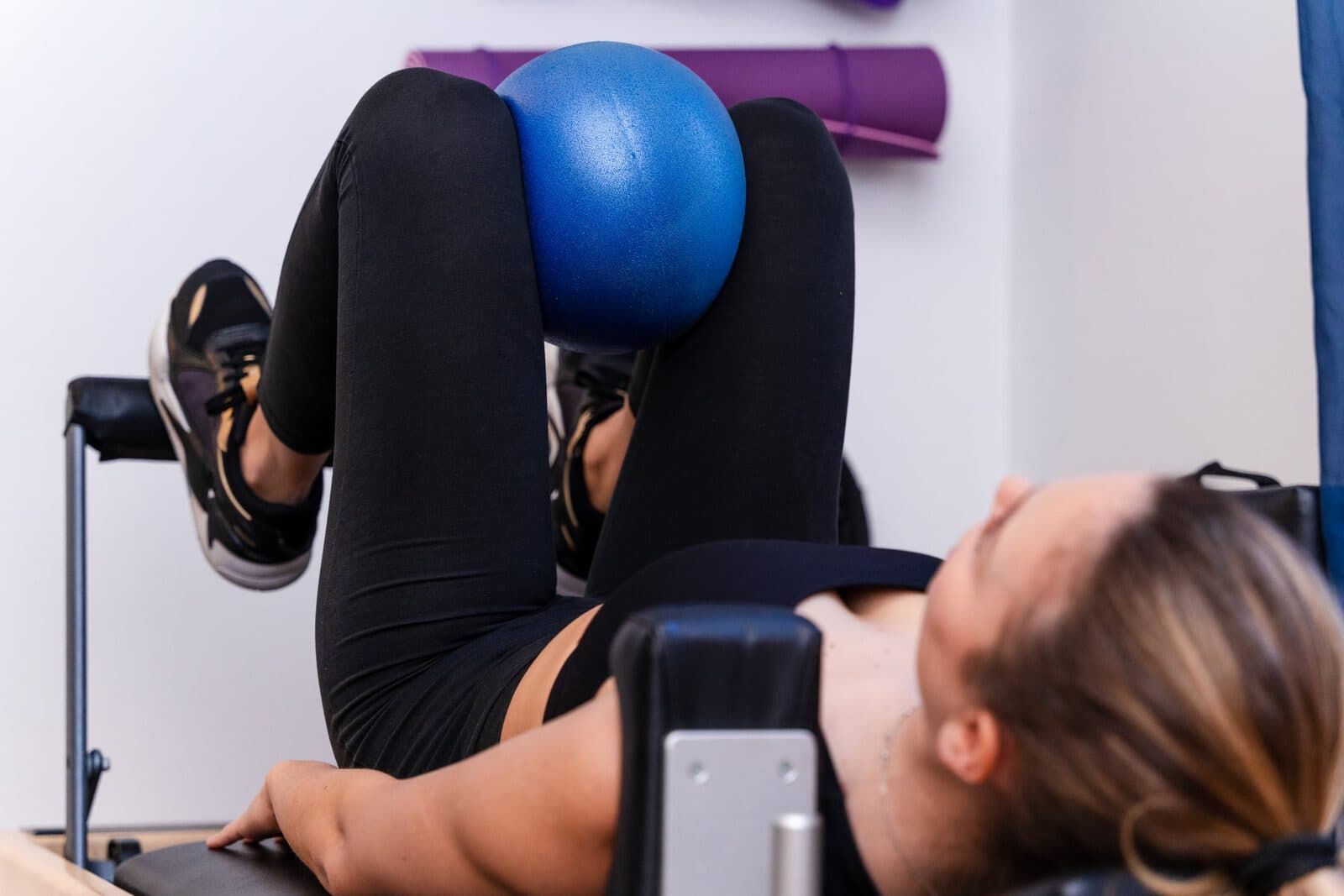
Strength training over 60: after 60, training strength is one of the most useful things you can do for your independence. But not all the benefits you read about are demonstrated to the same degree, and this page tries to tell you where the evidence is solid and where it is weak.
Let us give the conclusion up front, because it is the part that is usually missing: on strength and on the ability to do everyday things the evidence is good. On preventing falls with muscle strengthening alone the evidence is uncertain. On bone density it works only with high, supervised loads. On metabolism the available meta-analysis excluded precisely over-65s and postmenopausal women: for our age group, in practice, it does not answer.
⚠ Important: read this before continuing
The exercises and advice in this article are general indications and may not suit your situation. Every person has a unique clinical history: what works for others could be counterproductive for you.
Want a professional's opinion? Start with the questionnaire: you register and see who will follow you, a physiotherapist registered with the Register chosen for your case, to whom you write in chat. If you would rather hear their voice, the first consultation is free and we look at your situation together.
First of all: when you should NOT start on your own
This is not a list meant to frighten you, it is a list meant to save you time. If you recognise yourself in one of these points, talk to your doctor before starting a loading programme, not after.
- Chest pain or tightness, breathlessness out of proportion to the effort, palpitations during or straight after activity.
- Dizziness, blurred vision, a feeling of fainting when you stand up or when you push.
- A recent cardiac event, a recent operation, uncontrolled blood pressure or a known aneurysm: the load needs to be authorised and dosed, not improvised.
- Bone pain that appeared after a fall or a trauma, or back pain that came on suddenly without cause in someone with osteoporosis: it may be a fracture, even a vertebral one.
- Unintentional weight loss, fever, night sweats, deep tiredness accompanying the loss of strength.
- Weakness that worsens quickly, especially if it is asymmetric (one leg or one hand only), or if it comes with tingling, difficulty speaking, swallowing or keeping the foot lifted.
- Swelling, warmth and pain in one calf only: a vascular problem needs to be ruled out before loading.
- Loss of bladder or bowel control or numbness in the area that touches the saddle: this is a picture to assess urgently.
Outside these cases, the literature is fairly reassuring: in the Cochrane review on progressive strength training in older people (121 studies, 6,700 participants), serious adverse events were rare and none was attributed directly to the exercise programme. The authors add a note that is usually omitted, however: adverse events were poorly documented, and musculoskeletal discomforts (joint pain, muscle soreness) were reported in many of the studies that actually monitored them.
What we really lose as we age (the real numbers)
It is often said that "you lose 3-8% of muscle per decade". The figure itself is not made up: as you will see in a couple of lines, the literature places it in the right order of magnitude. The problem is something else: it is the wrong figure to look at.
A quantitative review published in Frontiers in Physiology pooled cross-sectional and longitudinal studies. The median loss of muscle mass reported in the cross-sectional studies is 0.47% a year in men and 0.37% in women. In the longitudinal studies, at 75 years of age, mass is lost at a rate of 0.64-0.70% a year in women and 0.80-0.98% in men. Put per decade: roughly 4% in the cross-sectional data (3.7% in women, 4.7% in men) and 6-10% by age 75. That is why "3-8%" is not wrong, it is just not very informative.
The interesting point is another one. Also at 75, strength is lost much faster than mass: 3-4% a year in men and 2.5-3% in women. In studies that measured both in the same people, the loss of strength was 2 to 5 times faster than the loss of mass. And, the authors add, the loss of strength is a more consistent risk factor for disability and mortality than the loss of muscle mass.
In practical terms: the goal of strength training over 60 is not "having more muscle". It is having more strength, which is trained in a different way, and which is lost much faster if you do not use it.

The solid benefits: strength, standing up, walking
Here the evidence for strength training over 60 is the most robust in the whole article. The Cochrane review on progressive strength training in older people reports:
- a large effect on muscle strength (73 studies, 3,059 participants);
- a small but real improvement in general physical capacity (33 studies, 2,172 participants);
- a modest improvement in walking speed: +0.08 m/s (24 studies, 1,179 participants);
- a moderate-to-large effect on standing up from a chair (11 studies, 384 participants).
In most of those studies the training was carried out two or three times a week at high intensity. Not with token loads.
A more recent meta-analysis, conducted specifically on people aged 60 and over (21 studies, 1,610 participants), found significant improvements in upper-limb strength (+15.26 kg), lower-limb strength (+48.46 kg) and grip (+1.35 kg), as well as improvements in mental health, bodily pain, general health and depressive symptoms. The same authors, however, point out that no benefits emerged for vitality, overall physical score, total quality-of-life score or distance covered in the 6-minute walk test, and they describe their conclusions as "preliminary". On pain, moreover, the two reviews do not say the same thing: the Cochrane review found a reduction in pain in people with osteoarthritis (6 studies, 503 participants), but in another 10 studies (587 participants) no effect on bodily pain. In short: pain relief is not the reason to train strength.
There is also a signal on the cognitive side: a Bayesian network meta-analysis of 44 studies and 4,793 participants aged 50 and over found that the effect of exercise on cognition depends on the type of activity, and that resistance modes (that is, strengthening) come out ahead of the others. It is an encouraging finding, not a promise of preventing dementia.
Falls: here we need to be honest
It is the benefit most often attributed to muscle strengthening, and it is where the evidence says something different.
The Cochrane review on exercise to prevent falls in older people living in the community (59 studies, 12,981 participants) concludes that exercise in general reduces the rate of falls by 23%. But when you look at the type of exercise:
- balance and functional exercises: -24% of falls (high-certainty evidence);
- mixed programmes, typically balance and functional plus strengthening: -34% (moderate certainty);
- Tai Chi: -19% (low certainty);
- programmes based mainly on muscle strengthening: uncertain effects.
Verbatim: the authors state that they are uncertain about the effects of programmes that consist mainly of resistance training.
A 2024 systematic review with network meta-analysis (219 studies, 167,864 participants, over-65s living in their own homes) does not repeat that judgement on strengthening alone, but it adds the piece that is needed: among exercise-based interventions, the most certain evidence concerns programmes that are supervised and long-lasting (over 3 months) and combine balance and strengthening, plus group Tai Chi. For completeness: the authors find evidence of similar certainty also for interventions that have nothing to do with exercise (whole-body vibration, high-intensity education or cognitive behavioural therapy, multifactorial assessment with a targeted treatment plan). The same authors specify two things it is useful to know: adding other interventions to exercise does not seem to increase the benefits much, and the effects apply above all to people who already have a high risk of falling.
What do you do with this information? Not that strengthening is useless: that on its own it is not enough for falls. If your goal is not to fall, the programme must also contain specific balance work for older people (reduced supports, changes of direction, dual tasks), and not only sets of squats. One detail from the same Cochrane review deserves attention: the effect was greater in studies where the intervention was delivered by a health professional, usually a physiotherapist.
Bones: it works, but not with light weights
Here too the common message ("strengthening prevents osteoporosis") is more nuanced than how it is told.
The randomised LIFTMOR study involved 101 postmenopausal women with low bone mass (T-score below -1.0), aged 65 ± 5. Forty-nine did an impact, high-intensity training for 8 months, twice a week, 30 minutes a session: 5 sets of 5 repetitions above 85% of maximum, under supervision. The other 52 did a low-intensity home programme.
Results: lumbar bone density +2.9% against -1.2%; femoral neck +0.3% against -1.9%; all functional tests also improved. Only one adverse event was reported (a minor lumbar spasm).
The message to take home is twofold. The first: loading bone works, and it is not automatically dangerous even with low bone mass, contrary to what is often believed. The second, which matters more here: those results come from very high loads, supervised by expert staff, not from elastic bands on the sofa. A light programme done on your own has many other benefits, but you cannot expect it to do what LIFTMOR did. If the bone topic affects you closely, we discuss it more fully in the guide to exercises for osteoporosis.
Metabolism and blood sugar: let us put them in proportion
Two claims that are repeated very often deserve clarification.
"It speeds up your metabolism." The available meta-analysis on the effect of exercise on resting metabolism found that resistance exercise raises resting metabolic rate by about 96 kcal a day compared with controls, while aerobic exercise showed no significant effect. It sounds like a point in favour, but it must be read in full. First: that review explicitly excluded people aged 65 and over and postmenopausal women, that is, precisely the population we are talking about. Second: considering all the interventions together (aerobic and resistance), the increase in resting metabolism was not statistically significant. Third: the authors themselves point out heterogeneous methods and a high risk of bias in the included studies. So: plausible, not demonstrated in this age group.
"It improves blood sugar." In the direct comparison between resistance and aerobic exercise in type 2 diabetes (12 studies, 626 adult participants, not selected by age, so this is not a study on over-60s), the reduction in glycated haemoglobin was greater with aerobic exercise (a difference of 0.18%), a difference that however loses significance in the sensitivity analysis. Be careful how this figure is read: the authors conclude that, although there are statistically significant differences, there is no evidence that they are clinically important, and that choosing one type of exercise or the other probably matters less than doing some form of physical activity. That study compares two exercises with each other, not strengthening with nothing: it is not proof that weights "lower blood sugar". If this is your goal, do not replace walking with weights, add them.
An important tip: before trying these exercises, make sure you have received a correct diagnosis. People often think they have one problem, but the real cause of the pain is something else. Doing the wrong exercises can make things worse instead of better.
Where to start
The first step of strength training over 60 is not choosing the exercise, it is understanding where you are starting from. If you have been sedentary for years, the starting point is the movement you already find hard in daily life: standing up from a chair, climbing a step, carrying a bag, raising an arm above your head.
Three simple home tests, to use as a starting point and to repeat after a few weeks:
- Standing up and sitting down from a chair without using your hands: how many times in a row can you manage, and with what quality of movement?
- Climbing a flight of stairs and noticing when breathlessness or burning in the thighs appears.
- Carrying the shopping for a stretch: how much weight, for how many metres, in which hand.
From here, progression is simple in logic and hard in patience: first you improve control of the movement without load, then you add load. Standing up and sitting down from a lower chair, pushing against the wall instead of the floor, climbing a higher step. If standing is a problem, you can start seated: we have a routine of chair exercises designed precisely for this.
The exercises that cover everything
A sensible programme does not need ten exercises. It needs to cover five movement patterns:
- Pushing down with the legs: standing up from a chair, partial squat, stepping up.
- Hinging forward loading the glutes: light deadlift, hip hinge with a stick.
- Pushing with the arms: wall push-ups or push-ups on a raised surface, overhead press with a light load.
- Pulling: band row, which strengthens the muscles of the back and shoulder blades.
- Carrying and stabilising: walking with a weight in one hand, holding a position against band resistance.
Lunges are excellent but require balance: they come in later, not on the first day. And balance, as we have seen, needs to be trained separately if the topic of falls concerns you.
Frequency, load, recovery
I am not inventing numbers: I report those used in the studies on strength training over 60 that worked.
In the Cochrane review on older people, most protocols involved 2-3 sessions a week at high intensity. In LIFTMOR there were 2 sessions of 30 minutes, with 5 sets of 5 repetitions. The WHO 2020 guidelines recommend regular muscle-strengthening activity for all age groups, together with 150-300 minutes a week of moderate aerobic activity for adults.
On recovery, on the other hand, I do not have a number from the cited studies: leaving at least one day between two sessions that train the same muscle groups is a practice convention, not a finding from these reviews. On load, the rule that matters most is that the last repetitions must be challenging: if after the last one you could do ten more identical ones, you are not training strength, you are moving (which is fine, but it is a different thing).
Progression is the real secret and also the reason many people stop: if the load never increases, results stall after a few weeks. Increasing does not mean straining: it means a higher step, one more repetition, a stiffer band.
Safety and supervision
Three things matter more than any plan:
Technique before weight. Not because it "hurts your back" in an absolute sense, but because controlled movement lets you load more and for longer.
Supervision at the start really matters. This is not a commercial recommendation: it is what emerges from the Cochrane data on falls, where the effect was greater when the intervention was delivered by a health professional, typically a physiotherapist. It must be said precisely, however: those reviews did not compare in-person supervision with remote supervision, and the 2024 review lists studies on programmes delivered remotely among the missing data. Tele-rehabilitation is a way to still have someone who watches how you move and corrects you live: it is a reasonable practical choice, not a demonstrated result.
Pain should be interpreted, not ignored. Diffuse soreness the day after is normal. Acute, localised pain that appears during the exercise or gets worse session after session is not "normal at my age". If your strength drops despite training, it is worth finding out why: the causes of muscle weakness are not only age.
Equipment: the minimum is enough to start
Elastic bands, a stable chair, a backpack to fill with books and a step cover the first few months. Gym machines have the advantage of guiding the movement and making it simple to increase the load, which is exactly the weak point of home training. The limit of working at home is not safety: it is that at some point you no longer have a way to make the exercise hard enough. When you get there, you either buy something heavier or change environment.
In summary
Strength training over 60 is among the few things with solid evidence behind it for maintaining strength, independence and the ability to stand up and walk. It is also one of the interventions with a good safety profile, provided that delicate clinical situations have been ruled out beforehand.
But strengthening is not an anti-fall programme unless you add balance work to it; it does not replicate the bone results if loads stay light; and on metabolism the available meta-analysis excluded over-65s and postmenopausal women, so it says nothing for this age group. Knowing where the line lies between what is demonstrated and what is plausible is what allows you to choose the right programme for the goal you have.
If you want to understand where to start in your situation, Ri-Hub's physiotherapists can assess you online and build a tailored progression.
You might also be interested in:
Knee Replacement: Essential Post-Operative Exercises Unstable Ankle: Causes, Strengthening Exercises and Treatment Disc Herniation Exercises: Safe Movements to Reduce Pain
Stay in touch with us Join our dedicated Facebook group: we answer all patients, give practical advice and clear up the most common doubts.
Sources
- Sarcopenia, dynapenia, and the impact of advancing age on human skeletal muscle size and strength; a quantitative review, Frontiers in Physiology, 2012
- Progressive resistance strength training for improving physical function in older adults, Cochrane Database of Systematic Reviews, 2009
- Exercise for preventing falls in older people living in the community: an abridged Cochrane systematic review, British Journal of Sports Medicine, 2020
- High-Intensity Resistance and Impact Training Improves Bone Mineral Density and Physical Function in Postmenopausal Women With Osteopenia and Osteoporosis: The LIFTMOR Randomized Controlled Trial, Journal of Bone and Mineral Research, 2018
- A Systematic Review and Meta-Analysis of Resistance Training on Quality of Life, Depression, Muscle Strength, and Functional Exercise Capacity in Older Adults Aged 60 Years or More, Biological Research for Nursing, 2023
- Falls prevention interventions for community-dwelling older adults: systematic review and meta-analysis of benefits, harms, and patient values and preferences, Systematic Reviews, 2024
- Optimal dose and type of exercise to improve cognitive function in older adults: A systematic review and bayesian model-based network meta-analysis of RCTs, Ageing Research Reviews, 2022
- The effect of exercise interventions on resting metabolic rate: A systematic review and meta-analysis, Journal of Sports Sciences, 2020
- Resistance exercise versus aerobic exercise for type 2 diabetes: a systematic review and meta-analysis, Sports Medicine, 2014
- World Health Organization 2020 guidelines on physical activity and sedentary behaviour, British Journal of Sports Medicine, 2020
Last source check: August 2026.
Need a consultation?
Start with the questionnaire on Ri-Hub, a few questions about your case, you register, and you see who will follow you: a physiotherapist registered with the Register, whom you can write to in chat whenever you like. If you would rather talk by voice, the first consultation is free, lasts twenty minutes and commits you to nothing: they arrive having already read what you wrote, and together you decide whether and how to go on.