There is a phrase that almost everyone has in mind: the physiotherapist is the one who massages your back. It is understandable, because for years it has been told that way, and it is wrong in a way that can be measured.
The number
The Observatory on private practice published by FisioScience in 2025 asked 959 Italian freelance physiotherapists which approach they mainly adopt in clinical practice. The answers:
| main approach | how many | share |
|---|---|---|
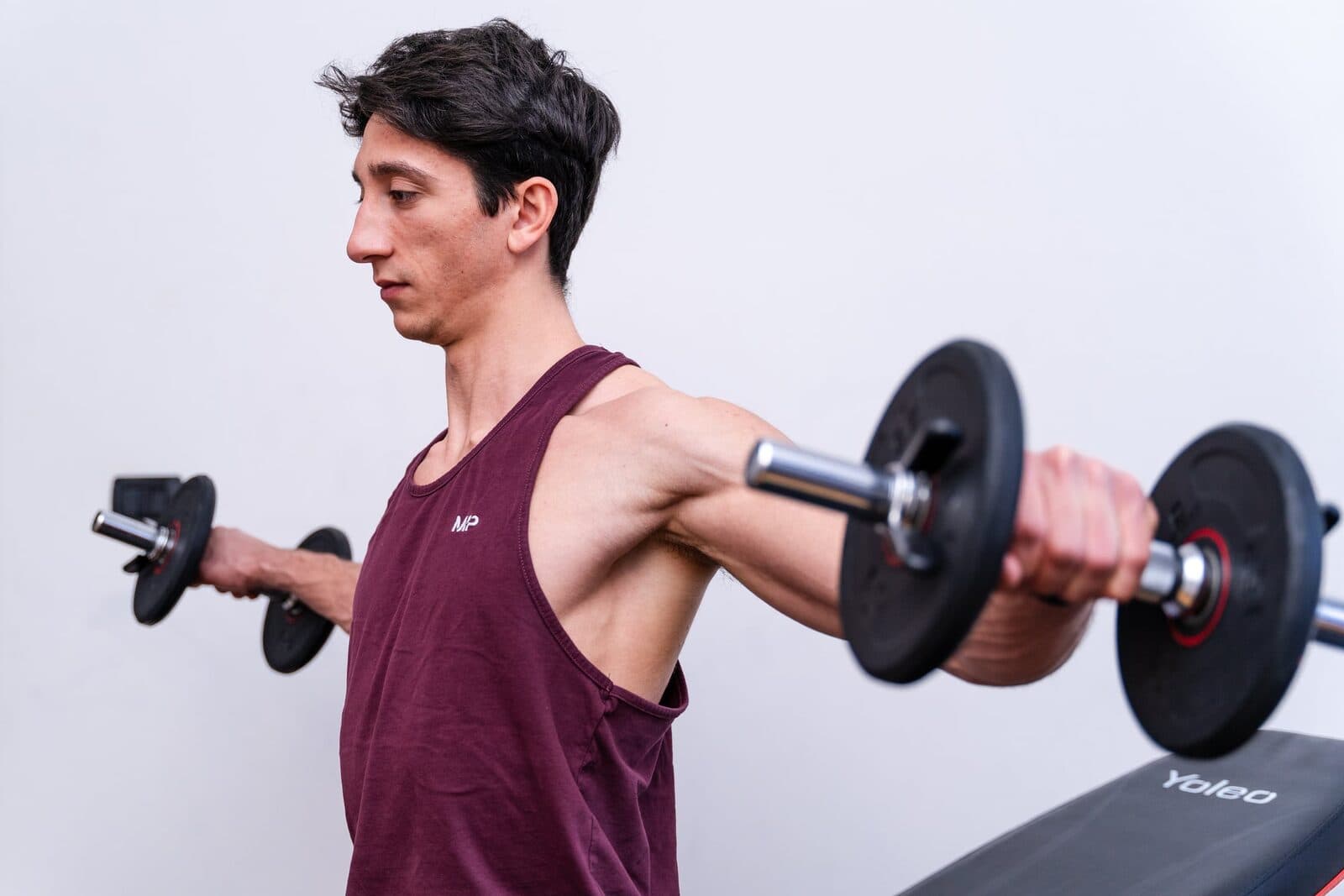
| Therapeutic exercise | 576 | 60.06% |
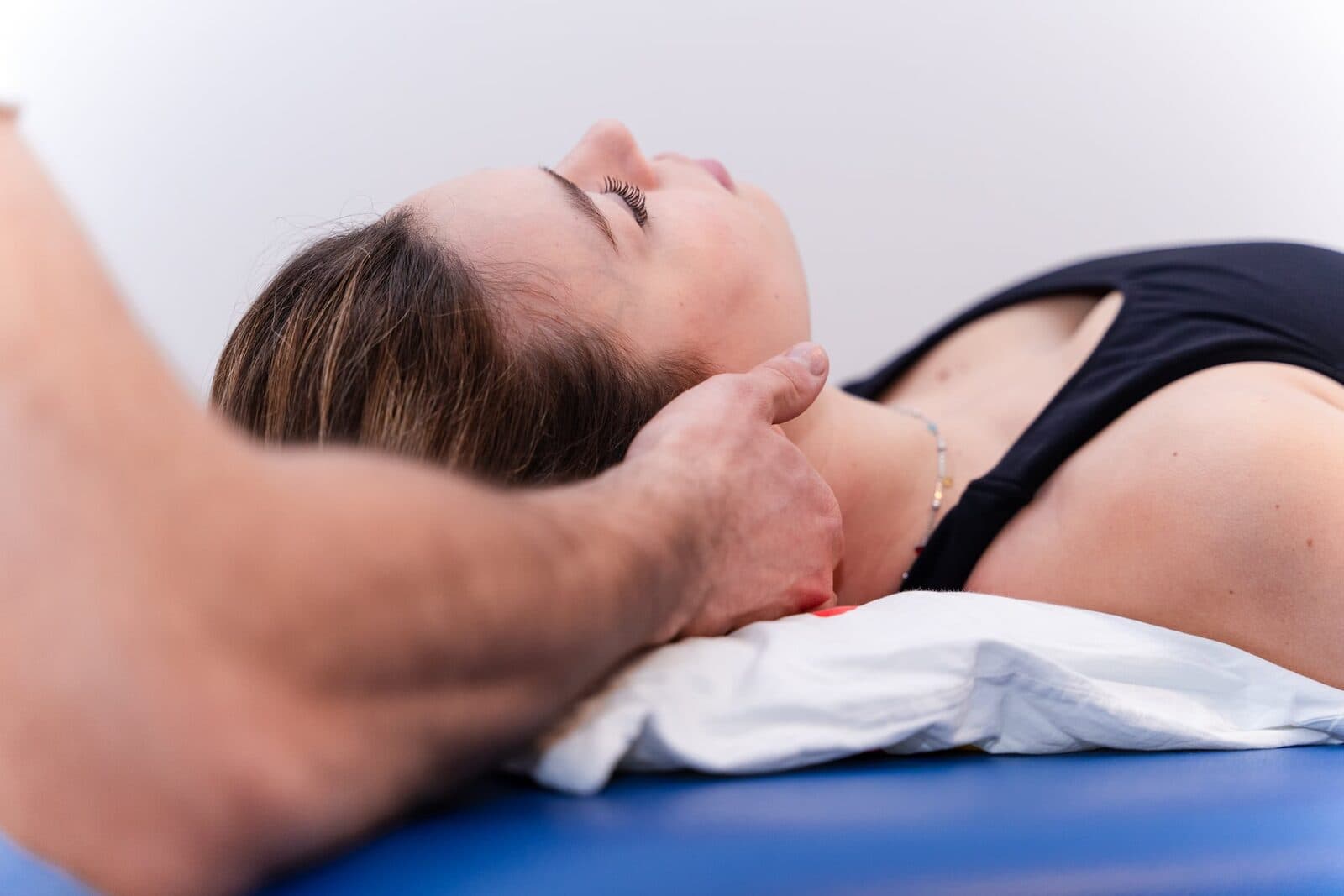
| Manual therapy | 262 | 27.32% |
| Education and behavioural approach | 86 | 8.97% |
| Physical therapies (tecar, laser, ultrasound…) | 14 | 1.46% |
| Massage | 9 | 0.94% |
| Other | 12 | 1.25% |
Nine professionals out of nine hundred and fifty-nine. 0.94%.
A note of transparency, because whoever opens the PDF will find it: the opening summary of the document writes "55%" for therapeutic exercise. Those are the figures from the 2024 edition, left in the summary. The 2025 data table, on page 36, gives 576 out of 959, that is 60.06%. We cite the table.

Why exercise has taken that place
Not for ideology: because it holds up under comparison. In knee and hip osteoarthritis, a 2023 network meta-analysis of 152 randomised studies and 17,431 participants finds no differences between therapeutic exercise and oral anti-inflammatories or paracetamol, neither on pain nor on function, at four, eight and twenty-four weeks, with a better safety profile.
A massage, on the other hand, works for as long as it lasts and a little beyond. It is not nothing when you are in pain: it is relief, and relief is needed. But it does not change how much load that structure can bear three months from now, and that is the problem that brought you there.
And manual therapy? The 27% is not a mistake
Here we need to be careful not to turn one stereotype into another. Manual therapy is the second item of the profession, and it is supported by the evidence, but in a precise way.
The 2025 umbrella review on neck disorders pooled 35 systematic reviews. For non-specific neck pain the result, with high confidence, is this: manual therapy combined with exercise is superior to each of the two alone. Not manual work against exercise: the two together beat the parts.
The same applies to cervicogenic headache. For cervical radiculopathy, neural and vertebral mobilisation techniques are supported with moderate confidence.
Translated: hands-on work is not the treatment, it is an accelerator of what you then have to do yourself. When someone offers it to you instead of exercise, they are removing the part that holds up over time.
Instrumental therapies: 1.46%
Tecar, laser, ultrasound and magnetotherapy are the main approach for fourteen professionals out of 959. This does not mean they are never used: it means that almost nobody builds their work on them. We have gone through them one by one, with the sources, in what the studies say about instrumental therapies.
What changes for you
The question to ask is not "who treats my back". It is "what do they have me do?"
A pathway that works has three recognisable parts: someone who watches how you move, a load that increases according to a criterion, and a way to understand whether it is working. If after the first session you leave without knowing what to do at home and how you progress, what you have bought is relief: legitimate, but a different thing.
What this means for remote physiotherapy
That the big part can be done. Watching how you perform, correcting, dosing the load, deciding when to raise the bar: this is 60% of what physiotherapists really do, and it is the part that keeps working when the physiotherapist is not there.
Manual therapy, no, and there is no way around it: for that there is the in-person session, which your physiotherapist proposes when your case needs it. It is carried out by one of our physiotherapists close to you, on the plan they wrote, and straight afterwards the pathway resumes online. It is set out in full in what we work with, and what we do not.
In summary
Of 959 Italian physiotherapists, massage is the main tool for nine. Exercise for 576. Manual therapy for 262, and it works better when it sits alongside exercise rather than in its place. If you are looking for a physiotherapist and you are offered only a couch, you are looking at 1% of the profession.
And for where the line sits with those who train you: movement partner, not personal trainer.
The same Observatory also tells us how long a session takes: how long a physiotherapy session lasts.
From the same Observatory, how many work in groups and with what goals: group physiotherapy, who does it and how well it works.
And the machines, how many there are and how much they really matter: machines in physiotherapy, who really has them.
And who is in front of them, in what proportions: who goes to a physiotherapist, and for what.
Sources
- Osservatorio sulla libera professione in fisioterapia 2025 (FisioScience, table "Approccio terapeutico adottato prevalentemente", p. 36, base 959 respondents)
- Comparative efficacy of exercise therapy and oral non-steroidal anti-inflammatory drugs and paracetamol for knee or hip osteoarthritis: a network meta-analysis of randomised controlled trials (British Journal of Sports Medicine, 2023)
- Manual physical therapy for neck disorders: an umbrella review (Journal of Manual & Manipulative Therapy, 2025)
- A critical review of the role of manual therapy in the treatment of individuals with low back pain (Journal of Manual & Manipulative Therapy, 2024)
Last source check: September 2026.
Need a consultation?
Start from the Ri-Hub questionnaire: a few questions about your case, you register, and see who will follow you: a physiotherapist on the Italian professional register, to whom you write in chat whenever you like. If you prefer to talk it through by voice, the first consultation is free, lasts twenty minutes and commits you to nothing: they arrive having already read what you wrote, and together you decide whether and how to continue.