Snapping hip: if you feel a click, a snap or a pop coming from the hip when you move, you may have this common condition. Snapping hip, also known as coxa saltans or snapping hip syndrome, is a phenomenon in which a tendon or tissue slides over a bony prominence, producing a sensation of snapping. In this complete guide to snapping hip you will find out what it is, why it happens, when it is normal and when it needs attention, and what you can do to fix the problem.
For many people a snapping hip is just a curious and painless phenomenon. For others it can be bothersome or even painful. Understanding what kind of snap it is and whether it needs treatment is the first step. The good news is that in most cases a snapping hip responds well to conservative treatment.
⚠ Important: read this first before continuing
The exercises and advice in this article are general guidance and may not suit your situation. Every person has a unique clinical history: what works for others could be counterproductive for you.
Want a professional's opinion? Start with the questionnaire: you sign up and see who will follow you, a physiotherapist registered with the Albo chosen for your case, whom you can write to in chat. If you prefer to hear a voice, the first consultation is free and we look at your situation together.
What Snapping Hip Is
Snapping hip is a condition in which, during movement of the hip, you feel a snap, a click, or a sensation of something "jumping". This snap can be audible (you hear a noise), palpable (you can feel it with your hand), or only perceived by the person as an internal sensation.
Snapping hip can be classified into three main types according to where it occurs:
External (lateral) snapping hip: The snap occurs on the outer side of the hip, above the greater trochanter. It is caused by the iliotibial band or the gluteus maximus sliding over the greater trochanter.
Internal (anterior) snapping hip: The snap occurs at the front of the hip, in the groin. It is caused by the iliopsoas tendon sliding over the head of the femur, the iliopectineal eminence, or the rim of the acetabulum.
Intra-articular snapping hip: The snap originates from inside the joint. It can be caused by tears of the acetabular labrum, loose intra-articular bodies, or other joint conditions.
Causes of Snapping Hip
The causes vary according to the type of snapping hip:
An important tip: before trying these exercises, make sure you have received a correct diagnosis. It is often assumed there is one problem when the real cause of the pain is something else. Doing the wrong exercises can make things worse rather than better.
External snapping hip: Tension in the iliotibial band or thickening of the posterior border of the fascia lata. The tight tissue slides over the greater trochanter during flexion-extension movements of the hip.
Internal snapping hip: Tension in the iliopsoas muscle. The tendon snaps over a bony prominence when the hip moves from flexion to extension.
Intra-articular snapping hip: Tears of the acetabular labrum, loose cartilage fragments in the joint, synovitis.
Predisposing factors: Repetitive activities that involve the hip (dance, gymnastics, running), excessive flexibility (hypermobility), muscle weakness, muscle imbalances.

Symptoms of Snapping Hip
The symptoms of snapping hip vary from person to person:
The snap: A sensation of a click, snap, or pop during movement of the hip. It can be audible or only felt.
Location: On the side of the hip (external type), in the groin (internal type), or deep inside the joint (intra-articular type).
Triggering movements: The snap typically occurs with specific movements: bringing the leg forward and back, standing up from sitting, walking, climbing stairs, rotating the hip.
Pain: Snapping hip can be painless or can cause pain in the area of the snap. Pain, when present, indicates irritation of the tissues.
Sensation of locking: Some people report a sensation of locking or catching.
Diagnosis of Snapping Hip
The diagnosis of snapping hip is mainly clinical:
History: Description of the snap, location, triggering movements, presence of pain.
Clinical examination: The doctor or physiotherapist can often reproduce the snap with specific manoeuvres and determine the type (external, internal, intra-articular).
Dynamic ultrasound: Can show the tendon snapping over the bone during movement.
Magnetic resonance imaging (MRI): Useful to rule out intra-articular causes (labral tears) or to assess the tendons.
X-rays: To rule out bone abnormalities.
Treatment of Snapping Hip
Treatment depends on the type of snap, the presence of pain, and the impact on daily life:
Painless snapping hip: If the snap does not cause pain and does not limit activities, it may not require treatment. Many people live with a snapping hip without problems.
Conservative treatment:
Stretching: Lengthening of the iliotibial band (for the external type) or of the iliopsoas (for the internal type).
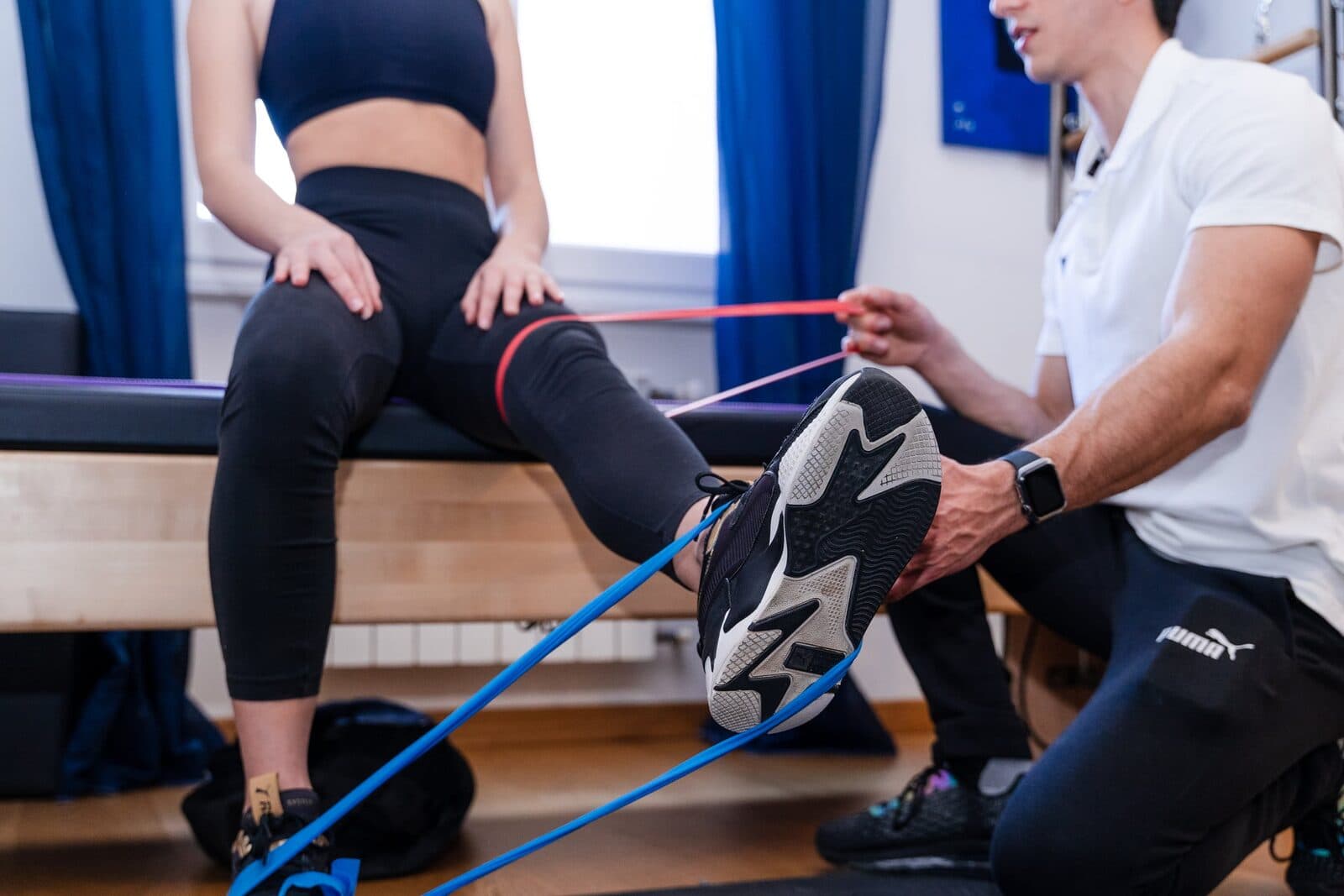
Muscle strengthening: Strengthening of the glutes to improve hip mechanics and reduce tension on the structures that snap.
Modification of activities: Temporary reduction of activities that cause the painful snap.
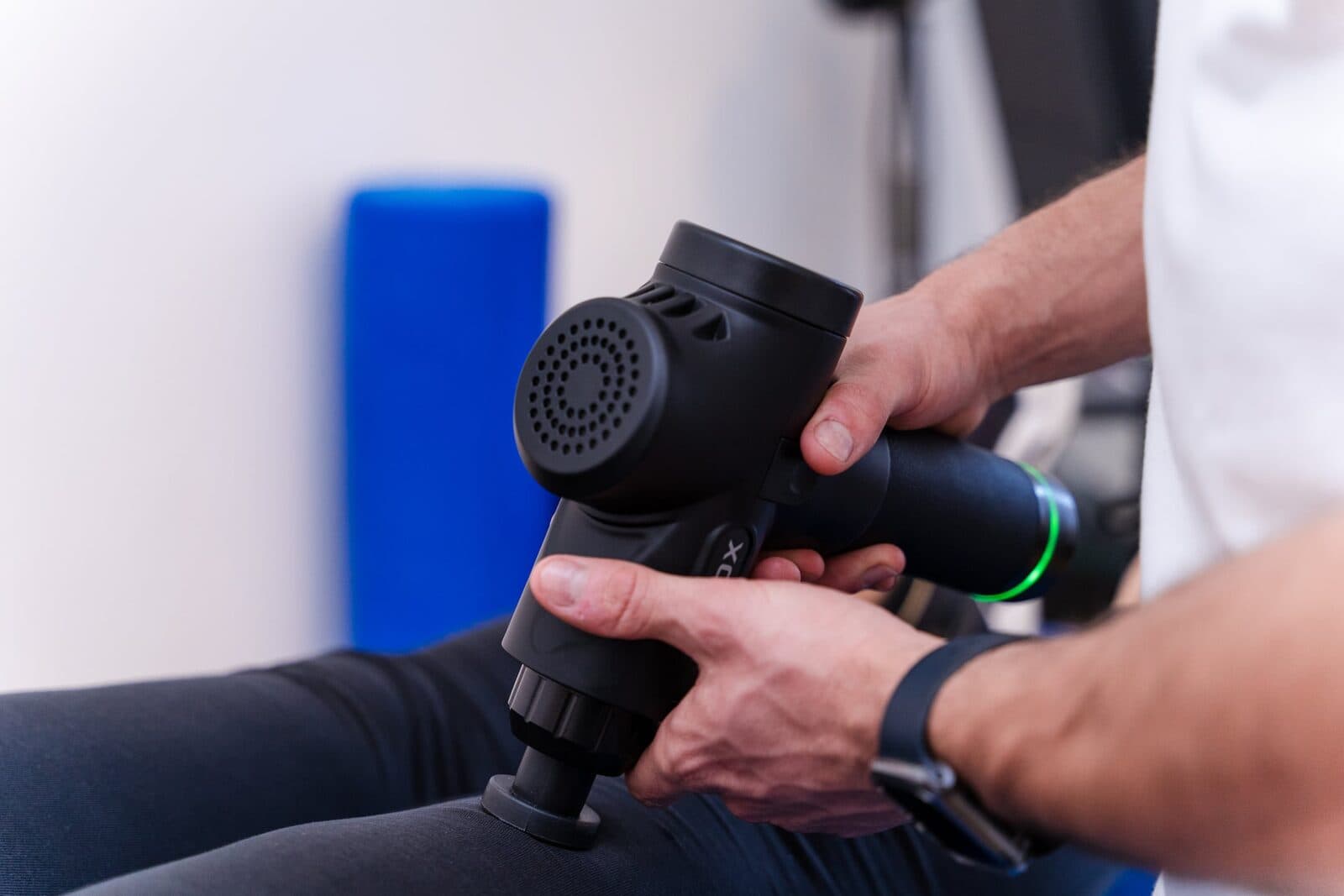
Manual therapy: Myofascial release techniques and mobilisation.
Anti-inflammatory medicines: To reduce inflammation if present.
Injections: A corticosteroid injection into the bursa or around the tendon can give relief in painful cases that resist treatment.
Surgery: Rarely necessary. It can be considered for painful snapping hip that does not respond to prolonged conservative treatment. The options include lengthening of the tendon or arthroscopic release.
Exercises for Snapping Hip
Exercises are the mainstay of conservative treatment:
For external snapping hip:
Iliotibial band stretching: Standing, cross the back leg behind the front one and bend sideways towards the side of the back leg. 30 seconds, 3 times per side.
ITB foam rolling: Roll over the outer side of the thigh with a foam roller. 1-2 minutes per side.
Clamshell: Strengthens the external rotators. 3 sets of 15 per side.
Monster walk with a band: Strengthens the gluteus medius. 2 sets of 10 steps per direction.
For internal snapping hip:
Iliopsoas stretching: In a lunge, push the pelvis forward. 30 seconds, 3 times per side.
Rectus femoris stretching: Standing or prone, bring the heel towards the buttock. 30 seconds, 3 times per side.
Bridge: Strengthens the glutes. 3 sets of 15.
Single-leg balance: Improves hip stability. 3 sets of 30 seconds per side.
Prevention of Snapping Hip
To prevent snapping hip or its recurrence:
Regular stretching: Keep the hip muscles flexible with daily stretching.
Strengthening: Keep the glutes strong for good hip mechanics.
Warm-up: Before physical activity.
Gradual progression: Do not increase the intensity of activities too quickly.
When to Worry
See a professional if: the snap is accompanied by significant pain, the pain worsens over time, the snap limits your activities, the snap appeared after a trauma, or there are other symptoms such as locking, giving way, or swelling.
If you have a snapping hip that bothers you or causes pain and you want a personalised exercise programme to solve the problem, Ri-Hub can help. Our physiotherapists offer assessments and programmes in tele-rehabilitation. We will identify the type of snap and the cause, and give you a specific stretching and strengthening plan. Do not let the snap in your hip limit you: contact Ri-Hub to get back a hip that moves without problems.
You might also be interested in:
Stay in touch with us
Join our dedicated Facebook group: we reply to all patients, give practical advice and clear up the most common doubts.
Sources
- The role of iliopsoas fractional lengthening in hip arthroscopy: a systematic review: Journal of hip preservation surgery, 2024
- Surgical management of internal snapping hip syndrome: a systematic review evaluating open and arthroscopic approaches: Arthroscopy: the journal of arthroscopic & related surgery: official publication of the Arthroscopy Association of North America and the International Arthroscopy Association, 2013
Last source check: September 2026.
Need a consultation?
Start with the questionnaire on Ri-Hub: a few questions about your case, you sign up, and you see who will follow you: a physiotherapist registered with the Albo, whom you can write to in chat whenever you like. If you prefer to talk it through by voice, the first consultation is free, lasts twenty minutes and commits you to nothing: it starts with them having already read what you wrote, and together you decide whether and how to proceed.