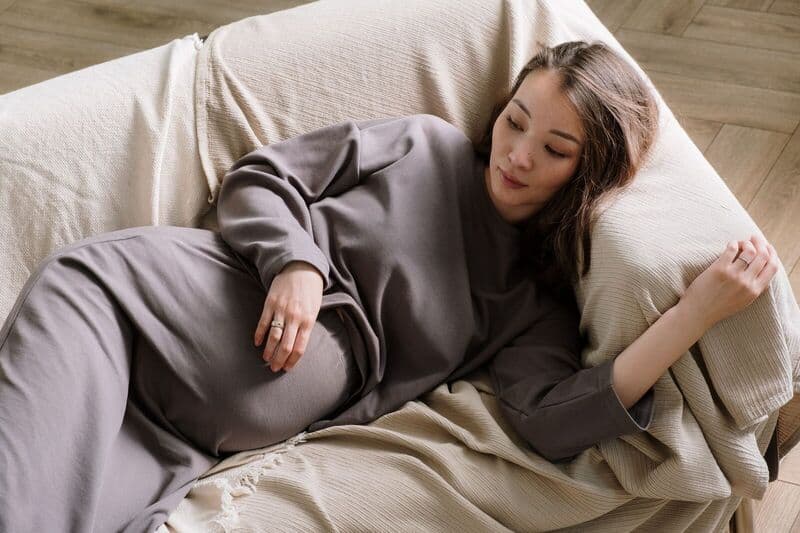
How to sleep with back pain is one of the questions we receive most often, and the honest answer is less clear-cut than what you find around. We spend about a third of our lives in bed, so it is reasonable to think that position matters. But "reasonable" does not mean "proven", and on this subject the difference is large.
In this guide you will find what the studies really say about positions, mattress and pillow, what has not yet been proven, and how to adjust anyway in your own case. The aim is not to sell you the miracle position, but to give you a criterion for deciding how much time it is worth investing on this front.
⚠ Important: read this before continuing
The exercises and advice in this article are general guidance and may not suit your situation. Every person has a unique clinical history: what works for others could be counterproductive for you.
Want a professional's opinion? Start with the questionnaire: you sign up and see who will follow you, a physiotherapist on the Italian professional register chosen for your case, whom you can write to in chat. If you would rather hear their voice, the first consultation is free and we look at your situation together.
First of all: when night pain is not a question of pillows
The vast majority of night-time back pain depends on trivial and reversible factors. A minority does not, and these are precisely the cases where losing weeks changing position is the worst damage. Stop the search for the perfect pillow and get assessed if you recognise any of these pictures.
Go to the emergency department, without waiting for the next morning, if you develop difficulty urinating or loss of control of urine or faeces, tingling or loss of sensation in the area that touches a bicycle saddle, or leg weakness that worsens by the hour. This is the picture of cauda equina syndrome, rare but time-dependent.
Book a medical visit at short notice if:
- the pain wakes you regularly in the second half of the night and does not change in any position: mechanical pain, the kind that depends on loads, usually changes when you turn over;
- night pain comes with fever, night sweats or weight loss you did not seek;
- you have had cancer in the past, even years ago;
- the pain started after a fall, or you have osteoporosis, have taken corticosteroids for long periods or are over 70;
- you have an infection somewhere else, a central venous catheter, or you use intravenous drugs.
These are not generic alarmist claims: a systematic review of over 41,000 patients who arrived at the emergency department with back pain found a serious condition requiring immediate or urgent treatment in 2.5 to 5.1% of cases in prospective studies, and cites among the examples of signs that raise the probability of a serious condition the suspicion or history of cancer (for spinal tumour) and intravenous drug use, a vascular catheter and an infection elsewhere (for epidural abscess). Two clarifications so as not to frighten anyone: the emergency department collects the most serious cases, so in a clinic these percentages are lower, and the same review notes that the accuracy of most of these signs has been measured by a single study. They serve to decide when to be seen, not to make a diagnosis yourself.
How to sleep with back pain: what the research really says
Here comes the part that is usually skipped. In 2025 a systematic review devoted precisely to the relationship between sleep position and low back pain was published. It found six studies, all observational, published between 2005 and 2024. The picture that emerges is this: lying on your back is associated with less back pain and better supports the alignment of the spine; lying on your front is associated with a higher risk from the load on the lower back; the side is the most widespread position and does reasonably well or badly depending on how well alignment is supported; while people who change position often show no relevant associations.
The delicate point is the verb: is associated. Observational studies mean that someone looked at preferred position and the presence of pain together, not that someone randomly assigned people to sleep prone or supine to measure what happened. With that design you cannot rule out the opposite: that it is the pain that pushes you towards certain positions, and not the position that produces the pain. Someone with an irritated lower back spontaneously stops sleeping face down, and in the final count they end up among the "supine people who feel better".
There is also a practical problem that no study has solved: the position you choose is only the position you fall asleep in. During the night you move, and you do not decide that. What you really control is the starting position and the way you support it.
This does not make the information useless; it puts it in proportion. Adjusting your night position is a zero-cost manoeuvre, without risk, with a possible but not guaranteed benefit. It should be treated that way: a sensible attempt to try, not the cure for your back pain. The international guidelines, summarised in the Lancet series on low back pain, put other things first: education that supports self-management, a return to normal activities and exercise.

The supine position
Sleeping on your back spreads the weight over a wide surface and reduces twisting. It is the position that comes out best in the review, and it also makes sense mechanically.
The adjustment that makes the difference is a pillow under the knees. With the legs completely straight the pelvis tends to tilt forward and the lumbar curve becomes more pronounced; a support under the knees slightly flexes the hips too and leaves the lower back in a more neutral position. You do not need a tall pillow: just enough to remove the feeling of an "arch" in the lower area. For the head, a medium pillow: if it is too high it pushes the neck forward all night.
One contraindication needs stating clearly: in pregnancy after the 28th week the supine position is not recommended, and not because of the back. An individual-participant meta-analysis pooling five case-control studies (851 cases and 2,257 controls) found that going to sleep supine was associated with a more than doubled probability of late stillbirth compared with going to sleep on the left side, while right and left side were equivalent. If you are in late pregnancy, the position to use is the side, full stop. Right or left changes little, and we have gone into what to do if you wake up on your back in sleeping in pregnancy: positions and the evidence.
An important tip: before trying these exercises, make sure you have received a correct diagnosis. People often think they have one problem, but the real cause of the pain is something else. Doing the wrong exercises can make things worse instead of better.
The side position
It is the most common position, and it is also the one that depends most on how you build it: the same review finds that lying on your side eases pain when alignment is supported and worsens it when it is not.
Two details do all the work. The first is a pillow between the knees: without one, the top leg slides forward and drags the pelvis into rotation, and the lower back spends the night twisted. The second is the height of the pillow under the head, which must fill the space between shoulder and ear: if it is low the neck bends downwards, if it is high it bends upwards, and in both cases the neck works all night.
If you find yourself curled up spontaneously, it is worth reading what sleeping in the foetal position involves: for some situations it is the position of relief, for others it is not.
The prone position
It is the position that comes out worst: sleeping face down forces you to turn the neck to the side for hours and tends to keep the lower back in extension. Again, we are talking about observed associations, not a proven relationship. In the review, prone and supine are the two positions with a consistent direction, the first negative and the second positive, while the side changes sign depending on how well you support alignment, and variable positions show no relevant associations.
If it has been your position forever, do not abolish it by decree: changing a sleep habit on command rarely works and you risk sleeping worse, which is a real cost. Try putting a flat pillow under the pelvis to reduce lumbar extension, removing the pillow under the head altogether, and starting on your side with a long pillow in front, so that if you roll over you stop halfway. The topic is covered in depth in sleeping face down: effects on the back.
What is a comfort adjustment here is not so in the first year of life: the newborn sleeps on its back even when it regurgitates, and the reason is in newborn positions, reflux and safe sleep.
The mattress: what has really been measured
This is the only piece with serious experimental evidence behind it. A double-blind randomised study published in The Lancet assigned 313 adults with chronic non-specific low back pain (people who had pain in bed and on getting up) to a firm mattress or one of medium firmness. At 90 days those with the medium mattress did better on pain in bed and on disability. On pain on getting up the difference was there but the confidence interval included no effect, so on that single outcome the 90-day measurement is not conclusive. It should be said, however, that looking at the whole study period rather than day 90 alone, on that same outcome the difference in favour of the medium mattress was significant.
Three clarifications that usually disappear when this study is cited:
- the comparison was medium against firm, not "new mattress against yours": it does not show that buying a mattress does anything if yours already works well;
- the participants had chronic low back pain and pain specifically in bed, so the result does not automatically extend to acute or occasional back pain;
- it debunks a stubborn myth, namely that for the back you need the hardest mattress possible. It is not so.
A later systematic review of 24 controlled studies, conducted on adults with and without back pain, points the same way: a medium-firm mattress that can be adjusted by the person sleeping on it is the one that best favours comfort, sleep quality and spinal alignment. Note that the outcomes on which that review concludes are these three, not the reduction of pain. No study has instead established a lifespan for a mattress in years: the practical criterion is whether it is visibly sagging where you rest your pelvis, or whether you wake up stiff in a way that disappears after half an hour on your feet and you have no other explanation.
The pillow: the right expectations
The pillow is the variable into which people invest the most and from which they can expect the least, at least for the back. The available meta-analysis examined 35 studies, nine of them high quality for a total of 555 participants: foam pillows reduce neck pain and waking symptoms, but with small effects. On neck disability, by contrast, the measured effect is more consistent, of medium size, and satisfaction with the pillow rises considerably: these are the two data points that work against the downsizing of this paragraph, and it is right to state them. Sleep quality, for its part, does not change according to the pillow model. And a useful detail emerged: the alignment of the neck when lying on the side did not depend on the material, but on shape and height.
Put into practice: the pillow is a question of geometry, not marketing. On your back you need a medium pillow that supports the curve of the neck without pushing the head forward; on your side you need a higher one, enough to fill the space between shoulder and head; on your front you need a very low one or none. Note also that these studies are on people with chronic neck pain, not lower back pain: if your problem is the lower back, the pillow under the head is not the right lever. If, on the other hand, the neck is your weak point, here you will find how to choose a cervical pillow.
Sleep itself matters more than position
If I had to point to one line in this article, it would be this one. The most solid evidence concerns not how you lie in bed, but how much and how well you sleep.
A systematic review with meta-analysis of prospective studies, 16 papers drawn from 11 populations for a total of 116,746 participants, found that having sleep problems at the start is associated with a higher risk of developing chronic musculoskeletal pain, both in the short term (OR 1.64, confidence interval 1.01 to 2.65) and in the long term (OR 1.39, interval 1.21 to 1.59). A necessary clarification: in the short term the interval comes close to no effect, and the authors themselves use the conditional, because the certainty of the evidence is low; the robust finding is the long-term one. The relationship also works in the other direction, but with more uncertain evidence: pain present at the start increases the risk of sleep problems in the short term. The authors themselves write that the bidirectional nature of the link needs to be investigated better.
Be careful not to make the logical leap too far. Fixing sleep is not automatically a therapy for pain: a meta-analysis of 11 randomised studies and 1,801 participants, conducted on people who had both chronic musculoskeletal pain and sleep disorders, found that cognitive behavioural therapy for insomnia greatly improves insomnia, but did not produce a significant effect on pain intensity. Sleeping better is a goal worth pursuing in its own right. That, by improving it, pain also goes down is exactly what the only available experimental evidence did not find: the associations seen above tell you who is more at risk, they do not guarantee that intervening lowers the risk. It is not the shortcut that makes back pain disappear.
What to do before going to bed
Evening habits have more room for intervention than position: when people ask how to sleep with back pain, they almost always look at the bed, almost never at the hour before getting into it. A few minutes of gentle mobility, avoiding in the preceding hours the activities you already know light up your pain, and a few minutes of slow breathing to lower arousal. If you have recently hurt yourself, the first 48 hours have their own rules.
Add the basics of sleep, which apply even without pain: regular wake-up times, a cool and dark room, and no hours spent awake in bed turning over. If pain keeps you awake for long periods, getting up, staying in a dimly lit room and going back to bed when sleep returns is the stimulus control rule, one of the ingredients of the cognitive behavioural therapy for insomnia mentioned above. Two warnings, though: in studies that therapy is a structured course of several hours led by a professional, not this single rule applied on your own, and it is designed for insomnia, not for pain. It is still preferable to spending the night fighting the mattress.
During the night and on waking
Changing position while you sleep is normal and is not a mistake to correct: nocturnal movement serves to redistribute pressure. You can only look after the starting position. A long pillow in front of the body helps you stay on your side for longer without effort.
On waking, the rule is do not get up abruptly from the supine position: roll onto your side first, push with your arms as you bring your legs out of bed and come to sitting, then stand up. It is not a magic manoeuvre; it is simply the way to go from lying to standing without asking a sudden extension of a back that has been still for hours. Then a few minutes of gentle movement: morning stiffness loosens by moving, not by waiting. If it seems cumbersome, it is the same sequence that a child uses when learning to sit up on their own: roll onto the side and push with the arm underneath.
If you have a specific diagnosis
For these conditions there are no studies comparing sleep positions. What follows is what sufferers report and what is consistent with the mechanics of the problem: use it as a starting point to test, not as a prescription.
Lumbar disc herniation. The side with hips and knees bent and a pillow between the knees is the position most people report as most tolerable. If it helps you to understand what to expect from the course, we have written whether and when a disc herniation can resorb on its own.
Lumbar stenosis. People with stenosis usually feel better in slight flexion and worse in extension: curled up on the side, or on your back with the knees raised on a tall pillow. The rest of the management is covered in safe exercises for lumbar stenosis.
Spondylolisthesis. The same logic applies: avoid positions that push the lower back into extension, so in particular lying prone without support under the pelvis.
How to actually use this information
Since the evidence is weak, the sensible thing is to stop looking for the "right" position in the abstract: how to sleep with back pain becomes a small personal test, not a universal rule to apply.
- Change one thing at a time. The pillow under the knees, or the one between the knees, or the height of the head pillow. If you change three together you will never know which one worked.
- Give it two weeks. The body adapts slowly to a new night set-up, and the first two or three days can be worse just because of the novelty.
- Measure the right thing. Not "how am I doing", but two blunt questions every morning: how much pain do I have on waking, from 0 to 10, and how many times did I wake up.
- If nothing moves in two weeks, do not insist. It means that in your case the lever is elsewhere: load, strength, daytime habits, stress management. Continuing to buy pillows is the most common way to lose months.
In practice it often happens that fixing the night does not solve things on its own, but removes enough noise to make the exercise during the day possible, which is the part that really shifts the needle.
Online physiotherapy: where a professional comes in
Understanding how to sleep with back pain in your specific case is exactly the part a guide cannot do: distinguishing your case from the average case. With Ri-Hub you can be followed by physiotherapists on the Italian professional register at 29,90€ per session. In practice, a professional can rule out the pictures listed at the start, understand whether your night-time pain is mechanical or not, watch you as you get into bed and get up, and above all build the daytime programme of which the sleep advice is only the backdrop.
If you have been waking up with pain almost every morning for weeks, the problem is not that you have not yet found the right pillow: it is that the picture needs assessing.
Conclusion
Knowing how to sleep with back pain helps, but it is worth knowing its real weight. The supine position and a well-supported side are associated with less pain, and the prone position with more pain, but only in observational studies that do not demonstrate a causal link. On the mattress there is better evidence, and it says that medium firmness beats a rigid one for people with chronic low back pain. On the pillow the effects are small and concern the neck. The thing with the strongest evidence behind it is the simplest: sleeping well, in general, is associated with less chronic pain in the future.
These are all adjustments that cost little and do no harm: try them, give them two weeks, and if nothing changes look for the cause elsewhere instead of changing your fifth pillow. If you need to understand where to start in your case, the general picture on back pain is a good starting point.
If you are not sure your case is this one, sleeping with pain sorts you among the most common situations.
Sources
- Relationship Between Sleep Posture and Low Back Pain: A Systematic Review, Musculoskeletal Care, 2025
- Effect of firmness of mattress on chronic non-specific low-back pain: randomised, double-blind, controlled, multicentre trial, The Lancet, 2003
- Effect of different mattress designs on promoting sleep quality, pain reduction, and spinal alignment in adults with or without back pain; systematic review of controlled trials, Sleep Health, 2015
- The effects of pillow designs on neck pain, waking symptoms, neck disability, sleep quality and spinal alignment in adults: A systematic review and meta-analysis, Clinical Biomechanics, 2021
- The bidirectional relationship between sleep problems and chronic musculoskeletal pain: a systematic review with meta-analysis, Pain, 2024
- Cognitive behavioral therapy for insomnia in people with chronic musculoskeletal pain. A systematic review and dose-response meta-analysis, Sleep Medicine, 2024
- An Individual Participant Data Meta-analysis of Maternal Going-to-Sleep Position, Interactions with Fetal Vulnerability, and the Risk of Late Stillbirth, EClinicalMedicine, 2019
- Low Back Pain in the Emergency Department: Prevalence of Serious Spinal Pathologies and Diagnostic Accuracy of Red Flags, The American Journal of Medicine, 2020
- Prevention and treatment of low back pain: evidence, challenges, and promising directions, The Lancet, 2018
Last source check: August 2026.
You might also be interested in:
Stay in touch with us
Join our dedicated Facebook group: we answer all patients, give practical advice and clear up the most common doubts.
Need a consultation?
Start the Ri-Hub questionnaire: a few questions about your case, you sign up, and you see who will follow you: a physiotherapist on the Italian professional register, whom you can write to in chat whenever you like. If you would rather talk it through by voice, the first consultation is free, lasts twenty minutes and commits you to nothing: they arrive having already read what you wrote, and together you decide whether and how to go on.