"I have a quadriceps strain" is one of the most common phrases in the clinic. It describes a real sensation well: the front of the thigh is hard and tight, and it pulls when you bend the knee.
The problem is that the word does not correspond to anything precise. It is not a diagnosis with shared criteria, it has no distinctive look on ultrasound, and under the same label fall things that are managed in very different ways: an overload that passes on its own, a tear in the fibres, and in rare cases a surgical emergency.
Here I will explain what is really behind the word, how to tell the cases apart, and what happens when you measure the remedies everyone takes for granted. But the first thing I have to put is the one that usually sits at the end, and at the end it should not be.
First of all: when thigh pain is not a tight muscle
There are four pictures that can present as "a locked thigh" and that are not treated at home.
You cannot extend the knee, and you feel a gap above the kneecap. This is the picture of a quadriceps tendon rupture. It affects about 1.37 people per 100,000 a year, mainly after the age of 40, and is more likely in people with rheumatoid arthritis, lupus, gout, chronic kidney failure, secondary hyperparathyroidism, diabetes or peripheral vascular disease.
The detail that confuses people is the mechanism: in the leading review the most common cause is not an extreme athletic gesture, but a simple fall. MRI is the reference test and complete ruptures require timely surgery. Staying at home with a hot water bottle, in this case, is wasted time on a tendon that needs repairing.
The thigh becomes tense, hard and disproportionately painful after an injury, a crush or a haematoma. This is acute compartment syndrome of the thigh, which requires an urgent fasciotomy.
In the surgical series of two reference centres over ten years, 38 operated patients, the most frequent cause was spontaneous haematoma (21%), followed by road accidents (16%). The figure that must stick is another: in 71% of cases more than 24 hours had passed between the event and the fasciotomy. This is a diagnosis that is reached late, and the delay has a cost.
After extreme effort, dark urine, disproportionate muscle pain and malaise appear. This is the picture of exertional rhabdomyolysis. In the systematic review of 772 cases, 54.3% involved runners, often marathon runners, and 14.8% weightlifters, with mean creatine kinase values enormously above normal.
The authors are explicit: anyone who presents with muscle pain or cramps and dark urine after an endurance event should be assessed, because the complication is renal. Fever is not part of this picture: if it appears together with significant muscle pain it should be assessed separately, and quickly.
The pain came on suddenly, with a snap or a kick, and you cannot bear load. This is not an emergency surgical matter, but not a strain either: it is the typical picture of a rectus femoris injury, and it has to be managed as such. In the practical guide to anterior thigh injuries, in the more serious cases a real gap can be felt in the muscle.
A muscle that twitches without hurting, on the other hand, is not a strain: it is fasciculation, and it is very common even in people who are well. What they are and when they matter.
"Strain" is not a diagnosis: what sits behind the word
This is not specialist pedantry. The international consensus that tried to bring order to the terminology of muscle injuries started from a questionnaire sent to thirty English-speaking sports doctors and researchers, and found marked variability in the use of the terms, with the most obvious inconsistencies concerning the word "strain" itself.
If they do not agree among themselves, it is quite predictable that you and your friend call two different things "strain".
That consensus proposed dividing the field into two large families. On one side, functional disorders, with no macroscopic evidence of tearing of fibres, distinguished between those linked to overload and those of neuromuscular origin. On the other, structural injuries, with visible damage: partial tears, subtotal or total tears and tendon avulsions.
The "strain" people talk about almost always sits in the first family. It should be said that this system is classified by the same authors as expert opinion, level V: it is a useful agreement, not a proven truth.
On the side of real injuries, the classification most used in high-level sport is the British one: grades 0 to 4 on MRI, with a suffix indicating whether the damage is myofascial, musculotendinous or intratendinous. The site matters as much as the severity, and you will see why later.
The "knot" the therapist feels under the fingers
There is another part of the common story that deserves honesty. The strain is often identified with a hardened point that is recognised by pressing, and the whole treatment is built on that point.
The meta-analysis on inter-rater agreement in palpating myofascial trigger points pooled six studies and 363 patients, finding a kappa coefficient of 0.452: a modest agreement.
The most reliable criteria were localised tenderness (kappa 0.676) and the patient's recognition of their own pain (0.575). The authors' conclusion is clear: palpation on its own is not reliable for identifying those points.
Put into practice: that it hurts at a precise point is a true and useful piece of information. That two different professionals identify the same "knot" is much less certain than it seems, and a diagnosis should not be built on that uncertainty.

Strain, pull, tear: the three words and what they really mean
These are the three terms used interchangeably, and they are not. The difference is not in the intensity of the pain: it is in what happened to the tissue.
- Strain (contrattura). It is the most used word and the least precise: it describes a muscle that stays contracted and painful, without any tear in the fibres. It is not an anatomical diagnosis, it is the description of a state.
- Pull (stiramento, or elongation). Here the fibres have been stressed beyond their capacity to lengthen, with microscopic damage but no interruption. The pain usually appears during a precise movement, and there is a circumscribed tender point.
- Tear (strappo, a lesion with interruption of fibres). This is the most severe grade: some of the fibres are interrupted. The characteristic sign is the moment: the person can say exactly when it happened, often with a sensation of a blow or snap, and the movement stops.
Why the distinction matters more than the word. In sport there are formal classifications of muscle injuries, the most used being the British Athletics Muscle Injury Classification, which combine the site of the damage and its extent on MRI, and which have been studied precisely to estimate return-to-activity times. This is why the same word "tear" can mean two weeks or two months: what changes the timing is not the label, it is where and how much.
In practice, for you: if you remember the exact moment it happened, if you felt a give or a snap, or if you had a bruise in the following days, you are not in strain territory and the assessment should be done before resuming. If instead the discomfort came on gradually and flares up when you touch the muscle, the picture is the one described on this page.
Benign overload or real injury: how to tell them apart
The question that changes everything is how it started.
Pain that builds over days, after an increase in load or a return after months of inactivity, that feels like diffuse stiffness and improves a little with movement, is almost always benign overload.
If it appears 12-24 hours after an unusual effort and is spread over the whole thigh, you are probably describing delayed-onset soreness, which I discuss in DOMS after training.
Pain that arrived in a precise instant, during a sprint, a kick or a change of direction, with the sensation of something giving way and the impossibility of carrying on, is something else. It is not a strain that dissolves in three days.
The numbers help to frame how specific this muscle is. In the injury register of elite Australian football, out of 164 quadriceps strains, 91.3% involved the rectus femoris, 48.4% happened while kicking and 72% affected the dominant leg. The rectus femoris is the only head that crosses two joints, the hip and the knee, and it is the one that pays the price.
In the surveillance of US university athletes, out of 517 quadriceps strains, 57.8% happened during pre-season, at a rate 3.6 times higher than in the regular season. The mechanism was non-contact in 63.2% of cases and overload in 21.9%.
That pre-season figure says one thing only, and it is the same thing I see in the clinic in people who do not play competitive sport: the risk does not lie in the effort, it lies in the jump in load. The return to the gym after months, the run that is longer than usual, the day in the mountains without preparation.
On tests: in most cases they are not needed. Ultrasound and MRI become useful when the picture does not add up, and MRI in particular serves to identify any tendon retraction that may require surgery.
If the painful thigh is your child's, the reasoning changes completely: pain that arrives in the evening in both legs, in a child who runs during the day and does not limp, is the picture of growing pains, not of a tight muscle. And if after training the painful spot is the heel and the age is between 8 and 14, the most common explanation is Sever's disease, which is managed by dosing the load instead of stopping everything.
What the evidence really says about popular remedies
Here comes the uncomfortable part, because the three pillars of do-it-yourself treatment have weaker evidence than they are described as having.
Stretching
The Cochrane review on the subject included twelve randomised studies, among them a field trial with 2,377 participants. The result was very consistent: stretching before exercise reduced pain at one day by half a point on a scale of 100, and stretching after exercise by about one point.
In the largest study, stretching both before and after reduced peak pain over the week by 3.8 points out of 100: statistically significant, clinically irrelevant. The authors' conclusion is that stretching does not produce clinically important reductions in soreness.
There is also a finding on the idea that stretching early speeds up recovery from a real injury. A randomised trial of 90 male athletes with a hamstring injury confirmed by MRI compared the early introduction of lengthening exercises with a delayed one.
The return to sport was 23 days against 33, but the difference was not significant and the recurrences at 12 months were similar.
This does not mean that stretching is harmful. It means that it is not the lever that shifts the result, and that pushing on lengthening with the idea of "releasing" sooner is not supported by the data. If you like it and it gives you relief, keep it, as part of your daily stretching routine, not as a cure.
Massage
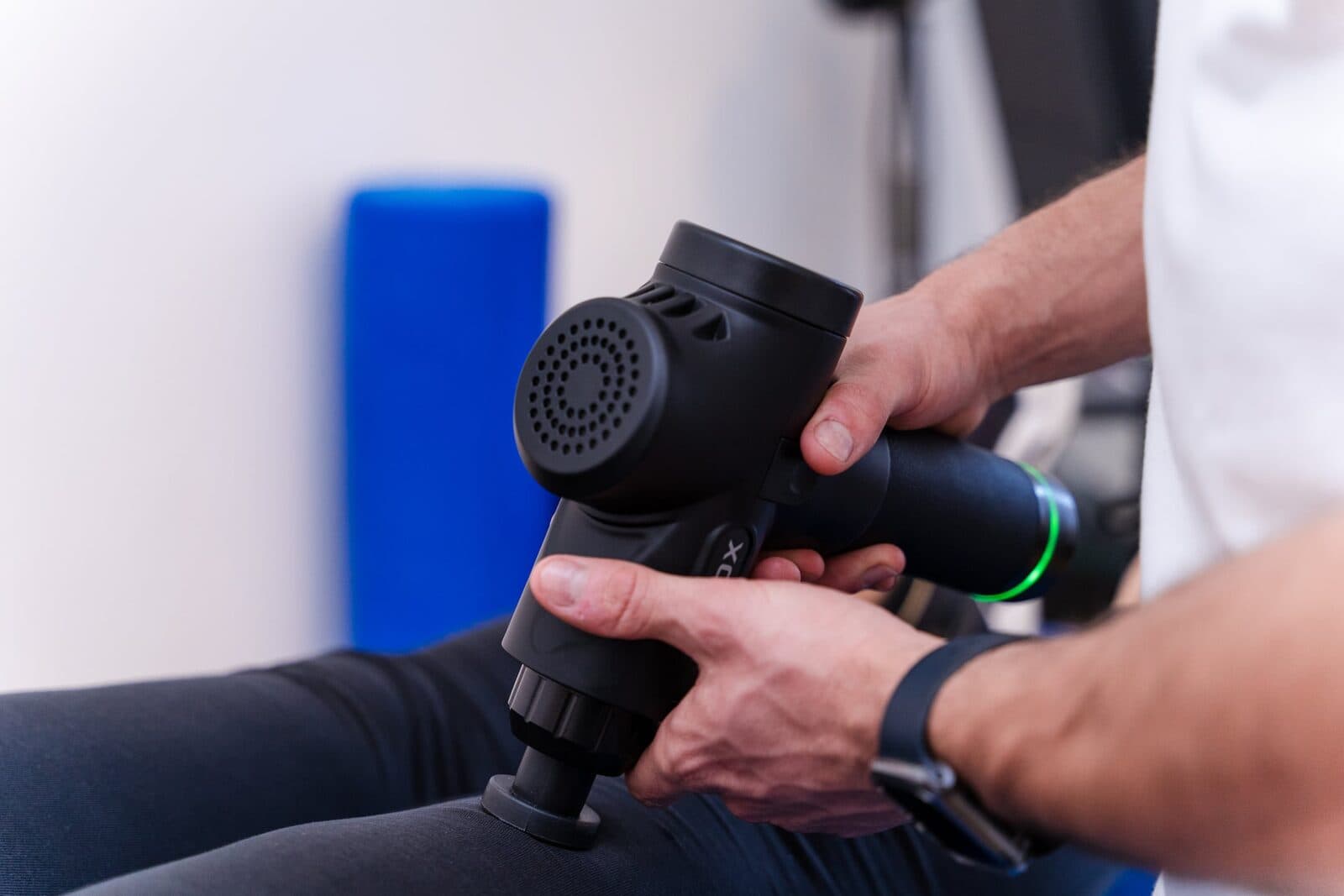
The broadest systematic review on sports massage collected 29 randomised studies and 1,012 participants. It found no evidence that massage improves strength, jumping, sprinting, endurance or fatigue. It found small but statistically significant improvements in flexibility and soreness.
The umbrella review published in 2025, which analysed 29 systematic reviews and 863 randomised studies on 24 different treatments, places massage among the techniques with some support for reducing pain at 24, 48 and 72 hours. The same authors, however, note that 17 of the 29 reviews were of critically low methodological quality and only two were of high quality.
The honest reading is this: massage reduces the painful sensation a little and makes you feel better. There is nothing to indicate that it releases a knot or speeds up the healing of the tissue. Feeling better is not nothing, but it is not the same thing.
Heat and cold
Here I have to correct something I wrote myself in an earlier version of this article, and which is repeated everywhere: that for a strain heat is needed, and for a pull, ice.
The meta-analysis of 32 randomised studies and 1,098 participants measured both. Cold applied within an hour of exercise reduces pain in the first 24 hours. Heat reduces it both within 24 hours and beyond, and the warm pack turned out to be the modality with the most evident effect.
The point is the direct comparison: between the heat group and the cold group there was no significant difference (p = 0.16). So the rule "heat for a strain, ice for a pull" has no solid basis. For benign overload, choose whatever gives you relief. Ice with compression remains part of the acute management of a trauma or a structural injury.
What has the best evidence: moving early and loading in stages
The only direction in which the data are most consistent is also the least spectacular.
In the randomised trial of 50 amateur athletes with a serious thigh or calf injury, early start of rehabilitation was compared with a delayed one. At five weeks, three and six months, strength was similar in the two groups, and the structural recovery seen on MRI was the same too, with a non-significant trend towards less pain and more confidence in the early group.
The same authors note the paradox: early start speeded up the return to sport, but their tissue data do not explain why.
This is a result to be read carefully: it says that starting early does not damage the tissue and does not lead to less strength recovery. It does not say that a magic protocol exists. Together with the trial on early lengthening, the message is: what counts is getting moving again, not rushing to push on lengthening.
On prevention, on the other hand, the data are strong. The meta-analysis of six randomised studies and 7,738 participants aged 12 to 40 estimated that strength training reduces the risk of injury to about one third (relative risk 0.338), with a dose-dependent effect: a 10% increase in strength-training volume was associated with more than four percentage points less risk.
In practice, translated to the front of the thigh:
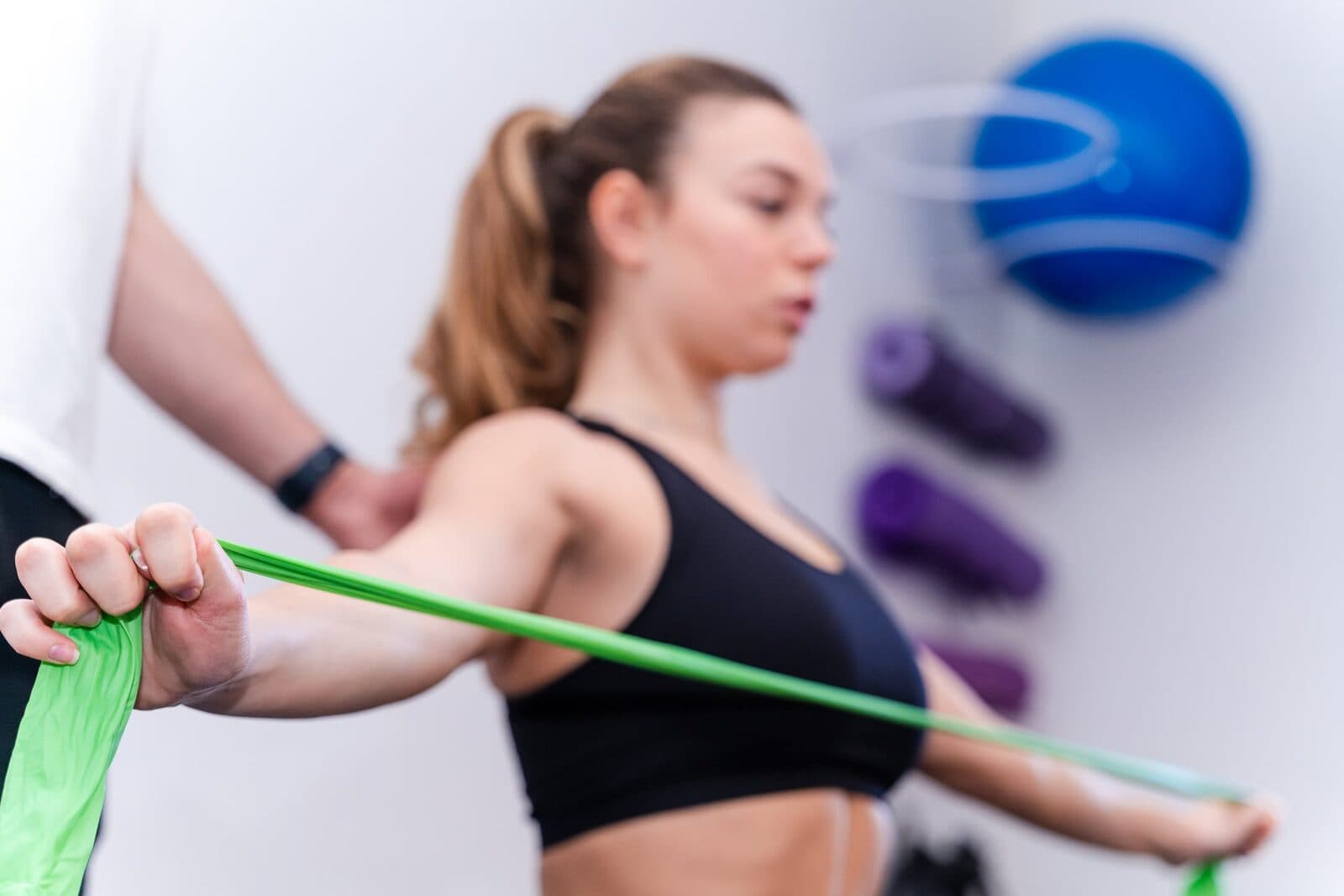
- in the first days, remove the movement that makes the pain flare up, but keep walking and bending the knee within the range you tolerate
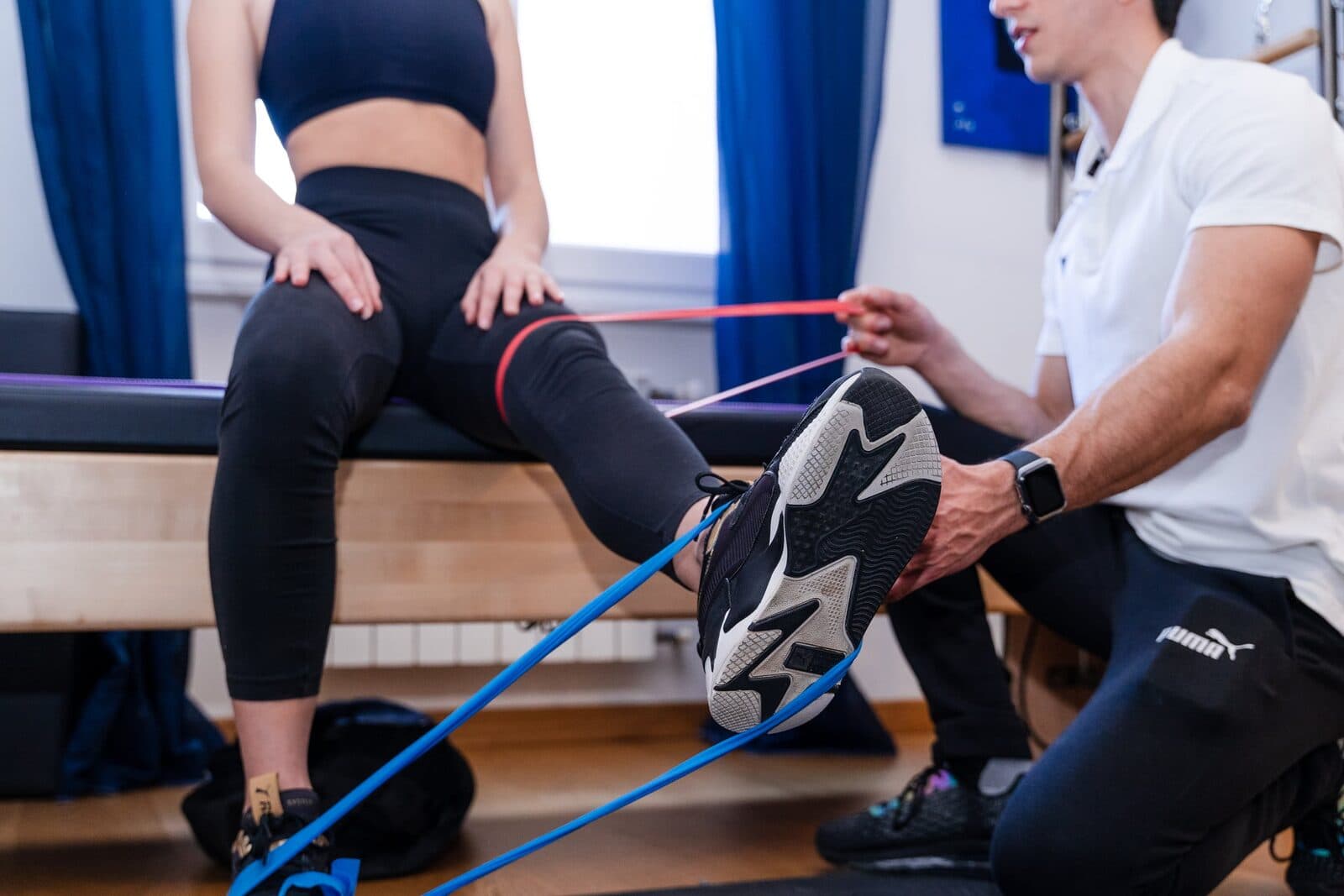
- rebuild progressive load as soon as the pain allows, starting with controlled exercises such as mini squats and low-load leg extensions
- then move on to eccentric work and gait, before returning to sprinting or kicking
The moment of highest risk is precisely the one in which it stops hurting: why pain that goes away does not mean you have healed.
- the criterion is not the calendar but the response: the pain must not increase during the exercise, and the day after you should be as you were or better
- if the problem recurs, strength work should be kept up even when you feel well, and it is what you find in the quadriceps strengthening exercises
On sets and repetitions I have to be clear: the numbers you read around, including mine, do not come from studies that have compared them with one another. They are reasonable clinical practice, not evidence.
How long it really takes
The two ends are very far apart, and this is what makes a single answer useless.
On the benign side, the surveillance of US university athletes found that 79.3% of quadriceps strains limited participation for less than a week. This is the case for the great majority of "strains".
On the side of real injuries, in elite Australian football the return to activity was on average 25.4 days, and rectus femoris injuries took about 14 days longer than those of the vasti.
In the nine-year study of British athletics, the return to full training for rectus femoris managed in rehabilitation averaged 20.4 days, with a standard deviation of 14.8: enormous variability.
In the same study, injuries that extended into the tendon had significantly longer times, and grade 3 injuries recurred more often. These are data on elite athletes followed daily, so they should be taken as an order of magnitude, not as a promise.
One last number explains why gradual return is not generic advice about caution: in the review on quadriceps injuries, recurrences reach up to 67% in severe proximal injuries. And in the Australian register 70% of recurrences happened within six months of the previous injury, all of them involving the rectus femoris.
If you have pain in the front of the thigh that keeps coming back, an assessment with a physiotherapist serves above all to work out whether you are treating an overload or whether you are reopening the same injury each time.
If the picture is wider than the quadriceps alone, I discuss it in pain in the front of the thigh.
How to reduce the chances of it coming back
- Progress in stages, especially when you return after a break: the pre-season data say that is where the risk concentrates.
- Keep up a steady strength routine: it is the prevention strategy with the strongest evidence.
- Do not add more volume and more intensity in the same week, and change one variable at a time.
- Kicks and sprints are the movements that do the lion's share in the registers: when you return they should be reintroduced last, not first.
- Do not consider an episode resolved just because the pain has gone: the window of risk for recurrence lasts months.
In summary
- "Strain" is a word in common use, not a diagnosis with shared criteria. The international consensus distinguishes functional disorders with no tearing of fibres from structural injuries, and does so at the level of expert opinion.
- The palpable "knot" is a weak reference: agreement between examiners in palpating trigger points is modest, with kappa 0.452.
- Gradual onset after an increase in load is a different thing from pain that came on suddenly during a sprint or a kick, with the impossibility of carrying on.
- Stretching and massage have real but small effects on pain, and no evidence of speeding up healing. Heat and cold both work, with no significant difference between them.
- What holds up best is getting moving again early and loading progressively, while for prevention strength training cuts the risk to about one third.
- Inability to extend the knee with a gap above the kneecap, a very tense thigh after an injury, dark urine after extreme effort or fever: you get checked straight away, you do not wait.
If you often use massage and the strain keeps coming back, the reason is explained in Decontracting massage: when it helps and when it does not.
Sources
Plastow R, et al. Quadriceps injuries (The Bone and Joint Journal, 2023)
Rodriguez J, et al. Surgical demographics of acute thigh compartment syndrome (Injury, 2022)
Last source check: August 2026.
Wondering how much it would cost to be followed? The price depends on how many sessions are needed, not on the single rate: the figures are in How much knee physiotherapy costs.
Need a consultation?
Let's see whether a programme makes sense for you: a few questions about your case, you register, and see who will follow you: a physiotherapist on the Italian professional register, to whom you write in chat whenever you like. If you prefer to talk it through by voice, the first consultation is free, lasts twenty minutes and commits you to nothing: they arrive having already read what you wrote, and together you decide whether and how to continue.