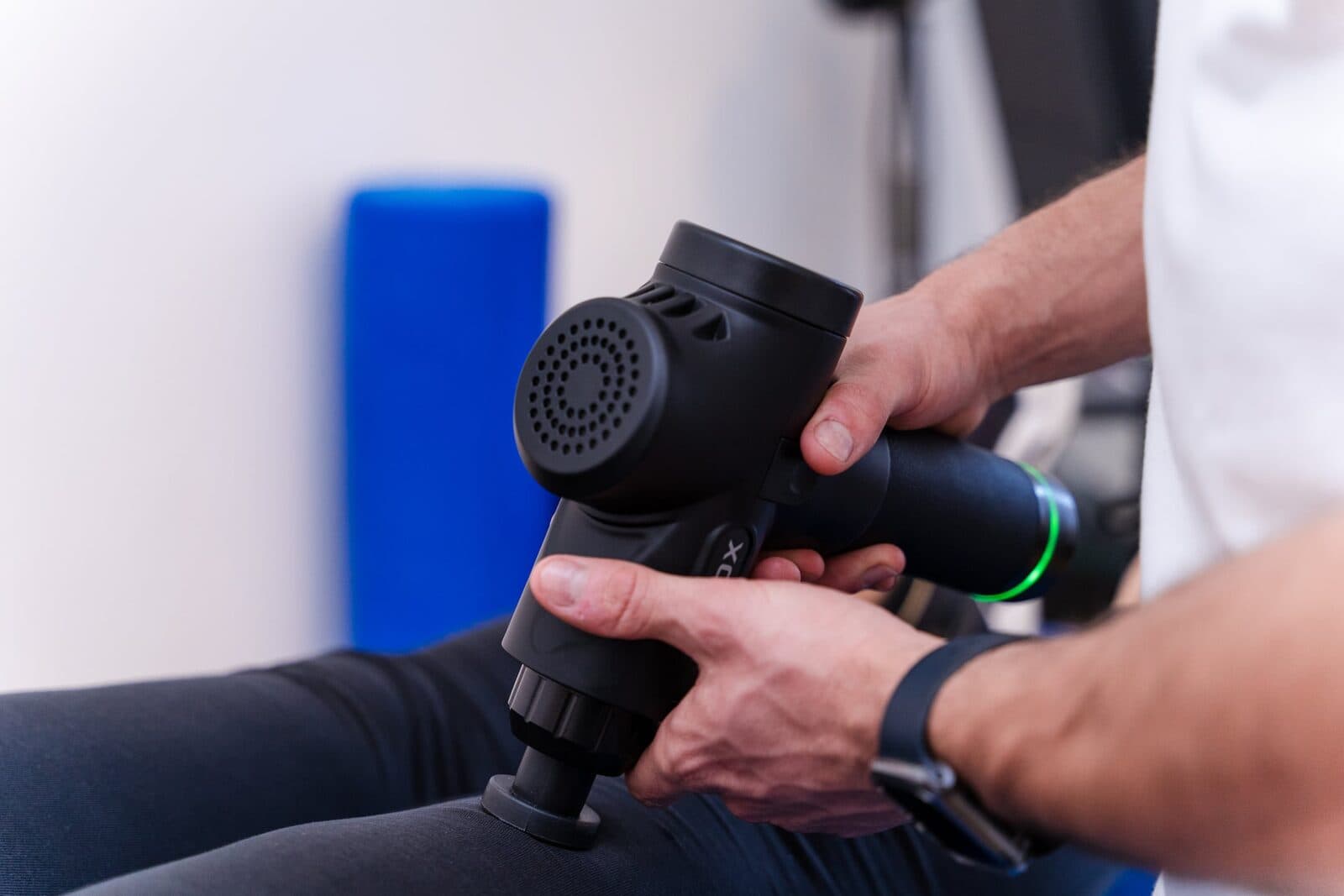
Flat bench press and shoulder pain are a pairing that anyone who goes to the gym knows only too well. Shoulder pain during or after the flat bench press is one of the most common problems among people who lift weights. If you also have shoulder discomfort linked to the bench press, this guide will help you understand the causes and, above all, how to solve the problem without giving up your favourite exercise.
The bench press is a fundamental exercise for developing the chest muscles, but it can put the shoulders under strain if performed with poor technique or without adequate preparation. Understanding the relationship between the bench press and the shoulder is essential for training safely and progressing without injury.
⚠ Important: read this before continuing
The exercises and advice in this article are general indications and may not suit your situation. Every person has a unique clinical history: what works for others could be counterproductive for you.
Want a professional's opinion? Start from the questionnaire: you register and see who will follow you, a physiotherapist on the Italian professional register chosen for your case, whom you can write to in chat. If you would rather hear their voice, the first consultation is free and we look at your situation together.
Why the Bench Press Hurts the Shoulder
The pain can come from different places. Identifying the specific one is the first step to solving the problem.
The position of the shoulder blades is often the main problem on the bench. Shoulder blades that are not retracted and depressed leave the shoulder in a vulnerable position. Each repetition compresses the rotator cuff structures against the acromion, causing progressive irritation.
The width of your grip directly affects the load on the shoulder during the bench press. A grip that is too wide increases stress on the front structures of the shoulder. People who have discomfort often do better with a slightly narrower grip.
The angle of the elbow is another critical factor. Elbows that are too far out (at 90 degrees to the torso) maximise stress on the shoulder. Keeping the elbows between 45 and 75 degrees from the torso reduces the load on the joint.
Anatomy of the Problem
Understanding which structure is involved helps you choose what to change.
The rotator cuff is often the main victim of the bench press. These four muscles (supraspinatus, infraspinatus, teres minor and subscapularis) stabilise the head of the humerus in the glenoid cavity. During the bench press, they are subjected to considerable stress.
An important point: before trying these exercises, make sure you have received a correct diagnosis. People often think they have one problem, but the real cause of the pain is something else. Performing the wrong exercises can make the situation worse instead of better.
The long head of the biceps tendon runs through the shoulder and can become irritated by the bench press. The typical pain is located at the front of the shoulder, in the bicipital groove.
The joint capsule and the glenohumeral ligaments can be stressed by the bench press, especially in the phase of maximum lowering of the bar when the shoulder is at maximum extension and external rotation. People who suffer from shoulder pain often recognise this pattern.

Common Technical Errors
Correcting your technique is often enough to make the discomfort go away.
Flat shoulder blades on the bench are the most frequent error. Throughout the whole bench press, the shoulder blades must be retracted (drawn together) and depressed (lowered). This creates a stable base and places the shoulder in the optimal position.
Bouncing the bar off the chest is the other error that makes things worse. Using momentum to lift the weight stresses the joints instead of the muscles. The movement must be controlled, with a brief pause on the chest.
Lifting your glutes off the bench during the effort changes the working angle and increases stress on the shoulder. For a safe bench press, always keep your glutes and shoulder blades in contact with the bench.
Correct Technique
Here is how to perform the bench press while minimising stress on the shoulder.
Before unracking the bar, set up your position: retract your shoulder blades by squeezing them together, then lower them towards your glutes. Hold this position for the whole set. It is the foundation of a press the shoulder can tolerate.
Grip the bar with a hand position that lets your forearms be vertical when the bar is on your chest. For the bench press, this usually means a slightly narrower grip than the one you would instinctively use.
During the descent, bring your elbows to 45-60 degrees from the torso, not 90 degrees. The bar should touch your chest at nipple level or slightly below. This is the path that loads the joint least.
Preventive Exercises
Strengthening the rotator cuff and the scapular stabilisers is the measure that holds up best in the studies: it is strength work, and strength work is the only item that really reduces injuries.
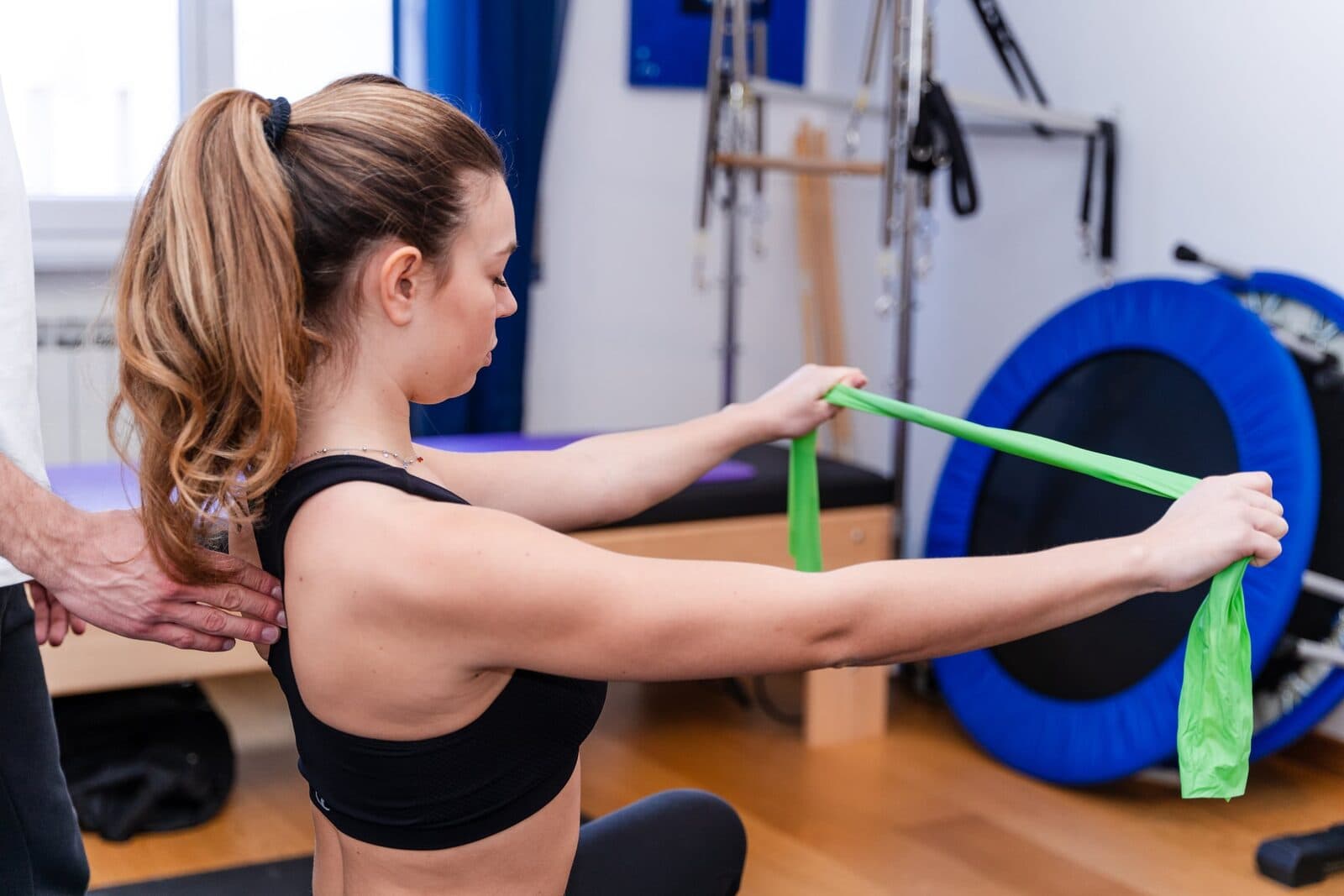
External rotations with a band or cable are fundamental. This exercise strengthens the external rotators (infraspinatus and teres minor) that balance the work of the front muscles in the bench press. Do 15-20 repetitions per side, 2-3 times a week.
Face pulls strengthen the muscles at the back of the shoulder and the shoulder blades. For people who do a lot of bench press, face pulls are the perfect counterbalance to the front-side work. Include them in every upper body session.
Thoracic mobility work is often overlooked but essential. A stiff thoracic spine forces the shoulder to compensate during the bench press. Mobility exercises for the spine reduce this stress.
Safer Variations
If the discomfort persists, some variations let you keep training.
The floor press (bench press on the floor) limits the range of movement, reducing stress on the shoulder in the critical phase. It lets you keep working the chest even when the flat press causes discomfort.
Dumbbells offer more freedom of movement than the barbell. The shoulder can find the most comfortable angle during the exercise. When the joint is irritable, dumbbells are often better tolerated, because they let the arm rotate in the way it prefers.
An incline or decline bench changes the working angle and can reduce the pain. Trying different angles helps you find the one your shoulder tolerates.
The Warm-Up
A well-done warm-up reduces discomfort during the heavy sets.
Start with 5-10 minutes of light cardiovascular activity to raise your body temperature. Arriving at the heavy sets with the joint already moving reduces discomfort.
Do shoulder mobility exercises: circles, internal and external rotations, extensions behind the back. Before the bench press, the shoulders must be fully mobile and ready.
Do progressive warm-up sets with the empty bar, then with increasing loads. Never jump straight to the working load without this gradual preparation. Three or four sets with increasing load before the working set are the sensible minimum.
When to Stop
Recognising when to stop is what keeps a discomfort from turning into a long-lasting problem.
Acute pain during the movement is a clear warning sign. Continuing with pain always makes the situation worse. If you feel shoulder pain during the bench press, stop the set immediately.
Pain that lasts for hours after training means you have exceeded the tissues' capacity to recover. Reduce the load or the volume in your next bench press sessions.
If the pain wakes you at night or limits your daily activities, you need a professional assessment. A discomfort that lasts more than one or two weeks should not be left to run its course.
Recovery and Rehabilitation
If the problem is already there, here is how to set up your recovery.
Active rest is preferable to complete rest. Avoid the painful movements but keep moving the shoulder in a non-traumatic way. One or two weeks off the flat press are often enough: a break from that movement, not from everything.
Ice after training, for 15-20 minutes, is low risk and can give you relief. It is worth being honest about what it does: it acts on the pain, and no review has ever measured faster healing thanks to cold. The full picture is in ice or heat: what the studies really say.
A physiotherapist can speed up recovery with manual techniques and a specific exercise programme. Ri-Hub offers online physiotherapy sessions at 29,90€ to guide you through recovery from the problematic bench press.
Conclusion
Shoulder discomfort with this exercise is common and in most cases is resolved with technical corrections and strength and mobility work. You do not have to give up the flat bench press, but learn to do it more intelligently.
If the pain persists despite the corrections, do not wait for it to get worse. Ri-Hub physiotherapists can assess your situation and create a personalised recovery and prevention programme through telerehabilitation, helping you return to training without pain, comfortably, with online sessions.
Sources
Last source check: September 2026.
You might also be interested in:
Back Pain Causes and Remedies: Complete Guide to Eliminating the Pain Neuroplasticity and Pain: How the Brain Can Change Tennis Elbow: Complete Prevention for Players
Stay in touch with us Join our dedicated Facebook group: we reply to all patients, give practical advice and clear up the most common doubts.
Need a consultation?
Start from the Ri-Hub questionnaire: a few questions about your case, you register, and you see who will follow you: a physiotherapist on the Italian professional register, whom you can write to in chat whenever you like. If you would rather talk it through by voice, the first consultation is free, lasts twenty minutes and commits you to nothing: they arrive having already read what you wrote, and together you decide whether and how to proceed.