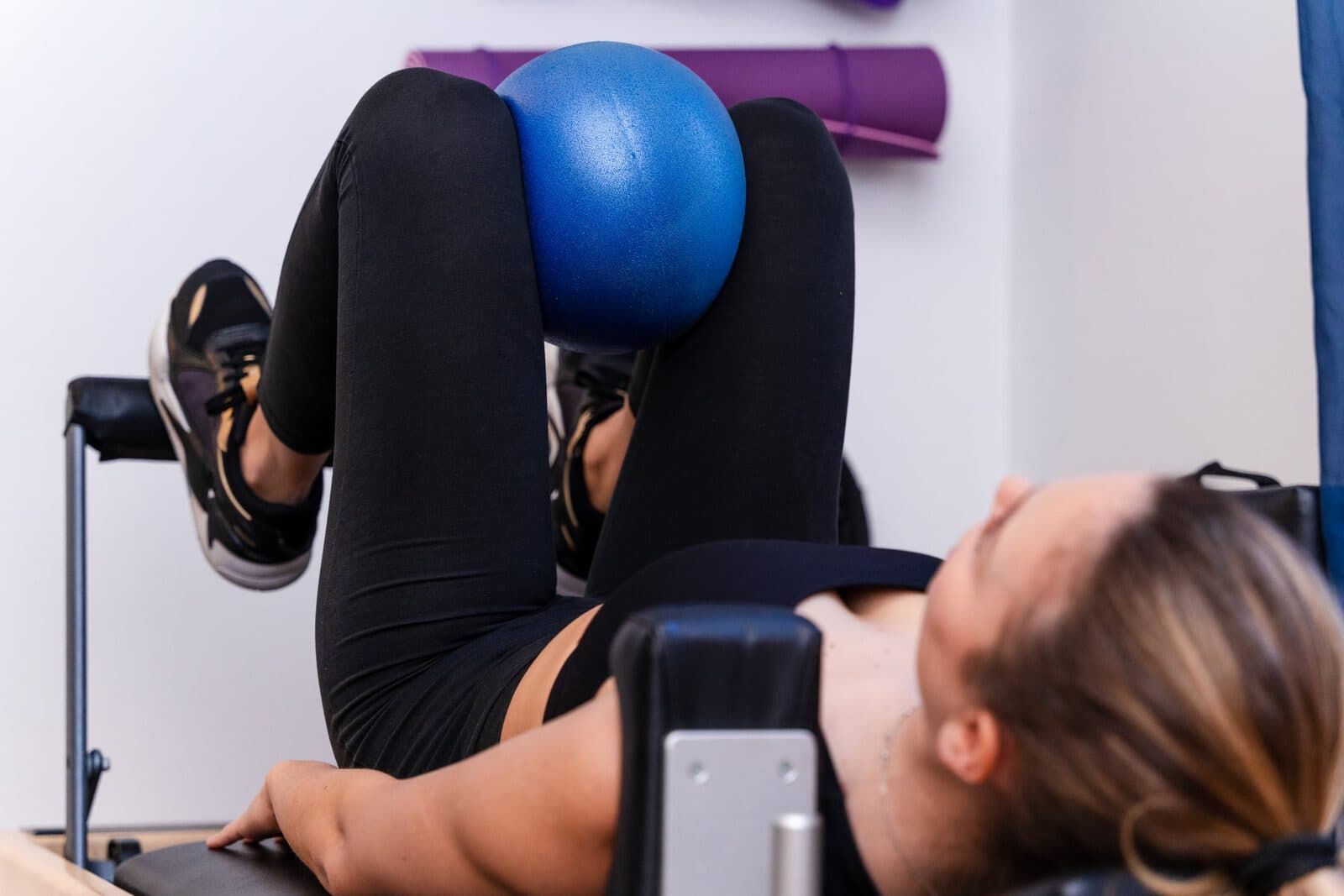
Cardiac rehabilitation: a structured pathway for people who have had a heart attack, a bypass, an angioplasty or a valve operation. It is not "a bit of gymnastics after hospital": it is exercise prescribed after an assessment, plus education, correction of risk factors and psychological support.
You will also find it called cardiological rehabilitation: it is the same thing, and the guidelines use the two terms as synonyms. Only the habit of the writer changes.
On this subject a sentence circulates that you will find repeated everywhere, often even on serious sites: "it reduces mortality by 20-30%". When you read the most recent meta-analyses, that figure does not hold up in the form in which it is told. The benefit exists, it is documented and it is important, but it is more precise and more limited. It is worth starting from there, because knowing what to expect changes the way you approach the pathway.
⚠ Important: read this before continuing
The exercises and advice in this article are general guidance and may not suit your situation. Every person has a unique clinical history: what works for others could be counterproductive for you.
Want a professional's opinion? Start with the questionnaire: you register and see who will follow you, a physiotherapist registered with the Albo, chosen for your case, whom you write to in chat. If you would rather hear their voice, the first consultation is free and we look at your situation together.
First of all: the signs that mean you must stop
This is the only truly urgent paragraph of the article, and that is why it sits at the top. Anyone with a known heart condition must be able to tell the normal fatigue of training apart from the signs that need medical attention.
Stop the activity and seek medical help, calling 112 if the symptoms are intense or do not pass:
- Pain, heaviness or tightness in the centre of the chest, especially if it appears at rest, lasts more than a few minutes, or does not resolve with rest and with the medicine you have been prescribed.
- Pain that radiates to the arm, jaw, neck or back, particularly if accompanied by cold sweats or nausea.
- Sudden breathlessness or breathlessness out of proportion to the effort you are making.
- Fainting or a feeling that you are about to faint, severe dizziness during or straight after exercise.
- Palpitations with a very rapid or irregular heartbeat, especially if associated with dizziness or shortness of breath.
- Rapid weight gain over a few days, swelling in the ankles, breathlessness when lying flat or waking at night gasping for air: these are signs of fluid retention that the cardiologist must assess.
- Surgical wound (after a bypass or valve operation) that becomes red, discharging or painful, or a sternum that "clicks" and moves: it must be seen straight away, not left until the scheduled check.
- Calf that is swollen, warm and painful on one side only, especially after a period of immobility.
One last note, equally important: if you have had a cardiac event and nobody has talked to you about cardiac rehabilitation, do not take it for granted. Ask the cardiologist actively. It is one of the most common omissions in the pathway.
What the studies really show
This is the honest heart of the article, the part that is rarely written down.
The most solid synthesis available is a Cochrane review that gathered 85 randomised studies on 23.430 people with ischaemic heart disease, comparing exercise-based cardiac rehabilitation with a control without exercise. The same body of data was then republished as a meta-analysis in the European Heart Journal. Here is what emerged.
On all-cause mortality the benefit is not demonstrated. In the overall meta-analysis the relative risk is 0,96, with a confidence interval from 0,89 to 1,04: the result includes the absence of an effect. In the Cochrane review, at 6-12 months, we are talking about a probable slight reduction (relative risk 0,87, from 0,73 to 1,04), and at longer follow-up about "little or no difference". Put simply: nobody has shown that cardiac rehabilitation makes you live longer in general.
On cardiovascular mortality the benefit is there, but it appears over time. The meta-analysis reports a relative risk of 0,74 (from 0,64 to 0,86), with a number needed to treat of 37: this means that, on average, 37 people need to follow the programme for one more person to avoid a death from cardiovascular causes. It must be said in full, however: in the Cochrane review, within the first 6-12 months the difference is not visible (relative risk 0,88, from 0,68 to 1,14, across 15 studies). The advantage emerges later, at 12-36 months (0,77, from 0,63 to 0,93) and above all beyond 3 years (0,58, from 0,43 to 0,78, across 8 studies). It is a benefit that builds up over years, not weeks.
On new events and admissions the benefit is more solid, with one exception. The heart attack rate falls: relative risk 0,82 (from 0,70 to 0,96) in the meta-analysis, with a number needed to treat of 100; in the Cochrane review at 6-12 months 0,72 (from 0,55 to 0,93), with high-certainty evidence and a number needed to treat of 75. The exception, which must be stated: in the intermediate band (12-36 months) the difference on heart attack disappears (1,07, from 0,91 to 1,27), only to reappear beyond 3 years (0,67, from 0,50 to 0,90).
On hospital admissions too, the two works give two different numbers, and it is useful to know which one you are reading. In the Cochrane review, at 6-12 months, the relative risk of admission for any cause is 0,58 (from 0,43 to 0,77), with a number needed to treat of 12. In the overall meta-analysis the benefit is more modest: 0,77 (from 0,67 to 0,89), with a number needed to treat of 37. And the authors of the Cochrane review point out that precisely for admissions, and only for them, there is a sign of bias from small studies, that is, the risk that the most favourable figure is partly an artefact. The honest estimate lies between the two, and it remains one of the most useful results of the pathway.
On further angioplasty and bypass there was no difference. Cardiac rehabilitation did not reduce the need for new revascularisations.
How do you read all of this together? Cardiac rehabilitation is not the pill of immortality that is sometimes described. It is something more useful and more concrete: it reduces the likelihood of going back to hospital and of having another heart attack, and it reduces cardiac mortality. If you have just come out of an acute event, "fewer admissions and fewer re-infarctions" is probably exactly what you want.
Two honest limits of this body of evidence, which nobody should hide. The first: women have historically been under-represented in studies, and they still make up less than 15% of the overall participants, although their share has grown over the last decade. The second: the quality of conduct and reporting of many studies has been judged poor, although it is improving. In plain terms: the estimates are good, they are not truths carved in stone.

Quality of life: be careful how it is described
Here too the nuance matters. In ischaemic heart disease the Cochrane review finds a possible slight improvement in quality of life across several subscales up to 12 months, but warns that these may not be clinically important differences. It is not "it changes your life": it is "a little better, perhaps".
In heart failure the picture is clearer. A Cochrane review on exercise-based cardiac rehabilitation gathered 60 studies and 8.728 participants. Quality of life was measured with the Minnesota Living with Heart Failure questionnaire, where a difference of 5 points or more is considered clinically relevant, in 22 of the comparisons available, across 2.699 participants: the average improvement was 7,39 points in favour of exercise (from 4,77 to 10,30), therefore above the threshold of relevance. One caveat: when you pool all the scales used across the various studies, and not only the Minnesota, the improvement remains but the certainty of the evidence becomes very low.
On admissions, in the same review, those for any cause fall (relative risk 0,69, from 0,56 to 0,86: from 23,8% to 15,9% in absolute terms, across 2.283 participants within 12 months). Those specifically for heart failure, on the other hand, show no statistically significant difference (0,82, from 0,49 to 1,35, across just 10 studies). And on all-cause mortality, again, no difference emerges (0,93, from 0,71 to 1,21, low certainty).
There is also a benefit that studies struggle to quantify but that people who work in rehabilitation see every day: confidence. After a heart attack many people stop moving because they are afraid that the effort will harm them. Exercising in front of a professional, and discovering that the heart holds up, gives back a freedom that no medicine can give.
Cardiac, cardiological, cardiosurgical: which name for which pathway
These are three words that are used as synonyms and that in fact indicate different starting points, although the work that follows is very similar.
Cardiological rehabilitation is the broadest term and the one most used by wards: it covers anyone with a heart condition to manage, with or without an operation behind them: after a heart attack, with heart failure, after an angioplasty.
Cardiosurgical rehabilitation, or post-operative, is the subset that starts from an open-heart operation: bypass, valve replacement or repair. Here what changes above all is the first phase, because there is a sternotomy to protect: in the first weeks you avoid pulling and asymmetric loads on the arms, you get out of bed by turning onto one side rather than pulling yourself up, and the surgeon sets the pace of progression. After that, the pathway follows the same track as the others.
The useful thing to know is that the name on the sheet does not change what works: dosed aerobic exercise, gradual strengthening, education about risk factors. What changes is where you start and which precautions apply in the first weeks.
Who benefits
Cardiac rehabilitation is indicated after myocardial infarction (both STEMI and NSTEMI), after angioplasty with or without a stent, after coronary artery bypass grafting, after valve surgery, in stable angina and in stable heart failure. The European guidelines on cardiovascular prevention recommend referral to a programme of this type for anyone with an established cardiovascular disease.
It is worth knowing who the studies were carried out on, because that is where the evidence is strongest. In ischaemic heart disease the population is mainly post-infarction and post-revascularisation. In heart failure, the evidence base concerns mainly patients with reduced ejection fraction and NYHA class II-III: older people, women and those with heart failure with preserved ejection fraction are still under-represented, although the more recent studies are closing the gap.
The phases of the pathway
Phase 1, in hospital. Cardiac rehabilitation begins during the stay, with early mobilisation, the first information about the disease and planning of what will happen after discharge. It is brief and serves mainly to stop deconditioning from adding to the damage to the heart.
Phase 2, supervised outpatient or home-based. This is the heart of the programme: prescribed and monitored exercise, structured education, control of risk factors. In the first sessions supervision is tighter, with electrocardiographic monitoring for patients at higher risk.
Phase 3, maintenance. It has no end date. It is the part that decides whether everything else will make sense years later, and it is also the part where most people get lost along the way.
One interesting finding from the analysis of the studies: the benefits did not vary significantly with the type of programme, the dose of exercise, the length of follow-up or the setting in which the programme was delivered. There is no magic formula to chase, in other words. There is the act of doing it, and of continuing to do it.
How exercise is set
Everything starts from a clinical assessment and, when indicated, an exercise test: it tells you how much capacity you have today and sets the range in which to work safely. It is the step that makes cardiac rehabilitation different from "going for a walk": the dose is calibrated to you, not copied from a template.
At the core is aerobic exercise (walking, cycling, treadmill) repeated several times a week, with gradual progression of duration and intensity according to how you respond. Intensity is prescribed starting from the data collected in the test and from the perception of effort, not by feel. Aerobic work is usually supplemented by low or moderate intensity muscle strengthening: in the analyses on heart failure, the results of programmes with aerobic work alone and of those that added strengthening were substantially the same, so strengthening should be seen as an additional tool for everyday life, not as the decisive ingredient.
An important tip: before trying these exercises, make sure you have received a correct diagnosis. People often think they have one problem, but the real cause of the pain is something else. Doing the wrong exercises can make the situation worse instead of better.
Education, risk factors and diet
The educational part of cardiac rehabilitation is worth as much as the motor part, and sometimes more. It serves to answer the questions that nobody asks on the ward: what exactly happened to my heart, why am I taking these medicines and what happens if I skip one, when can I go back to driving, to work, to having a normal sex life.
On the risk factor front, the work concerns smoking, blood pressure, cholesterol, blood sugar, weight and inactivity: these are the same levers that the European prevention guidelines focus on. For diet the reference remains the Mediterranean model, with attention to the amount of salt, the choice of fats and body weight; where the programme provides for it, a dietitian's advice makes everything far more concrete than a list of prohibitions.
The mind, after a cardiac event
This is the part that is handled worst, and the numbers explain why. A systematic review with meta-analysis that included only studies with a formal psychiatric diagnosis (a structured interview conducted by a psychiatrist according to DSM criteria, not self-completed questionnaires) estimated, after acute myocardial infarction, a prevalence of depression of 23,58% (95% confidence interval 22,86-24,32) across 20 studies. When the estimate is separated by timing of the assessment, however, the values fall: 19,46% within 3 months of the infarction and 14,87% beyond 3 months. Anxiety stands at 11,96% and post-traumatic stress disorder at 10,26%, but here the studies are 7 and 3 respectively and the confidence intervals are very wide (from 6% to 22% for anxiety, from 5% to 18% for PTSD): these are orders of magnitude, not precise measurements. The subgroup analysis on depression and anxiety finds higher percentages in women (29,89%) and in people with hypertension, diabetes, dyslipidaemia or who smoke; a previous depressive episode is the only factor found to be significant in the meta-regression, and in that subgroup the prevalence rises to 57,41% (with a very wide interval, 31-79%).
The practical message, setting aside the fluctuations between estimates, is that we are talking about one person in five or one in four. It is not a failing of character and it is a legitimate part of cardiac rehabilitation: group sessions, peer support, stress management techniques and, when needed, structured psychological support have the same right to a place as the exercises.
Safety: where it really lies
In supervised programmes the exercise takes place with trained staff and emergency equipment available, and patients are stratified by risk so that the level of monitoring can be adapted. In the randomised studies no sign of harm emerged in the groups that trained; it must be said with equal honesty that those studies were not designed to measure rare adverse events, so no precise rate of complications can be derived from them.
The practical conclusion, however, is solid and points in the opposite direction to the most common fear. The risk does not lie in moving after a cardiac event: it lies in moving without anyone having established how much and how. Cardiac rehabilitation is, quite literally, the way of making exercise safe in a person with a diseased heart.
Why so many people do not do it
The paradox of cardiac rehabilitation is that it is an intervention with robust evidence and at the same time widely under-used. The reasons are always the same: the programme is not offered at discharge, the centre is far away or the timetable is not compatible with work, the waiting list is long, and above all there is fear: of exerting yourself, of feeling that chest pain again, of discovering that you cannot manage it.
The first three barriers are organisational and partly avoidable, as we will see shortly. The last one dissolves in only one way: by training for the first time with someone beside you who knows how to read what is happening.
At home or at a centre?
This is the question on which direct data exist. A Cochrane review updated to 2023 compared home-based cardiac rehabilitation (including with digital and telemedicine support) and that delivered at a centre, across 24 randomised studies and 3.046 participants with infarction, revascularisation or heart failure.
Up to 12 months no differences emerged in total mortality (relative risk 1,19, from 0,65 to 2,16) or in exercise capacity (standardised mean difference −0,10, from −0,24 to 0,04). On quality of life, 71 of 77 comparisons showed no significant differences up to 24 months. The percentage of people who completed the programme was similar in the two groups, and the cost per patient was comparable.
Three caveats before drawing the wrong conclusion. The certainty of the evidence is low for the main outcomes. The studies were almost all short. And, above all, the home programmes were formally supervised by healthcare staff: they were not a video, a leaflet or an app left to the patient's own initiative. When the review says that home and centre are equivalent, it is talking about home with someone following you.
Where Ri-Hub's telerehabilitation fits
Clarity is needed here, because this is the part where it is easiest to promise too much. Ri-Hub is a physiotherapy service by video call: it is not a phase 2 cardiac rehabilitation programme with electrocardiographic monitoring, it does not replace the risk stratification by the cardiologist, and it does not prescribe therapies. If your centre offers a structured cardiological pathway, that comes before anything else.
It makes sense instead as a complementary support, and that is where a physiotherapist really serves a purpose: in the maintenance phase, when the official programme has ended and consistency starts to crumble; in recovering mobility after a sternotomy, within the constraints of the case; in general deconditioning after weeks of inactivity; in managing musculoskeletal pains that add to the cardiac picture and that are often the real reason people stop walking.
With Ri-Hub you can access this kind of support at 29,90 euros per session, always with your cardiologist's go-ahead on what you can do and which limits to respect.
In summary
Cardiac rehabilitation is one of the best-studied interventions in cardiology, and the evidence says one precise thing: it reduces the risk of re-infarction, reduces admissions, reduces cardiovascular mortality over the medium to long term and improves quality of life, clearly in heart failure and more modestly in ischaemic heart disease. It has not, however, been shown to reduce all-cause mortality, and whoever tells you it does is simplifying a figure.
That is not a reason to forgo it. It is a reason to do it with the right expectations. If you have had a heart attack, heart surgery or live with a heart condition, ask your doctor whether you are a candidate for a cardiac rehabilitation programme, and if distance or timetables are an obstacle, ask whether a supervised home version exists, because the available evidence does not treat it as a second-best option.
You might also be interested in:
Stay in touch with us
Join our dedicated Facebook group: we reply to all patients, give practical advice and clear up the most common doubts.
Sources
- Exercise-based cardiac rehabilitation for coronary heart disease. Cochrane Database of Systematic Reviews, 2021
- Exercise-based cardiac rehabilitation for coronary heart disease: a meta-analysis. European Heart Journal, 2023
- Exercise-based cardiac rehabilitation for adults with heart failure. Cochrane Database of Systematic Reviews, 2024
- Home-based versus centre-based cardiac rehabilitation. Cochrane Database of Systematic Reviews, 2023
- 2021 ESC Guidelines on cardiovascular disease prevention in clinical practice. European Heart Journal, 2021
- Prevalence of Depression, Anxiety and Post-Traumatic Stress Disorder (PTSD) After Acute Myocardial Infarction: A Systematic Review and Meta-Analysis. Journal of Clinical Medicine, 2025
Ultima verifica delle fonti: agosto 2026.
Need a consultation?
Start with the questionnaire on Ri-Hub. A few questions about your case, you register, and you see who will follow you: a physiotherapist registered with the Albo, whom you write to in chat whenever you like. If you would rather talk it through by voice, the first consultation is free, lasts twenty minutes and commits you to nothing: they arrive having already read what you wrote, and together you decide whether and how to go on.