Neck pain and nausea: a combination that very many people report. The neck pulls, the head feels heavy, and together comes that closed-stomach feeling that ruins the day. Those who experience it almost always become convinced of the same thing: "it is the neck that is making me feel sick".
Here, however, we have to be honest, because this is health information and it is worth getting it right. That the two conditions appear together is documented. That the neck is what causes the nausea is not. It is a difference that seems subtle and yet changes everything: it changes the tests to do, it changes the treatment and it changes the expectations about how long it will take to feel better.
In this article you will find what the research really says, which causes should be ruled out before blaming the vertebrae, which signs call for a trip to hospital and what physiotherapy can reasonably offer you.
⚠ Important: read this before continuing
The exercises and advice in this article are general guidance and may not suit your situation. Every person has a unique clinical history: what works for others could be counterproductive for you.
Want a professional's opinion? Start with the questionnaire: you register and see who will follow you, a physiotherapist on the Italian professional register chosen for your case, whom you can write to in chat. If you would rather hear their voice, the first consultation is free and we look at your situation together.
First of all: the signs you must not put off
In most cases neck pain and nausea are benign and bothersome disorders. But nausea is a symptom that the nervous system also produces when something serious is happening inside the head or in the vessels of the neck. This is why the warning signs must be read at the start, not at the end.
Go to the emergency department, without waiting, if alongside the nausea even one of these appears:
- a sudden, very violent headache, the worst of your life;
- high fever with neck stiffness (you cannot bring your chin to your chest);
- confusion, unusual drowsiness, difficulty speaking;
- loss of strength or sensation in an arm, a leg or half of the face;
- double vision, a sudden drop in vision, difficulty swallowing, marked unsteadiness when walking;
- vomiting that does not stop, especially in the morning and with a headache that gets worse when lying down.
A separate chapter is deserved by dissection of the cervical arteries: a tear in the wall of the carotid or vertebral artery, which is one of the main causes of stroke in young adults and which can start deceptively, with headache, neck pain or dizziness that seem trivial. The situations to keep an eye on are neck or nape pain that comes on suddenly, often described as different from any previous pain, perhaps after a trauma, a sharp manipulation, a violent cough or intense effort. If you recognise yourself in this picture, medical assessment comes before any exercise and any massage.
Neck pain and nausea: what the research really says
Let us clarify the central point, because online it is described with a certainty that the data do not have.
What the literature has studied is not nausea, but dizziness of presumed cervical origin (so-called cervicogenic dizziness). And it is a clinical entity that is still controversial: it has convinced supporters and equally convinced opponents, there is no test that confirms it, and the diagnosis is reached only by exclusion, that is, after everything else has been ruled out.
One piece of data helps to put the phenomenon in proportion. A cohort study published in JAMA Otolaryngology-Head & Neck Surgery in 2024 compared, using the records of Taiwan's national health insurance, 3,638 people aged 60 and over with a new diagnosis of cervical spondylosis and the same number with lumbar spondylosis, statistically matched. After one year, the incidence of dizziness diagnosed in clinic was 10.2% in the cervical group against 8.6% in the comparison group: a relative risk of 1.20 (confidence interval 1.03-1.39) and an absolute difference of 1.6%. The authors conclude that the association exists, but that precisely this small difference between the groups shows how uncommon dizziness attributable to the neck is, and they urge clinicians to be wary of the diagnosis "it is the neck" based only on the presence of cervical spondylosis.
Keep in mind the limits of that figure: it concerns only people aged 60 and over, it is based on administrative diagnoses (the codes recorded at visits, not an assessment carried out specifically for the study) and it measures dizziness, not nausea. On nausea as a symptom generated by the neck, there are simply no studies confirming it.
There is also a fact that explains much of the confusion. According to a 2023 review on the relationship between neck pain and headache, a painful neck accompanies migraine and tension-type headache in between 73% and 90% of people: it is so frequent that it is considered part of the picture, and its presence is also a risk factor for these forms of headache. In other words: if you have neck pain and nausea, the neck pain is by no means proof that the problem starts in the neck. It is often migraine that also presents with a painful neck.
It is not surprising that a review dedicated to cervicogenic vertigo observes that vertigo associated with migraine could explain why some people with neck pain also have dizziness and others do not.
This does not mean your symptom is imaginary or that the neck has nothing to do with it. It means the order of the questions needs to be reversed: first you look for the cause of the nausea, then you assess how much the neck contributes.

Why the neck can still come into play
The most solid mechanism among those proposed concerns proprioception. The upper cervical spine is extremely dense with receptors that inform the brain about the position of the head in relation to the body; this information is constantly compared with that from the inner ear and the eyes. When the muscles and joints of the neck are painful, stiff or the result of a trauma, the signal arriving can be disturbed and the comparison between the three channels becomes inconsistent. It is the same kind of sensory conflict that lies behind motion sickness, and motion sickness, as is well known, causes nausea.
It is a physiologically plausible hypothesis, and on this basis neck sensorimotor rehabilitation has been built. But it remains a hypothesis: nobody has shown that correcting that disturbance makes the nausea go away.
Two useful clarifications, because more suggestive than well-founded explanations are in circulation:
- The vagus nerve. It is often read that neck tension "irritates the vagus" and triggers nausea. It is a fascinating explanation but without clinical demonstration: the vagus runs through the neck, but to claim that a muscle contracture activates it to the point of causing nausea is a leap that the evidence does not support.
- Pain itself. This, by contrast, is trivial and true: a very intense pain, wherever it is located, can cause nausea. If your neck pain is one of the acute and violent kind, the nausea may simply be the body's response to the intensity of the pain, and it tends to fade when the pain calms down.
Symptoms that appear together
When neck pain and nausea appear in the same picture, they are usually not alone. Recognising the companions helps to direct the diagnosis.
Dizziness and unsteadiness. These are the symptom most often associated. We discuss them in depth in the article on neck pain and vertigo, where you will also find the conditions that must be ruled out first.
Headache. A headache starting at the back of the neck and radiating forward suggests a cervical origin, but the distinction from migraine is far from straightforward, and nausea, it must be said, is a much more characteristic feature of migraine than of cervicogenic headache.
Stiffness and restricted movement. The neck moves less and with discomfort: this is the element on which physiotherapy has the most real room for action.
Discomfort with light or noise. If it appears, it shifts suspicion further towards migraine.
How to work out where it really comes from
Before attributing everything to the vertebrae, a competent professional goes through the causes that have nausea "as standard". Here are the ones to put on the table.
Vestibular migraine. International criteria recognise, among the symptoms that qualify the diagnosis, dizziness provoked by head movement accompanied by nausea, with episodes of moderate or severe intensity lasting between 5 minutes and 72 hours, in a person with a history of migraine and after other causes have been excluded. It is a diagnosis to put on the table first, because here nausea is not an occasional addition: it appears explicitly in the international diagnostic criteria.
Benign paroxysmal positional vertigo. Brief episodes of rotatory vertigo triggered by changing the position of the head, such as turning over in bed or looking up, often with intense nausea. It is diagnosed with specific manoeuvres and treated with repositioning manoeuvres, not with neck exercises.
Acute inner ear disorders. An intense and continuous vertigo, lasting hours or days, with nausea and vomiting and marked unsteadiness, requires medical assessment: it falls within the chapter of acute vestibular conditions, where the first task is to distinguish a peripheral cause from a central one.
Medications and other factors. Many medicines cause nausea as a side effect, as do reflux, fasting, anxiety and medication-overuse headache. They should be ruled out first, not last.
Whiplash. After a neck trauma, dizziness and nausea are frequently reported, and here the contribution of the neck is more credible than elsewhere. We discuss it in the article on whiplash.
Only when this list has reasonably been ruled out does it make sense to reason in terms of cervical origin. This is the correct way to use the idea of "neck pain and nausea": not as a starting diagnosis, but as a hypothesis that remains standing at the end.
An important tip: before trying these exercises, make sure you have had a correct diagnosis. People often think they have one problem, but the real cause of the pain is something else. Doing the wrong exercises can make things worse instead of better.
Exercises: what they can and cannot do
Let us put expectations in the right place. These exercises work on the neck: mobility, control, muscle tension, tolerance to movement. If the nausea depends on the neck, improving the neck may reduce it. If it depends on something else, the neck will feel better and the nausea will stay: that will be valuable information, not a failure.
Chin tuck (chin retraction). Seated, draw the chin back as if making a double chin, without lowering your gaze. It lengthens the back of the neck and activates the deep muscles that stabilise the upper cervical spine. It is the basic exercise for cervical control: if you want the detailed technique, we explain it in the chin tuck guide. A few slow repetitions, several times through the day, are worth more than a single intense session.
Gentle mobility in all directions. Rotations, tilts and flexion-extension performed slowly, within the range that does not cause symptoms. Avoid sudden movements and fast "circling": if they trigger vertigo or nausea, you are not training anything, you are just provoking the system.
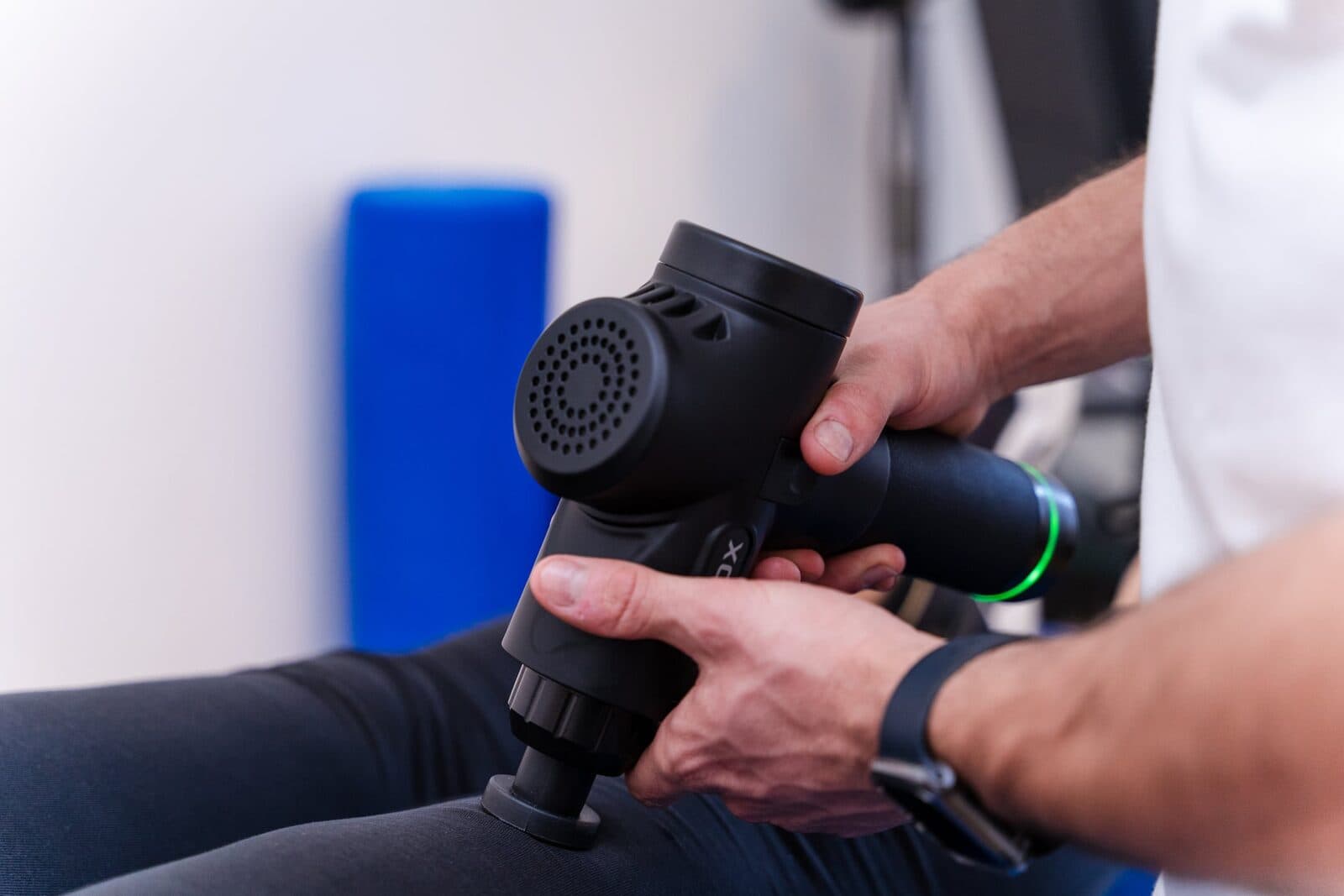
Release of the suboccipitals. The small muscles at the base of the skull are often painful in people with persistent neck pain. Gentle, sustained pressure with the fingertips, or lying down with two tennis balls in a sock, is generally well tolerated. It serves to reduce local discomfort: it is not an "anti-nausea" manoeuvre.
Slow breathing. Breathing with the diaphragm, lengthening the exhale, lowers the overall level of activation and for many people makes nausea more bearable. It is a strategy for managing the symptom, and should be presented as such.
One rule only, but a firm one: if an exercise provokes strong dizziness, increasing nausea or headache, stop. It is not "the body unlocking", it is a signal.
Treatment: what to expect from physiotherapy
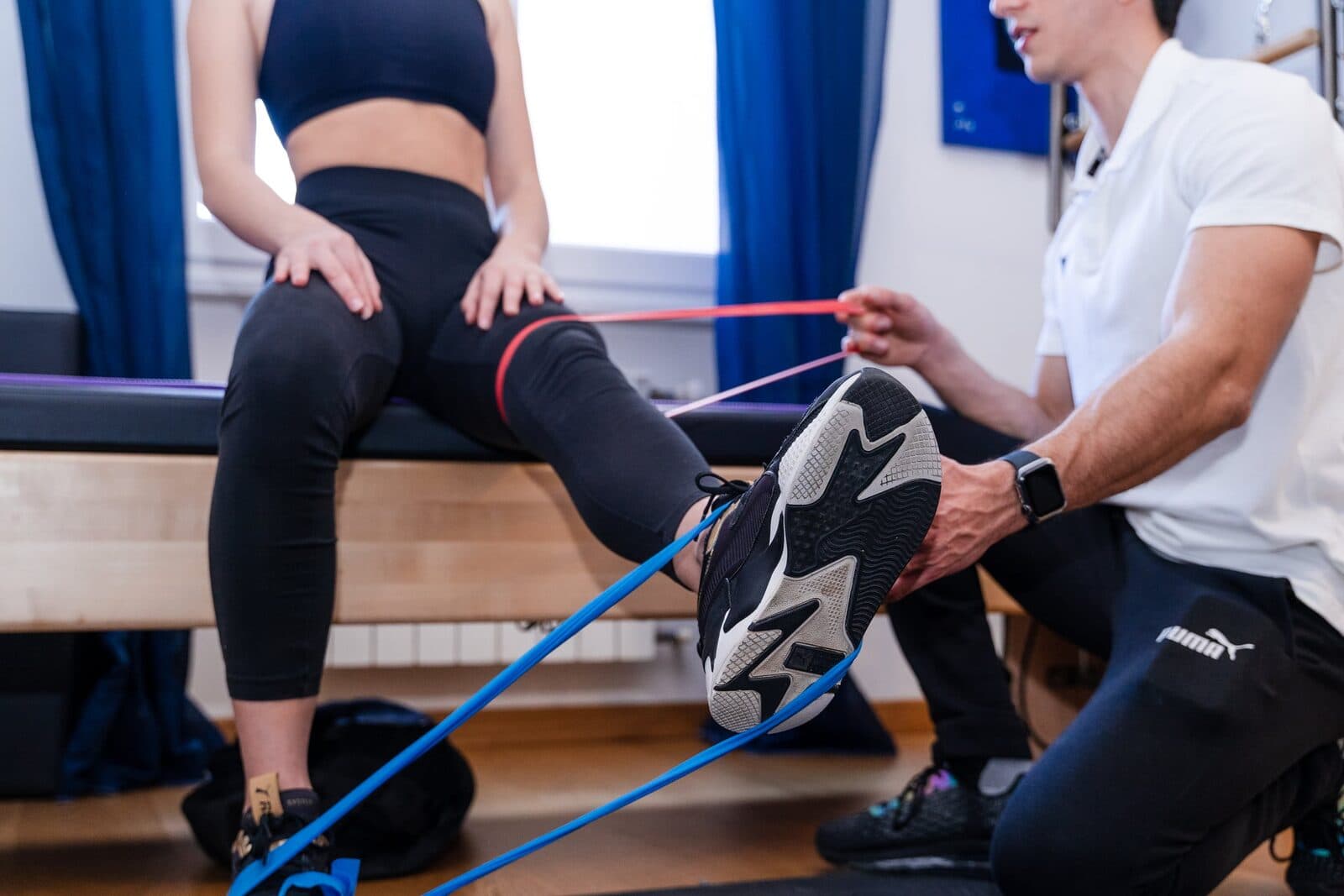
Here some evidence, albeit partial, does exist. A systematic review with meta-analysis from 2022 gathered 13 randomised trials for a total of 898 patients with cervicogenic dizziness, of variable methodological quality (two high, five moderate, six low); of these, six went into the actual meta-analysis. The conclusions: manual therapy reduces dizziness and cervical and balance symptoms with moderate quality of evidence; adding therapeutic exercise makes the effect more marked, but the quality of the evidence on this point is very low. Only three studies specified the cause of the disorder, and in post-traumatic forms the results of exercise were inconsistent.
Two details make the difference. The first: the outcomes measured were dizziness, neck symptoms and balance, and nausea is not among the results evaluated, so promising that physiotherapy will make it disappear means going beyond the data. The second: that manual therapy is a treatment carried out by the physiotherapist on the patient, not self-directed exercise. The exercises in the previous section are reasonable self-management, not the same thing that was studied.
What remains, then, in concrete terms?
- Neck assessment and manual treatment, when the examination identifies painful and restricted segments. You will find the full picture of neck disorders on our page dedicated to neck pain.
- Progressive therapeutic exercise for motor control, endurance of the deep flexors and cervical proprioception.
- Education and load management: breaks, changes of posture, sleep, stress reduction. The tension component is far from secondary, and we went into it in the article on stress-related neck pain.
- Local heat on the back of the neck: it cures nothing, but makes the neck more ready to move before the exercises.
- Referral to a specialist when the picture points towards the inner ear or migraine. Recognising this in time is part of the work, not a failure.
Prevention: what makes sense to do
There is no specific prevention for "neck pain and nausea", because there is no disease with that name. There are, however, habits that reduce the load on the neck and the frequency of headache episodes, and they are the same ones.
Move your neck often. You do not need elaborate exercises: frequent breaks are enough when you work still in front of a screen.
Set up your workstation. Screen at eye level, forearms supported, phone not wedged between shoulder and ear.
Look after sleep and your pillow. A pillow that holds the head too high or too low makes you wake with an already tired neck, and insufficient sleep is one of the best-known triggers of migraine.
Do not skip meals and drink enough. Fasting and dehydration are trivial, and they are among the most common triggers of both headache and nausea.
Keep a diary for a few weeks. Note when the symptoms appear, how long they last and what comes before them. It is the cheapest tool there is for finding out whether your problem follows the rhythm of the neck or that of migraine, and it is worth more than any test done without a hypothesis.
How long it lasts
It is the question everyone asks me, and the honest answer is that it depends on the cause, not on the neck.
If the nausea accompanies an acute pain crisis, it tends to fade with the pain. If it depends on migraine, it follows the rhythm of the attacks and improves when you work on the triggers and, if needed, on medication. If it depends on positional vertigo, it can resolve very quickly with the right manoeuvres, but those are manoeuvres to be carried out, not exercises to try at home.
What I will not tell you is "it improves in two weeks": that would be an invented number. What we can give you is a criterion: if after a few weeks of sensible work the neck has improved and the nausea has not, the cervical hypothesis should be abandoned and another path is needed.
In summary
Neck pain and nausea often coexist, but coexistence is not a cause. Dizziness of cervical origin is already in itself a controversial diagnosis of exclusion; for nausea the evidence is entirely missing. Migraine and inner ear disorders explain a much larger share of these pictures, and they should be considered first.
This does not leave you empty-handed, quite the contrary. It gives you the right order: rule out the warning signs, look for the cause of the nausea, then work on the neck for what the neck can give you: less pain, more mobility, more control. And that is already a great deal.
If neck pain and nausea are limiting you, Ri-Hub's physiotherapists can assess your situation by telerehabilitation, tell you honestly whether the picture falls within our competence and, when it does not, point you to the right person.
You might also be interested in:
Lower Back Pain: Causes, Exercises and Remedies to Heal Back and Leg Pain: Causes of Radiating Pain and How to Solve It Neck Pain Causes: Why Your Neck Hurts and How to Fix It
Stay in touch with us Join our dedicated Facebook group: we answer every patient, give practical advice and clear up the most common doubts.
Need a consultation?
Start with the questionnaire on Ri-Hub: a few questions about your case, you register, and you see who will follow you: a physiotherapist on the Italian professional register, whom you can write to in chat whenever you like. If you prefer to talk it through by voice, the first consultation is free, lasts twenty minutes and commits you to nothing: they arrive having already read what you wrote, and together you decide whether and how to go on.
Sources
- Risk of Cervical Dizziness in Patients With Cervical Spondylosis, JAMA Otolaryngology-Head & Neck Surgery, 2024
- Clinical characteristics of cervicogenic-related dizziness and vertigo, Seminars in Neurology, 2013
- Vestibular migraine: diagnostic criteria, Journal of Vestibular Research, 2012
- Neck pain and headache: Pathophysiology, treatments and future directions, Musculoskeletal Science and Practice, 2023
- Systematic review and meta-analysis of the therapeutic management of patients with cervicogenic dizziness, Journal of Manual & Manipulative Therapy, 2022
- A review of carotid and vertebral artery dissection, British Journal of Hospital Medicine, 2022
Last source check: August 2026.