Neck pain that is chronic: when neck pain lasts for months, it becomes a daily challenge. Chronic neck pain affects millions of people and can feel like a life sentence, but with the right approach it can be managed effectively and quality of life can improve significantly.
Persistent pain needs a different approach from acute pain, and the difference is not one extra technique: the targets change.
⚠ Important: read this before continuing
The exercises and advice in this article are general guidance and may not suit your situation. Every person has a unique clinical history: what works for others could be counterproductive for you.
Want a professional's opinion? Start with the questionnaire: you register and see who will follow you, a physiotherapist on the Italian professional register chosen for your case, whom you can write to in chat. If you would rather hear their voice, the first consultation is free and we look at your situation together.
Why the pain stays
Chronic pain means pain lasting beyond three months. Past that threshold pain stops being a good indicator of the state of the tissues: the nervous system has tuned itself to a lower threshold and keeps signalling even when there is nothing left to repair.
This is the best news on this whole page, even if it does not seem so at first: pain does not mean damage. On what it means to have pain with no apparent cause we have written a separate guide.
The factors that feed the cycle are almost always the same: prolonged stress, hours in the same position, fear of moving the neck, broken sleep. None of these is the culprit alone; together they keep the system on alert.
This is why the guidelines on non-specific neck pain recommend an approach that combines exercise, education and management of contextual factors, rather than looking for a structure to repair.
Exercise, which is the main voice
The full review of the causes of neck pain, one by one, is in neck pain: all the causes.
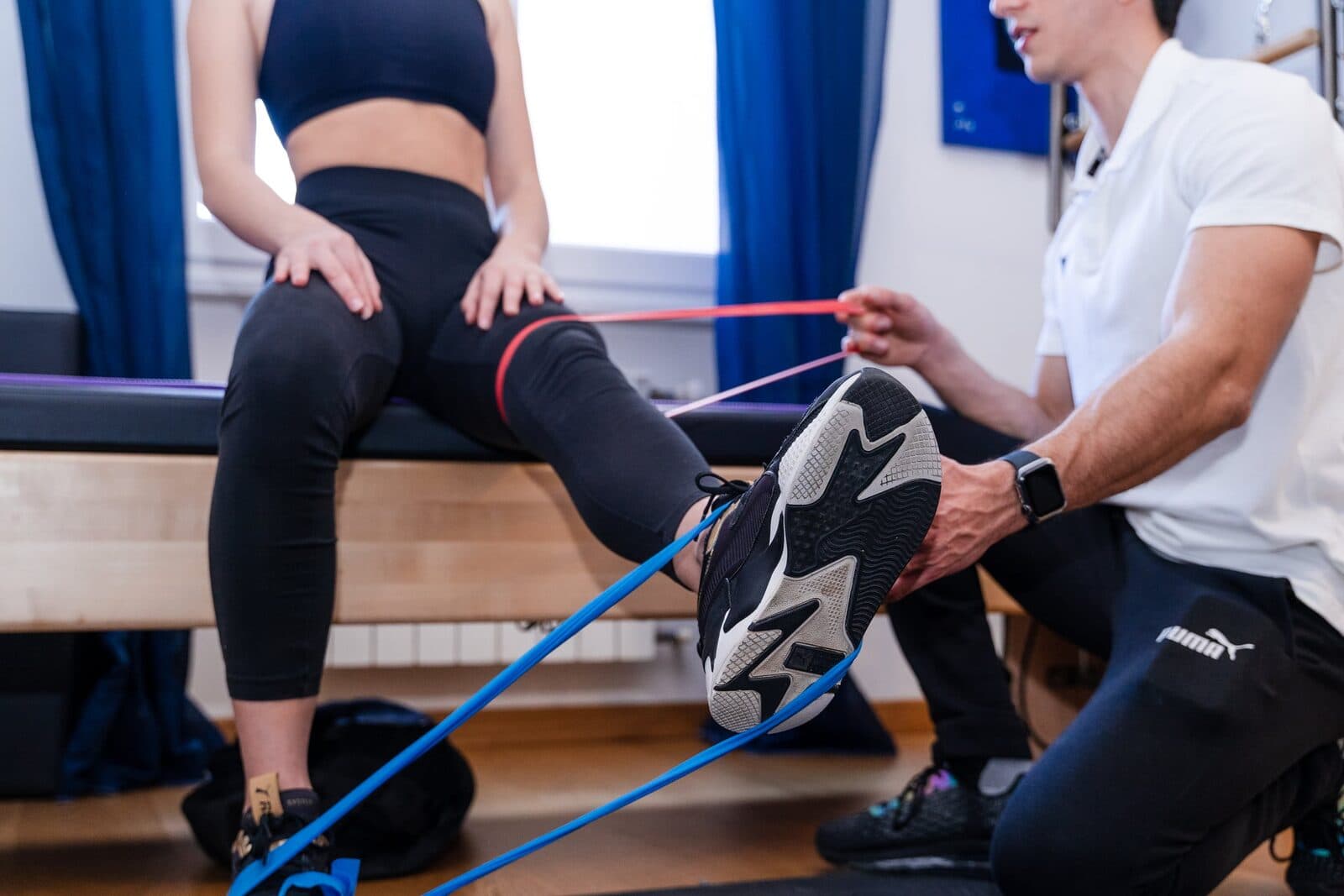
The meta-analysis of reviews on the different types of exercise for chronic neck pain reaches a conclusion worth reading in full: they work, and no single form is clearly superior to the others. What separates programmes that produce results is not the school, it is progression and consistency.
In practice: strengthening of the deep neck flexors and extensors, work on the shoulder blades and back, exercises such as wall angels, and a load that grows over the weeks instead of staying the same for months. If the sore point is on the side of the neck, it is worth looking at the sternocleidomastoid, which gives a recognisable picture; if instead ringing in the ears or a feeling of fullness in the ear appears, the link is explained in neck pain and the ear.
Alongside this, aerobic activity (walking, swimming, cycling) has an effect on pain that goes beyond the area trained, and it is the easiest part to keep up over time; there is a dedicated article on the effects of movement on anxiety. If the form that brings you back to the mat is yoga for neck pain, that is fine: in trials it matched a home exercise programme.
An important tip: before trying these exercises, make sure you have had a correct diagnosis. People often think they have one problem, but the real cause of the pain is something else. Doing the wrong exercises can make things worse instead of better.

The factors that feed it
Stress. This is not a convenient explanation: it raises the baseline muscle tone and lowers the pain threshold. Slow breathing, relaxation and mindfulness are not alternative therapies, they are tools that act on that lever. The body scan is the easiest to learn on your own.
Sleep. It is the most neglected factor and one of the heaviest: sleeping little and badly increases pain sensitivity the next day, and pain worsens sleep the following night. Breaking that cycle often has more effect than one more exercise.
Holding a position. There is no correct posture to hold for eight hours: the problem is holding only one. The useful measure is the break: stand up, change position, move the neck every half hour. The strategies for preventing neck pain before it becomes chronic are collected separately.
How you think changes how it hurts
Catastrophising, such as "my neck is ruined" or "I will never get better", is one of the most solid predictors of pain that does not improve. It is not a question of attitude: these thoughts keep the system's alarm raised, and understanding how chronic pain works reduces them in a measurable way.
Fear of moving does the rest: you avoid, you lose conditioning, movement becomes harder and confirms the fear. You get out of it by resuming gradually, not by waiting for the pain to disappear first.
What makes up a programme
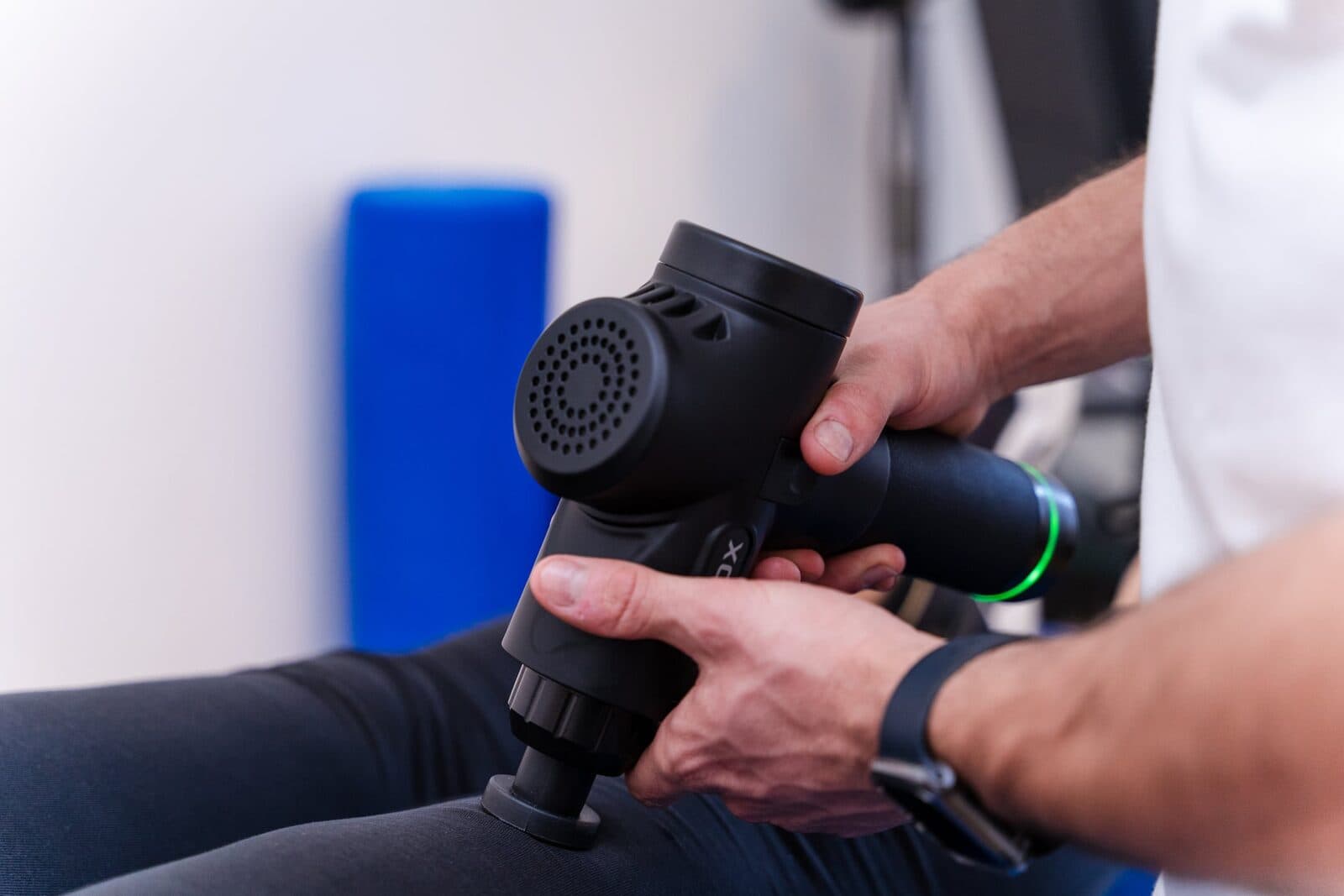
The core is therapeutic exercise, with manual therapy as a tool to make movement possible during the more irritated phases, not as a treatment on its own.
Pain education is the other half: in the reviews on the subject, explaining the mechanisms of persistent pain reduces catastrophising and improves disability, especially when it accompanies exercise instead of replacing it.
Medication
A note on the cervical collar is worth making separately: it has precise and short indications, and worn for a long time it takes load away from muscles that need to take it back.
Medication has a role, and it is a narrow one. In persistent pain inflammation is not the main driver, and an anti-inflammatory taken for weeks gives little relief and has a cost. They can help to bring down a peak and make movement possible: that is their place.
In summary
After three months the target is no longer the tissue: it is the load the neck can tolerate, sleep, stress and how much you move. Exercise is the voice with the best evidence, and no single form is clearly better than the others: what matters is that it progresses and that it lasts.
Recovery takes a long time and is not linear, and this is the premise that stops you changing course every six weeks. If you want to set up the programme with someone, Ri-Hub offers telerehabilitation at 29,90 € per session, with the first consultation free.
Sources
- Summarizing the effects of different exercise types in chronic neck pain - a systematic review and meta-analysis of systematic reviews, BMC Musculoskelet Disord, 2023
- Clinical Practice Guideline: Nonspecific Neck Pain, Dtsch Arztebl Int, 2025
- Pain Neuroscience Education for Adults With Chronic Musculoskeletal Pain: A Mixed-Methods Systematic Review and Meta-Analysis, J Pain, 2019
- Clinical Practice Guideline for Physical Therapy Assessment and Treatment in Patients With Nonspecific Neck Pain, Phys Ther, 2018
Last source check: September 2026.
You might also be interested in:
Shoulder Pain Causes: All the Origins of the Pain and How to Recognise Them Physiotherapist or Osteopath: Which to Choose for Your Problem Swimmer's Shoulder: Prevention, Symptoms and How to Treat It
Stay in touch with us Join our dedicated Facebook group: we answer every patient, give practical advice and clear up the most common doubts.
Need a consultation?
Start with the questionnaire on Ri-Hub: a few questions about your case, you register, and you see who will follow you: a physiotherapist on the Italian professional register, whom you can write to in chat whenever you like. If you prefer to talk it through by voice, the first consultation is free, lasts twenty minutes and commits you to nothing: they arrive having already read what you wrote, and together you decide whether and how to go on.