
Anxiety and exercise: a pairing that science has shown to be remarkably effective. If you suffer from anxiety, physical exercise could be one of the most powerful remedies available to you, in some cases comparable to medication. Anxiety and exercise are deeply connected, and understanding this connection can change how you approach managing anxiety.
In this complete guide we will explore how physical exercise reduces anxiety, which types of activity are most effective, and how to start even when anxiety seems to paralyse you. You will discover that the relationship between anxiety and exercise can become a valuable ally.
⚠ Important: read this before continuing
The exercises and advice in this article are general guidance and may not suit your situation. Every person has a unique clinical history: what works for others could be counterproductive for you.
Want a professional's opinion? Start with the questionnaire: you sign up and see who will follow you, a physiotherapist on the Italian professional register chosen for your case, whom you write to in chat. If you would rather hear a voice, the first consultation is free and we look at your situation together.
Anxiety and Exercise: What Science Says
The connection between anxiety and exercise is supported by decades of scientific research. Studies show that regular physical activity significantly reduces anxiety symptoms, often comparable in effectiveness to anxiolytic medication.
A meta-analysis published in the journal JAMA Psychiatry concluded that exercise has a clinically significant effect on anxiety. For anyone exploring the link between anxiety and exercise, these findings are encouraging: movement is not just a distraction, but a genuine therapy.
The effects of exercise on anxiety are both immediate and cumulative. A single session of exercise can reduce anxiety for hours; regular practice produces lasting changes in the brain and body. Anxiety and exercise are therefore connected on several timescales.
How Exercise Reduces Anxiety: The Mechanisms
Understanding the mechanisms behind the link between anxiety and exercise can help you believe in the power of movement.
Endorphins: Exercise releases endorphins, the "well-being hormones". These natural substances produce a sense of calm and well-being that counteracts anxiety. The link between anxiety and exercise runs in part through these chemical messengers.
Reduced cortisol: Regular exercise lowers levels of cortisol, the stress hormone that is chronically elevated in people who suffer from anxiety. This is another key mechanism in the relationship between anxiety and exercise.
An important point: before trying these exercises, make sure you have received a correct diagnosis. People often think they have one problem, but the real cause of the pain is something else. Doing the wrong exercises can make the situation worse instead of better.
Regulation of the nervous system: Physical activity teaches the body to manage physiological stress, improving heart rate variability and the ability to return to calm after activation. Anxiety and exercise influence each other through the autonomic nervous system.
Which Types of Exercise Work Best for Anxiety
Not all exercises have the same effect on the relationship between anxiety and exercise. Here is what works best.
Aerobic exercise: Brisk walking, running, swimming and cycling are particularly effective at reducing anxiety. For the relationship between anxiety and exercise, 30 minutes of moderate aerobic activity seems to be the optimal dose.
Yoga: The benefits of yoga for anxiety are well documented. The combination of movement, breathing and meditation makes yoga particularly effective. For anxiety and exercise, yoga offers a holistic approach.
Weight training: Muscle strengthening also has anxiolytic effects. Recent studies show that strength training significantly reduces anxiety. In the context of anxiety and exercise, do not limit yourself to cardio.
Starting Exercise When You Are Anxious
The paradox of anxiety and exercise is that anxiety itself can stop you from starting to move. Here is how to overcome this obstacle.
Start small: You do not need to run a marathon. To improve the relationship between anxiety and exercise, even 10 minutes of walking counts. What matters is starting, not perfection.
Choose enjoyable activities: If you hate the gym, do not force yourself. Dance, walk in the park, do gardening. For anxiety and exercise, the activity you will actually do is better than the "perfect" one you avoid.
Avoid comparison: Anxiety can get worse in competitive environments. To work on anxiety and exercise, choose activities where you can focus on yourself without comparisons.
There is a stage of life in which moving seems the furthest thing possible, and in which it helps to know how far it goes: in the months after childbirth, movement does have an effect on mood and anxiety, but measured, it is modest. The numbers, with what they do not promise, are in how much moving really helps after childbirth.
Specific Exercises to Calm Anxiety
Here are some exercises that are particularly effective for the pairing of anxiety and exercise.
Mindful walking: Walk concentrating on the sensations: feet touching the ground, air on the skin, sounds around you. This practice combines movement and mindfulness, ideal for anxiety and exercise. 20-30 minutes a day.
Breathing with movement: Breathe in as you raise your arms over your head, breathe out as you lower them. This simple movement synchronised with the breath activates the parasympathetic system. In the context of anxiety and exercise, it is a powerful calming tool. Repeat for 2-3 minutes.
Slow stretching: Stretching done slowly, holding positions for 30-60 seconds and focusing on the breath, has calming effects. For anxiety and exercise, evening stretching can also improve sleep.
How Much Exercise Is Needed to Reduce Anxiety
Research on anxiety and exercise indicates that the optimal dose is more accessible than you might think.
Frequency: For significant benefits on anxiety and exercise, aim for 3-5 sessions a week. Regularity matters more than intensity.
Duration: 30-45 minutes per session seems optimal, but shorter sessions also have benefits. In the relationship between anxiety and exercise, something is always better than nothing.
Intensity: Moderate intensity (you can talk but not sing) is generally the most effective. Exercise that is too intense can temporarily increase anxiety in some people. For anxiety and exercise, listen to your body.
Exercise as Part of an Integrated Approach
The link between anxiety and exercise is powerful, but exercise works best as part of an overall approach to managing anxiety.
Combine exercise with: good sleep hygiene, a balanced diet, relaxation techniques such as diaphragmatic breathing and, if needed, professional support. Anxiety and exercise are an important piece of the puzzle, not the only one.
If anxiety is severe or persistent, consult a mental health professional. Exercise can be an excellent complement to therapy and, in some cases, to medication. The relationship between anxiety and exercise does not replace treatment when treatment is needed.
Online Physiotherapy and Anxiety
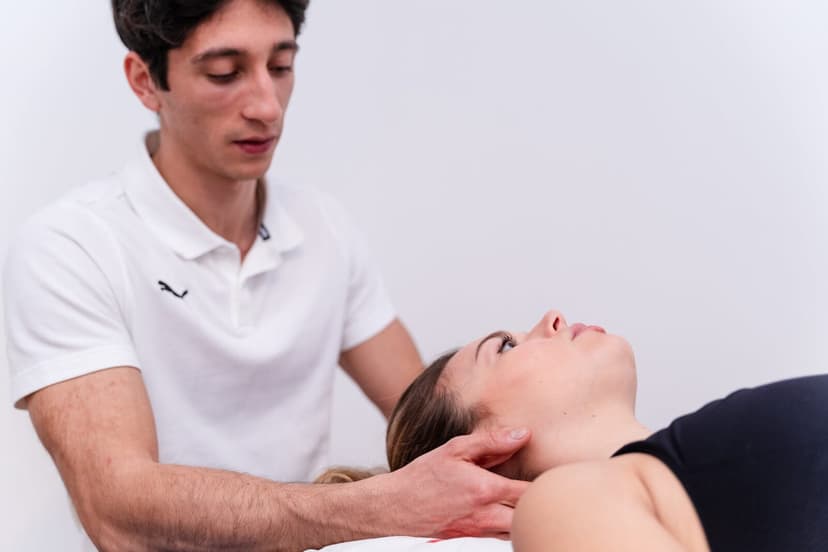
Teletherapy can help you start an exercise programme when anxiety makes it hard to go to the gym or train in public. A physiotherapist can guide you through exercises to do at home, in the comfort of your own environment.
With Ri-Hub, you can start a personalised movement programme at 29,90€ per session. The physiotherapist will create a programme suited to your level and your goals, taking into account the link between anxiety and exercise.
If anxiety has also caused physical tension such as trapezius tightness or back pain from stress, physiotherapy can address both aspects: the physical one and the promotion of exercise as an anti-anxiety tool.
Conclusion
The connection between anxiety and exercise is supported by solid scientific evidence. Regular exercise reduces anxiety through real biological mechanisms: endorphins, reduced cortisol, regulation of the nervous system. You do not need to become an athlete: 30 minutes of moderate movement, 3-5 times a week, can make a significant difference.
If anxiety holds you back from starting, remember that even small steps count. Ri-Hub teletherapy can help you build an exercise routine that works for you, guiding you with an understanding of how anxiety and exercise interact. Start today: your body and your mind will thank you.
You might also be interested in:
Outer Knee Pain: Causes, Diagnosis and Effective Remedies World's Greatest Stretch: The Most Complete Mobility Exercise Back Pain in Pregnancy: Causes, Remedies and Safe Exercises
Stay in touch with us Join our dedicated Facebook group: we reply to all patients, give practical advice and clear up the most common questions.
Need a consultation?
Start with the Ri-Hub questionnaire: a few questions about your case, you sign up, and you see who will follow you: a physiotherapist on the Italian professional register, whom you write to in chat whenever you like. If you would rather talk it through by voice, the first consultation is free, lasts twenty minutes and commits you to nothing: they arrive having already read what you wrote, and together you decide whether and how to go on.