You reach the end of the day and your legs feel full of sand. Your ankles bear the mark of your socks, your shoes feel tighter than in the morning, and the only thing that brings relief is lying down with your feet raised.
It is one of the most common complaints of all, and it has a precise mechanical explanation - which is also the starting point for the solution.
Why it happens
Blood reaches the legs pushed by the heart, and from there it has to climb back against gravity. There is no second pump doing this: the work is done by the contraction of the calf muscles, which squeeze the deep veins and push blood upwards, while a series of valves stops it from falling back.
It is an effective system, with one flaw: it only works if you move. Eight hours at a desk and eight hours behind a counter have the same effect - the pump stays still, blood pools, fluid seeps into the tissues. Hence the heaviness, the swelling of the ankles and the sense of tension that worsens in summer, because heat dilates the vessels.
The recognisable feature is the pattern over the day: it appears in the afternoon, worsens in the evening and disappears during the night. If your symptom behaves this way, you are almost certainly in this chapter.
In pregnancy the same mechanism adds two things: almost half as much extra fluid in circulation as before, and the uterus pressing on the veins that carry blood back up. Consequently the countermeasures that have actually been measured also change, from position to immersion in water to stockings, and you will find them in swollen legs in pregnancy: what really helps.
What makes it worse
- Standing still, whether standing or seated - it makes no difference: what counts is immobility, not the position;
- heat: summer, very hot showers, underfloor heating;
- crossed legs and clothing that is very tight at the waist or groin;
- excess weight, which increases pressure in the abdomen and hinders the return of blood;
- a sedentary lifestyle, which weakens exactly the muscle that acts as the pump.
When it is not just circulation
Get assessed immediately if one leg only swells quickly, with calf pain, warmth and redness: this is the picture that raises the suspicion of a deep vein thrombosis and must be ruled out without waiting.
See your doctor in the short term if the heaviness comes with breathlessness, even just climbing stairs, or with rapid weight gain over a few days: these are signs that concern the heart and kidneys.
And if the problem is not heaviness but an irresistible urge to move your legs that appears at rest in the evening and improves with movement, that is a different condition - restless legs syndrome - with a different pathway, which goes through your doctor.
What works
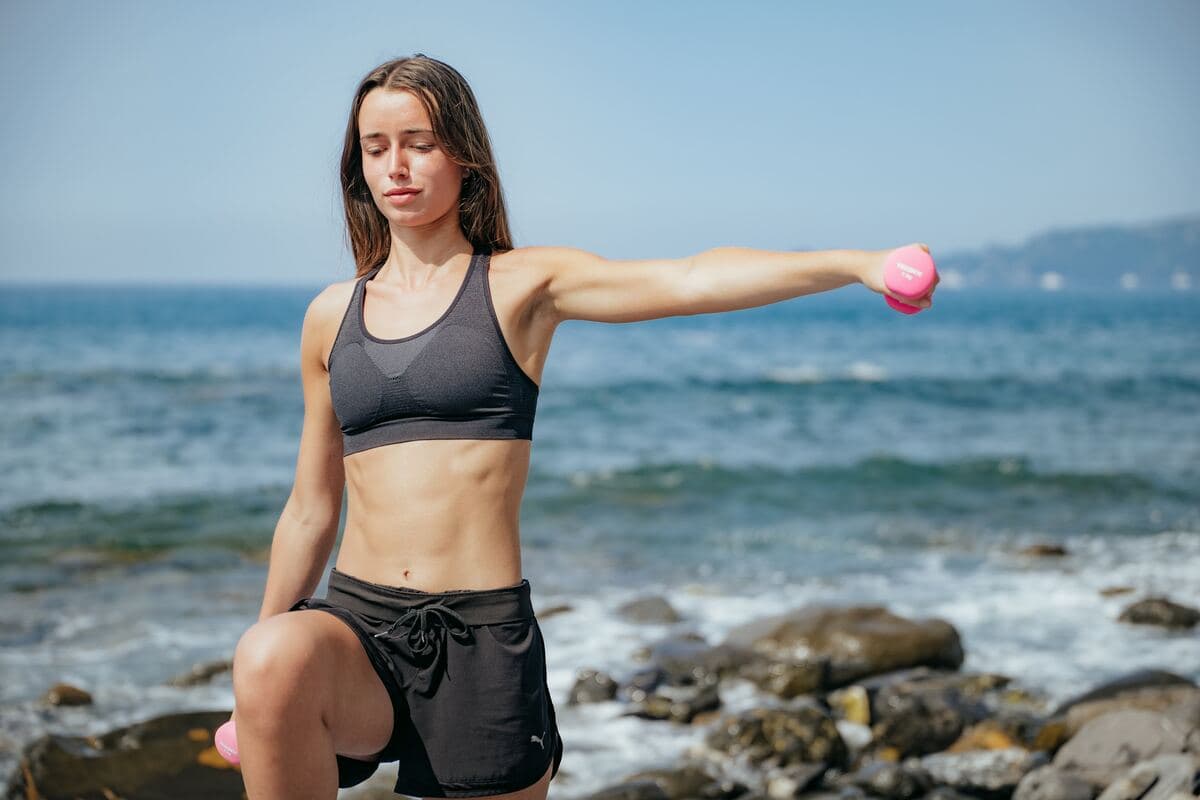
Movement, which is the main remedy
A Cochrane review examined physical exercise in non-ulcerated chronic venous insufficiency, and a randomised study compared training of the calf muscles with another approach, measuring quality of life, pain and venous function. The direction is clear: the calf is not an accessory to the circulatory system, it is a component of it.
In practice, three things:
- walking, every day, even just twenty or thirty minutes;
- moving the ankle during the hours you are still: point up and down, repeatedly, every hour. It is the gesture that switches the pump on without getting up;
- strengthening the calf: progressive heel raises. A randomised study measured the effect of strengthening the lower limbs even on the pressure exerted by elastic compression.
Elevation, done properly
Twenty minutes with the legs above heart level, a couple of times a day. Not resting on a low stool, which changes nothing: they need to be higher than the chest.
Compression, if indicated
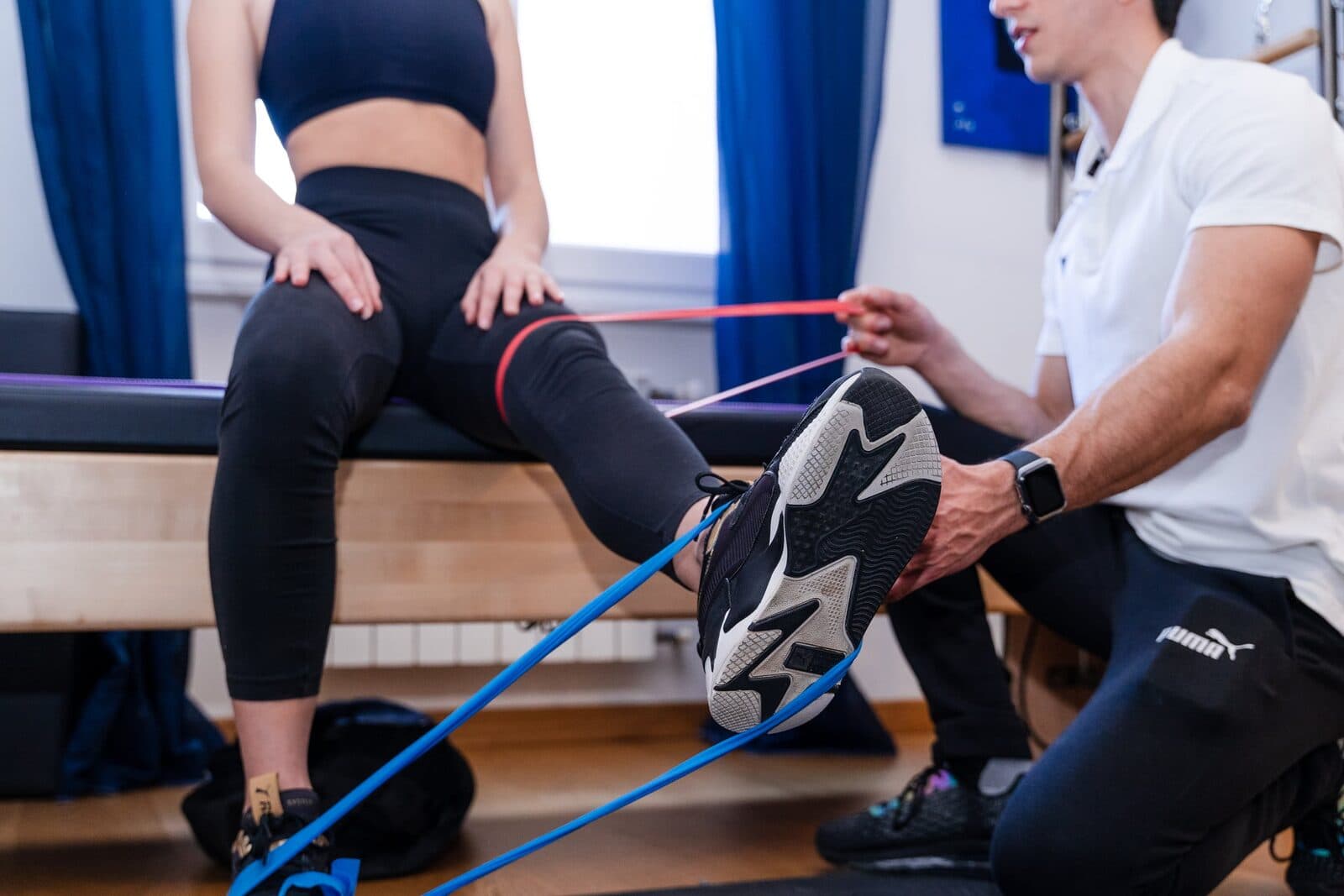
Elastic stockings have indications defined by an evidence-based consensus document for venous and lymphatic disorders. They should be chosen after an assessment: the compression class matters, and in the presence of some arterial conditions they are contraindicated. In pregnancy the same question has its own answer, and it is less straightforward than you are told: stockings make the legs feel better but do not stop the veins from showing, and the studies that measured this are in what really works on varicose veins and spider veins in pregnancy.
The habits that multiply the rest
Cool showers on the legs at the end of a hot day; avoid sitting with your legs crossed; get up every hour if your work is sedentary, and shift your weight from one foot to the other if you are on your feet - if, on the other hand, you spend the whole shift standing, the full picture for back and legs is here.
Getting support
Heavy legs are one of those complaints that people accept as inevitable - and almost never are. In most cases there is a muscle pump that does little work, and that can be trained.
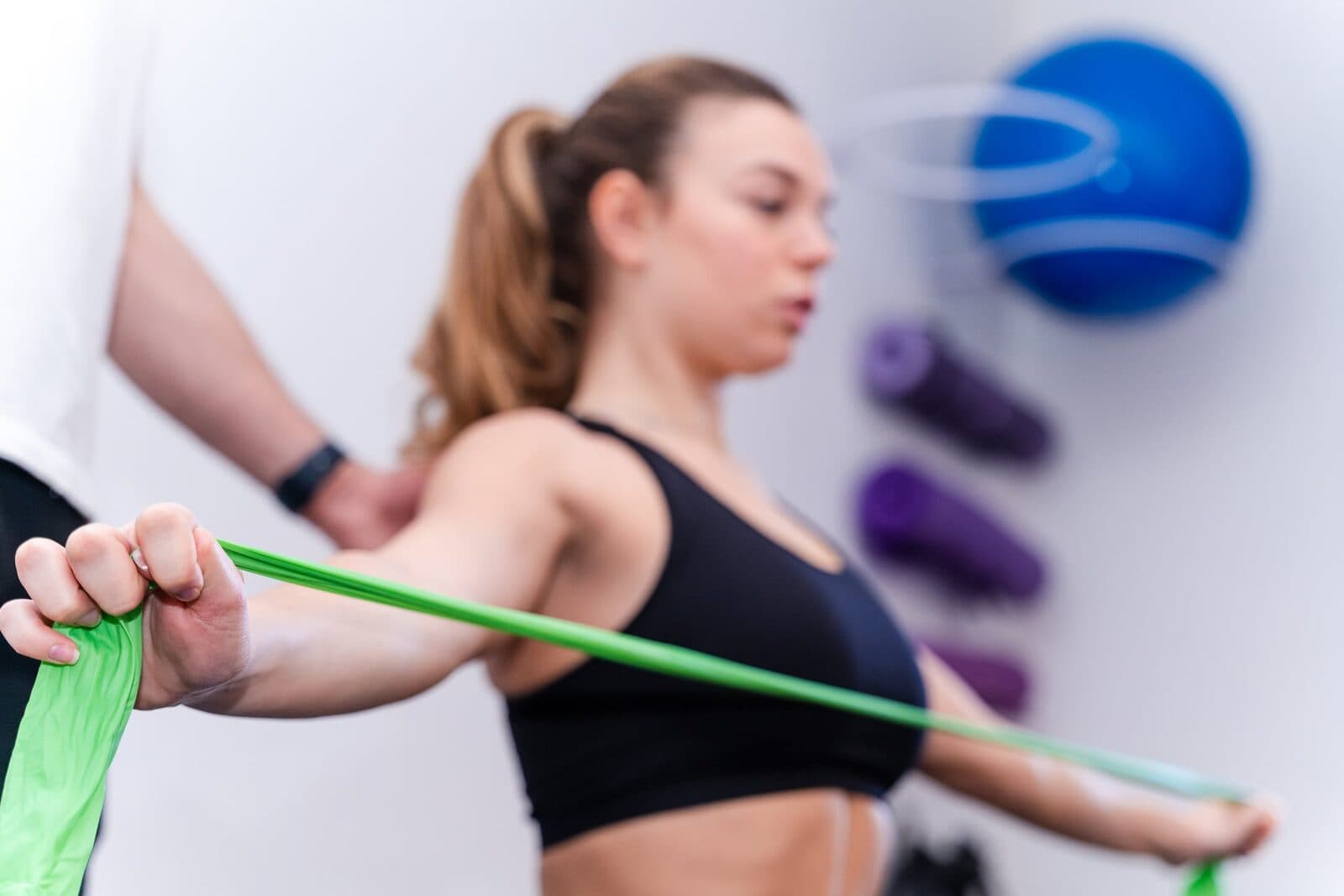
With Ri-Hub the first consultation is free: twenty minutes on a video call with a physiotherapist on the Italian professional register, who looks at how your symptom behaves over the day, builds the routine that suits your still hours - and tells you when, instead, the picture should be taken to a doctor. Subsequent sessions cost 29,90€.
If you spend the day seated, the routine to do without getting up from your desk is in Leg circulation: exercises for people who sit all day.
If the swelling is concentrated in the ankles more than the legs, the causes to tell apart are in Swollen ankle: causes, what to do and when to worry.
If alongside the heaviness there is tingling in the feet, the picture is different: Tingling in the feet: causes and when to worry.
Sources
- Physical exercise for the treatment of non-ulcerated chronic venous insufficiency - The Cochrane database of systematic reviews, 2016
- Effects of inspiratory muscle training versus calf muscle training on quality of life, pain, venous function and activity in patients with chronic venous insufficiency - Journal of vascular surgery. Venous and lymphatic disorders, 2022
- Effects of lower limb muscle strengthening on interface pressure in older adults undergoing inelastic compression: Randomized controlled clinical trial - Phlebology, 2024
- Indications for medical compression stockings in venous and lymphatic disorders: An evidence-based consensus statement - Phlebology, 2018
Last source check: September 2026.