Bursitis: sudden pain, swelling and difficulty moving a joint can be the signs of this irritating condition. Bursitis is an inflammation of the synovial bursae, small sacs filled with fluid that protect the joints. If you have bursitis, know that you are not alone: this condition affects millions of people every year and can be treated effectively.
Bursitis can affect any joint in the body, but some areas are more vulnerable than others. Bursitis of the shoulder, elbow, hip and knee are the most common forms. In this guide you will learn how to recognise it, what its causes are and, above all, how to treat it so that you can move again without pain.
⚠ Important: read this before continuing
The exercises and advice in this article are general indications and may not suit your situation. Every person has a unique clinical history: what works for others could be counterproductive for you.
Want a professional's opinion? Start from the questionnaire: you register and see who will follow you, a physiotherapist on the Italian professional register chosen for your case, whom you can write to in chat. If you would rather hear their voice, the first consultation is free and we look at your situation together.
Bursitis: What the Synovial Bursae Are and How They Work
To understand bursitis it is important to know what synovial bursae are. They are small sacs lined with synovial membrane and containing lubricating fluid. The human body has more than 150 of them, strategically placed near the joints, between tendons, muscles and bones.
The main function of the synovial bursae is to reduce friction. During movement, these sacs allow tissues to glide over one another without rubbing. Without synovial bursae, every movement would cause wear and pain. Bursitis occurs when these structures become inflamed.
When a synovial bursa becomes inflamed, as happens in bursitis, its lining thickens and produces excess fluid. The bursa swells, becomes painful and presses on the surrounding structures. This inflammatory process, characteristic of bursitis, causes the typical symptoms: pain, swelling and limited movement.
It can be acute or chronic. The acute form develops quickly, often after a trauma or overload, and generally heals within a few weeks with appropriate treatment. Chronic bursitis, on the other hand, persists over time, with phases of flare-up and remission, and requires a more articulated therapeutic approach.
Why a Bursa Becomes Inflamed
The causes are varied and often overlap. Mechanical overload is the most frequent cause of bursitis. Repetitive movements, prolonged pressure on a joint or intense physical activity can irritate the synovial bursa and trigger inflammation.
Direct trauma often causes it. A fall onto the knee, a blow to the elbow or a knock to the shoulder can damage the synovial bursa and cause traumatic bursitis. In these cases it appears quickly after the injurious event.
An important point: before trying these exercises, make sure you have received a correct diagnosis. People often think they have one problem, but the real cause of the pain is something else. Performing the wrong exercises can make the situation worse instead of better.
Some jobs and sports predispose people to develop it. Tilers often develop knee bursitis from constant kneeling. Tennis players are at risk of elbow bursitis. Swimmers can suffer from shoulder bursitis. These forms are called occupational or sports-related.
Infections can cause a particular form called septic bursitis. Bacteria that enter through a wound or are carried by the blood infect the synovial bursa. Septic bursitis is more serious than the other forms and requires prompt antibiotic treatment.
Some systemic diseases increase the risk. Rheumatoid arthritis, gout, diabetes and thyroid disorders can favour inflammation of the synovial bursae. (For movement with rheumatoid arthritis, what is safe and what the studies say, there is a dedicated guide: rheumatoid arthritis and exercise.) In these cases bursitis tends to recur and to involve several joints.
Advanced age predisposes to bursitis because the synovial bursae lose elasticity and resistance. Obesity also increases the risk of bursitis, especially at the hips and knees, because of the greater load on the joints of the lower limbs.

How Long It Takes: Healing Times
It is the first question people ask and it deserves an honest answer: it depends on the bursa and on why it became inflamed, and the precise figures that circulate have no study behind them.
What can be said is the shape of the course. Bursitis from acute overload, once the irritating cause is removed, generally improves within a few weeks. Bursitis that returns, at the knee, elbow or hip, indicates that the cause has not been removed, and there time does not work on its own: what re-ignites it needs to be changed.
The practical rule is the same as for everything else: direction matters more than speed. If after two or three weeks the swelling decreases and you can do more things, the approach is working even if you are not yet healed. If nothing changes or it gets worse, the right question is not how much longer to wait but whether the diagnosis is the right one.
How to Recognise It: The Symptoms
Pain is the main symptom of bursitis. It is located in the area of the affected joint and is described as deep, throbbing or burning. Bursitis pain typically worsens with movement and with pressure on the affected area.
Swelling is a characteristic sign of bursitis, especially when the inflamed bursa is superficial. In bursitis of the elbow or knee the swelling is often clearly visible as a rounded swelling. In hip bursitis, which is deeper, the swelling may be less evident.
Limited movement almost always accompanies bursitis. The joint becomes stiff, and movements that involve the inflamed bursa are painful and restricted. In shoulder bursitis, for example, raising the arm above the head becomes difficult.
Redness and local heat are present in bursitis, especially in acute and septic forms. The skin over the inflamed bursa looks red and feels warm to the touch. These signs indicate an active inflammatory process.
In septic bursitis, systemic symptoms such as fever, general malaise and shivering can appear. If you suspect an infected bursitis, see a doctor immediately, because it requires urgent treatment with antibiotics.
Where It Appears Most Often
Shoulder bursitis is one of the most frequent forms. The subacromial bursa, located between the rotator cuff and the acromion, becomes inflamed and causes lateral shoulder pain that worsens when raising the arm. This bursitis is typical of those who perform repetitive movements overhead.
Elbow bursitis, called olecranon bursitis, affects the bursa located on the tip of the elbow. It shows as obvious swelling and pain when the elbow is leaned on. Elbow bursitis is common in people who frequently lean on their elbows, such as students and office workers.
Hip bursitis can affect several bursae. Trochanteric bursitis affects the bursa on the outer side of the hip, causing pain that radiates down the thigh. Iliopsoas bursitis instead affects the front of the hip. Both forms of hip bursitis limit walking.
Knee bursitis has several variants. Prepatellar bursitis, known as housemaid's knee, swells the front of the knee. Pes anserine bursitis affects the inner side, below the knee. Popliteal bursitis, or Baker's cyst, forms at the back. Each type of knee bursitis has specific characteristics.
Foot bursitis almost always concerns the heel: it affects the retrocalcaneal bursa, between the Achilles tendon and the heel bone, or the posterior subcutaneous bursa. Less often it can appear under the heads of the metatarsal bones, in the forefoot, where the load concentrates. This bursitis causes heel pain that worsens when walking and can be confused with other conditions such as plantar fasciitis.
How the Diagnosis Is Reached
The diagnosis of bursitis is based mainly on clinical examination. The doctor takes the history of the problem, assesses the symptoms and examines the affected joint. Palpating the inflamed bursa evokes pain and allows the characteristic swelling of bursitis to be assessed.
Ultrasound is the most useful instrumental test for confirming bursitis. It allows the inflamed bursa to be visualised, the amount of fluid present to be measured and the surrounding structures to be evaluated. Ultrasound is inexpensive, quick and non-invasive.
Magnetic resonance imaging may be needed for deep bursitis or to rule out other conditions. It is particularly useful in hip bursitis, where the structures are less accessible. MRI provides detailed images of all the joint tissues.
If septic bursitis is suspected, aspiration of fluid from the bursa is essential. The fluid is analysed to identify any bacteria and to guide antibiotic therapy. This procedure is both diagnostic and therapeutic in bursitis.
Septic or Not: The Distinction That Changes Everything
It is the question that comes before any treatment, and the honest answer is that you cannot tell by eye. A review dedicated to the management of septic bursitis says so clearly: separating a septic form from an aseptic one almost always requires aspirating the fluid from the bursa and analysing it, because clinical assessment alone is not enough. Ultrasound serves both to confirm the diagnosis and to guide that sampling.
Two useful facts to know:
- 80% of superficial septic bursitis is caused by Staphylococcus aureus, a bacterium that normally lives on the skin and enters through even a minor lesion;
- the most affected sites are the olecranon bursa (elbow) and the prepatellar bursa (front of the knee), that is, the ones that bear weight, rub and take knocks.
The deep form is rare and is often diagnosed late, precisely because it cannot be seen or palpated.
Why insist on this: an aseptic bursitis is managed by removing the overload and waiting, whereas a septic one needs antibiotics and sometimes drainage. Treating the second like the first wastes precious time. If there is fever, if the skin above is red and hot, if the pain is out of proportion, the route is the doctor, not exercises.
What Helps It Go Away
Can bursitis be "reabsorbed"? It is the question that almost always comes first. The swelling of an inflamed bursa resorbs on its own in most cases, but not because you do something that dissolves it: it reduces when the cause that kept irritating it stops, a point of contact, a friction, a repeated load. This is why bursitis treated only with drugs and rest often comes back: the symptom has calmed down without removing what produced it. Aspirating the fluid with a needle gives quick relief but does not change this logic, and the bursa can fill up again.
Rest is the first remedy. Avoiding activities that cause pain allows the inflamed bursa to heal. It does not mean immobilising the joint completely, but reducing the movements that stress the affected bursa.
Ice is effective in the acute phase. Apply a cold pack to the inflamed area for 15-20 minutes, several times a day. Ice reduces swelling and eases pain. Always protect the skin with a cloth to avoid cold burns.
Non-steroidal anti-inflammatory drugs (NSAIDs) are used frequently. Ibuprofen, naproxen or diclofenac reduce inflammation and pain. They can be taken orally or applied locally as a gel. Always follow your doctor's instructions.
Corticosteroid injections are effective in forms that do not respond to first-line treatments. The steroid is injected directly into the inflamed bursa, rapidly reducing inflammation. This bursitis treatment must be carried out by qualified staff.
Antibiotics are essential in the septic form. The type of antibiotic depends on the bacterium responsible and is chosen on the basis of the fluid analysis results. Infected bursitis often requires a prolonged course of antibiotics.
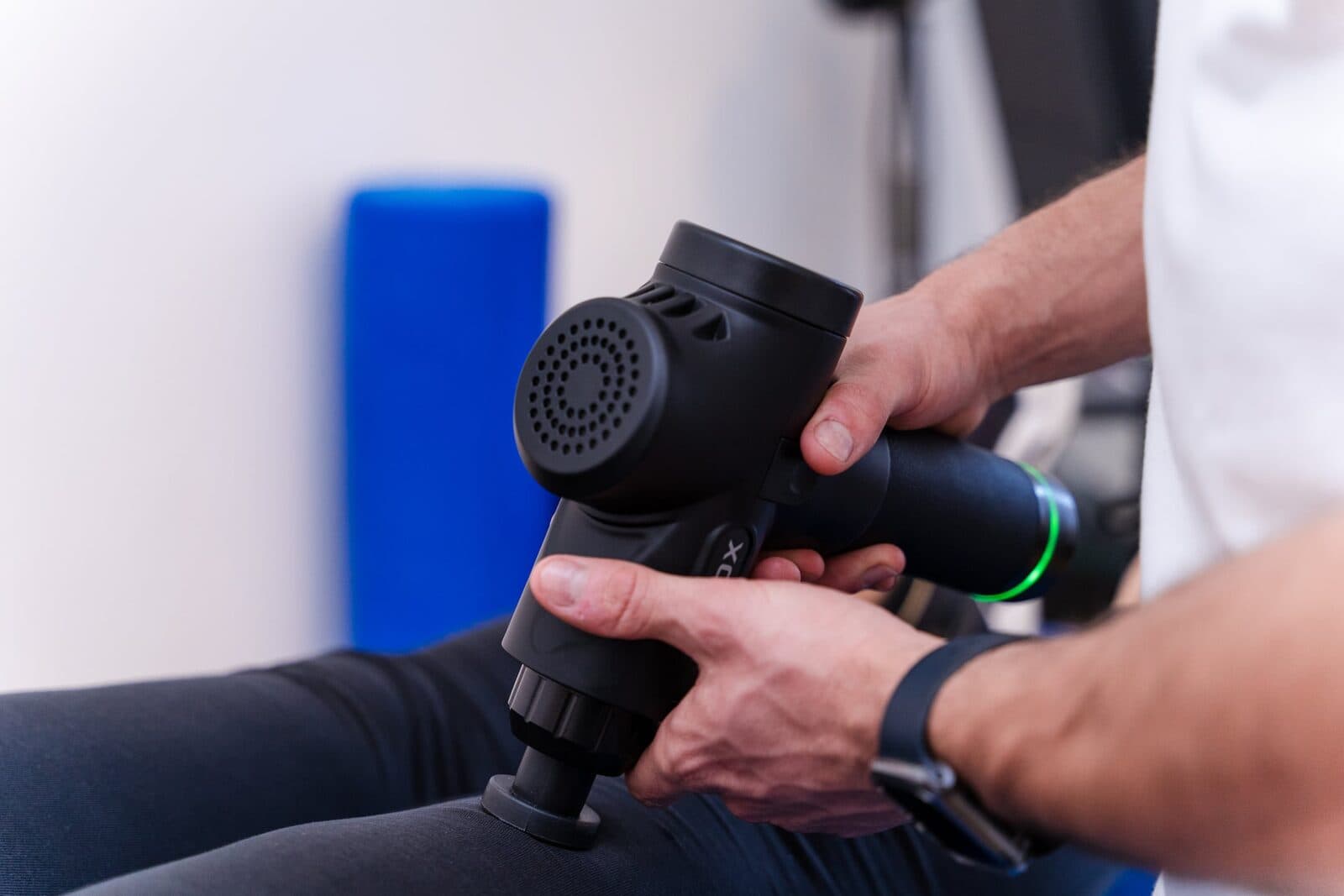
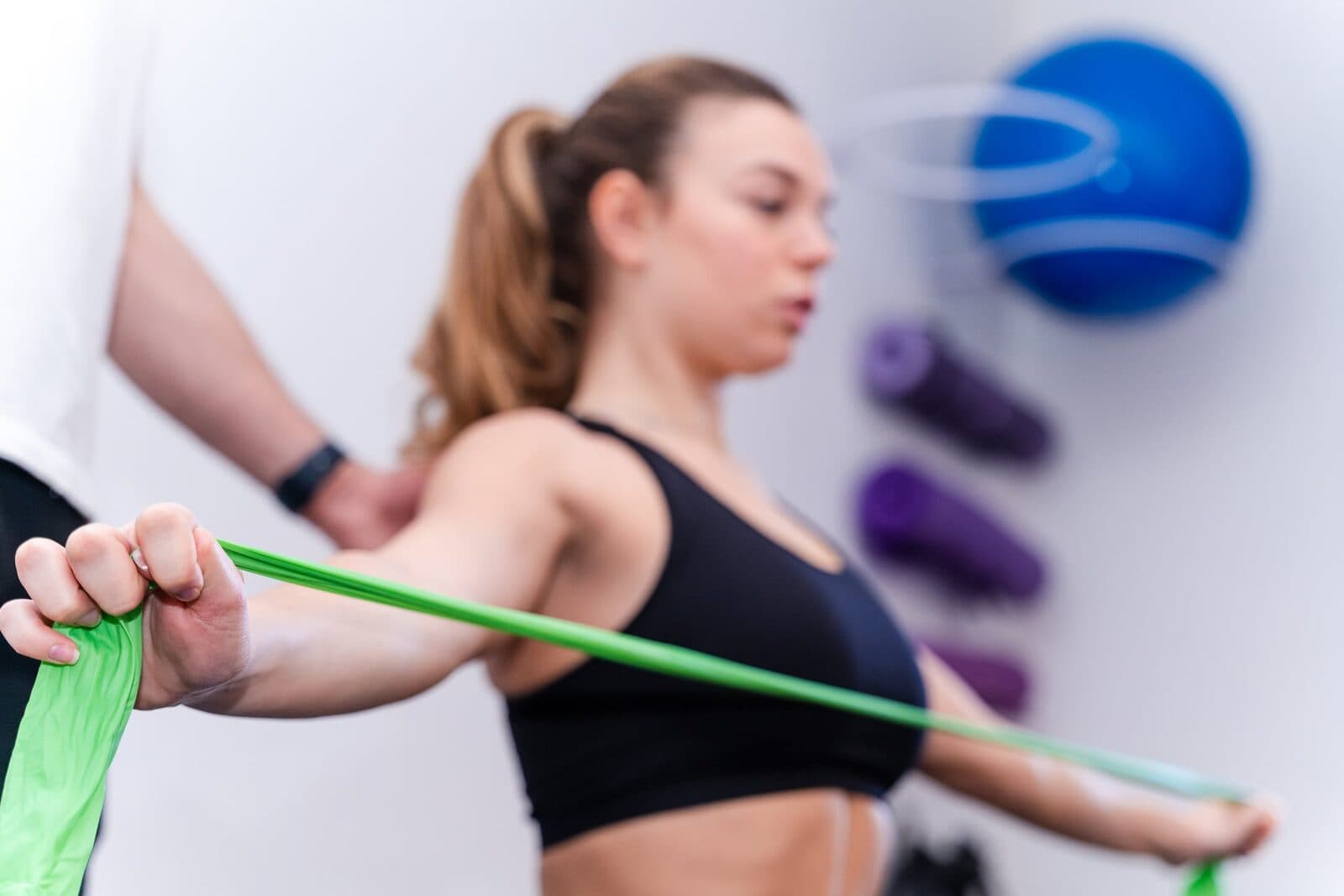
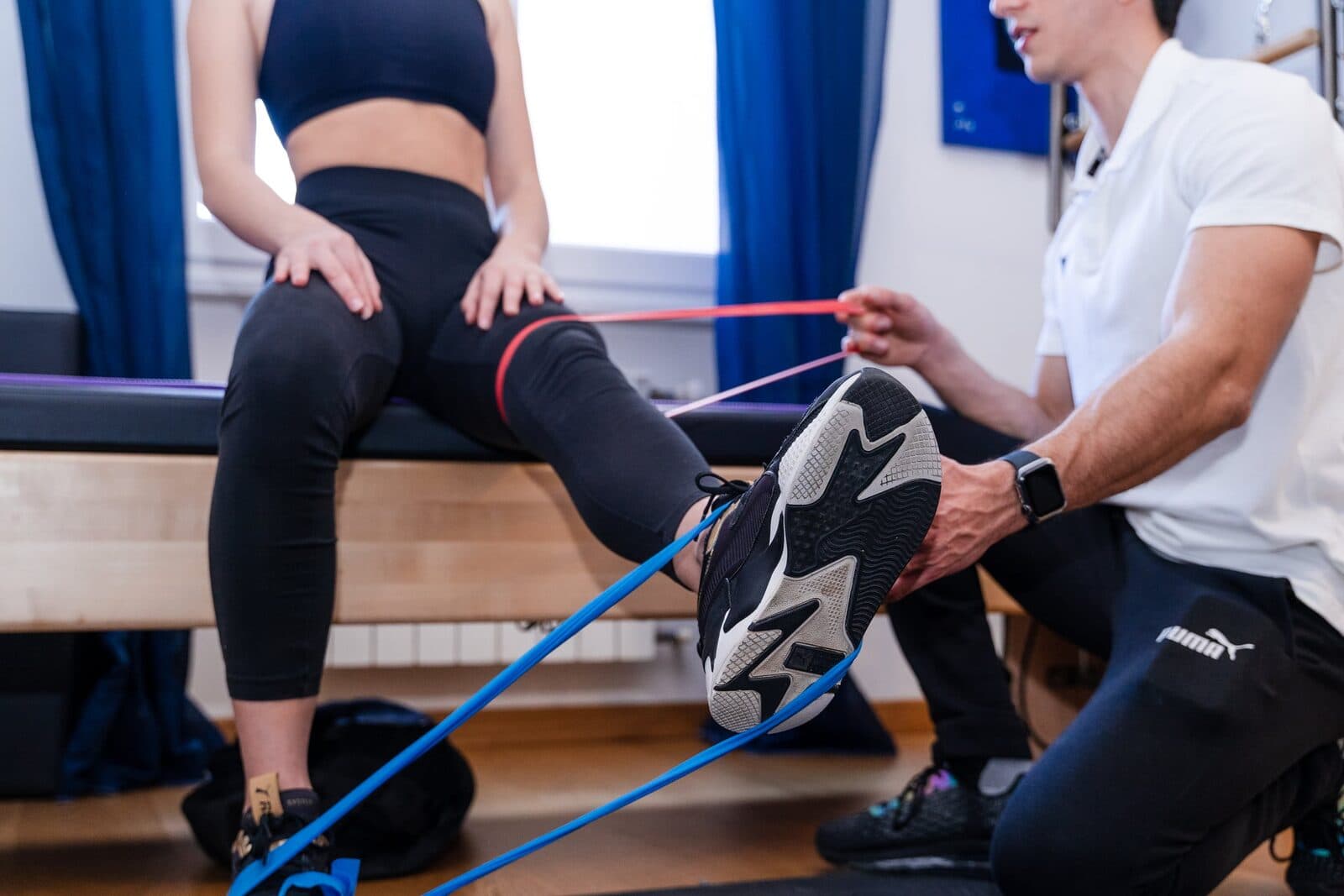
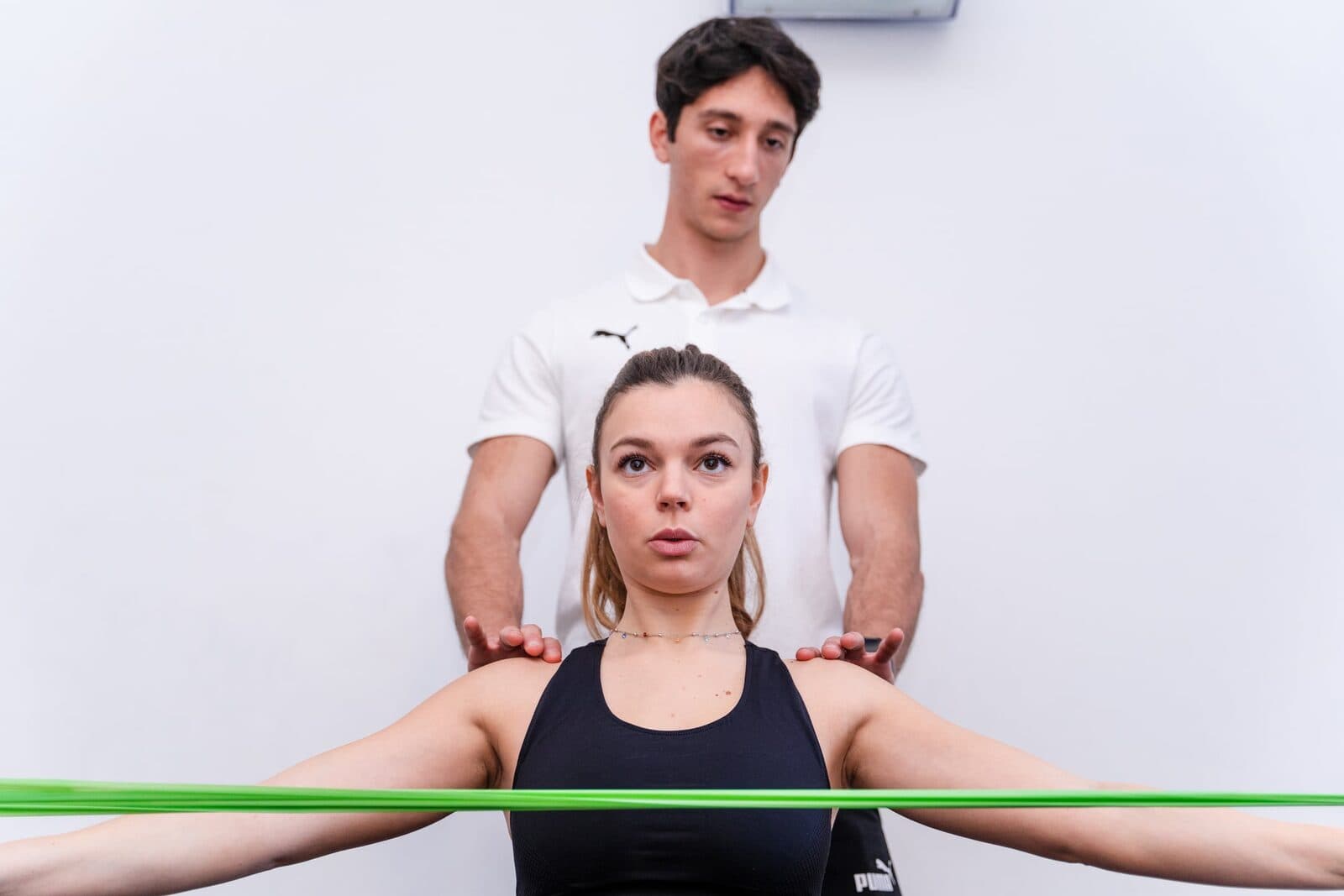
Physiotherapy is fundamental in recovery. Stretching and muscle strengthening exercises improve joint function and prevent recurrences. A physiotherapist can teach you the exercises best suited to your type of bursitis.
Exercises: Rehabilitation and Prevention
Exercises for bursitis should be started gradually, once the acute pain has eased. The goal is to recover joint mobility, strengthen the muscles and prevent new episodes of bursitis. Each type of bursitis requires specific exercises.
For shoulder bursitis, pendulum exercises are a good starting point. Lean forward letting the arm hang and make small circles. This movement mobilises the shoulder without stressing the bursa. Continue with pectoral stretching and rotator cuff strengthening.
Hip bursitis benefits from stretching exercises for the thigh and hip muscles. Stretching the iliotibial band is particularly useful in trochanteric bursitis. Strengthening the glutes and abductors stabilises the joint and reduces stress on the bursa.
For knee bursitis, isometric quadriceps exercises are safe and effective. Contract the thigh muscle with the leg straight, hold for 10 seconds and relax. Continue with progressive strengthening exercises such as partial squats and lunges.
Regular stretching is the best prevention. Flexible muscles reduce tension on the synovial bursae. Dedicate 10-15 minutes a day to stretching, focusing on the areas most at risk of bursitis.
When to See a Doctor
Some signs of bursitis require urgent medical assessment. If the pain and swelling are very intense, if fever appears, or if the skin over the bursa is very red and hot, it could be septic bursitis, which needs immediate treatment.
See a doctor if the bursitis does not improve after 1-2 weeks of home treatment. Persistent bursitis may require injections, specific physiotherapy or tests to rule out underlying conditions.
If you suffer from recurrent episodes of bursitis, it is important to identify the cause. It may be necessary to change working habits, correct sporting technique or treat a systemic disease that predisposes to bursitis.
How to Reabsorb a Bursitis
"Reabsorbing" describes well what happens: the bursa is a sac containing fluid, and when it becomes inflamed it produces more. The excess fluid the body reabsorbs on its own, on one condition: that the stimulus that makes it produce the fluid stops arriving.
For this reason the sequence that works is always the same, and the order matters:
- Remove the action that irritates it. Not absolute rest: remove that one, leaning on the elbow, sleeping on the painful side, running downhill. If the stimulus remains, everything else is wasted time.
- Ice in the first days, to be more comfortable. It helps the symptom, it does not speed up reabsorption.
- Build the load back up gradually. This is the part that decides whether it returns: a bursa becomes inflamed when the surrounding tissue cannot cope with what you ask of it, and that gap only closes through training.
Timing: days or a few weeks for the acute part, longer if the cause is not removed. If the swelling appeared suddenly with redness, heat and fever, that is a different situation and needs to be seen straight away: it is written in the paragraph on warning signs above.
How to Prevent It Coming Back
Preventing bursitis is possible with some precautions. Avoid prolonged pressure on the joints: use knee pads if you have to kneel, cushions if you work a lot at the computer. These simple measures reduce the risk of bursitis.
Always warm up before physical activity and stretch afterwards. Warm, flexible muscles protect the synovial bursae from overload. Increase the intensity of training gradually to prevent overload bursitis.
Maintain a healthy body weight to prevent hip and knee bursitis. Excess weight increases the mechanical stress on these joints and favours inflammation of the synovial bursae.
Look after your posture and ergonomics at work. A well-organised workstation reduces muscle tension and the risk of bursitis. Take regular breaks to move and change position.
The Support of Telerehabilitation
Bursitis often requires a rehabilitation programme to heal completely and prevent recurrences. Physiotherapy is fundamental, but it is not always easy to go regularly to a clinic. Telerehabilitation offers a practical and effective solution for those who suffer from bursitis.
With Ri-Hub you can be followed by qualified physiotherapists comfortably from home. The professional assesses your bursitis, sets a personalised exercise programme and guides you in performing it correctly. Correcting errors in real time speeds up recovery from bursitis.
Telerehabilitation for bursitis costs a fraction of traditional sessions: only 29,90 euro per session. No travel, no waiting, maximum flexibility in timing. Book a free consultation to start your path to recovery from bursitis and return to moving without pain.
You might also be interested in:
Pilates: All the Benefits for Body, Posture and Wellbeing Hip Osteoarthritis (Coxarthrosis): Symptoms, Causes, Exercises and Treatment Degenerative Disc Disease: What It Is, Symptoms and How to Manage It with Exercise
Stay in touch with us Join our dedicated Facebook group: we reply to all patients, give practical advice and clear up the most common doubts.
Sources
- Management of septic bursitis: Joint Bone Spine, 2019
- Management of septic and aseptic prepatellar bursitis: a systematic review: Archives of Orthopaedic and Trauma Surgery, 2022
- Evidence-based approach to the shoulder examination for subacromial bursitis and rotator cuff tears: a systematic review and meta-analysis: BMC Musculoskeletal Disorders, 2024
- Conservative treatments for greater trochanteric pain syndrome: a systematic review: British Journal of Sports Medicine, 2017
- Exercise compared to a control condition or other conservative treatment options in patients with Greater Trochanteric Pain Syndrome: a systematic review and meta-analysis of randomized controlled trials: Physiotherapy, 2024
Last source check: August 2026.
Need a consultation?
Start from the Ri-Hub questionnaire: a few questions about your case, you register, and you see who will follow you: a physiotherapist on the Italian professional register, whom you can write to in chat whenever you like. If you would rather talk it through by voice, the first consultation is free, lasts twenty minutes and commits you to nothing: they arrive having already read what you wrote, and together you decide whether and how to proceed.