Can osteoarthritis be cured? It is the first question after the diagnosis, and it deserves an answer in two parts rather than a yes or a no.
Part one, the uncomfortable one. If "cured" means restoring the cartilage to how it was, the answer is no: no treatment available today does it. Drugs do not, injections do not, exercise does not.
Part two, the one that matters. Almost nobody, in fact, wants the cartilage back. People want to stop hurting, walk without thinking about it, sleep through the night. From that point of view the answer changes completely, and the treatment with the best evidence is not a drug.
The belief that does the most harm
That osteoarthritis inevitably gets worse.
It does not, and the reason is that the image and the pain run on largely separate tracks. There are people with badly altered X-rays and few symptoms, and people with modest images and significant pain. How to read a knee report, with terms such as tricompartmental gonarthrosis, subchondral sclerosis and osteophytes, we have broken down word by word in knee report.
The practical consequence: the report is not a countdown, and behaving as if it were, by stopping moving "so as not to wear it out", is the most reliable way to make the situation worse.
Exercise: how well it works, with the numbers
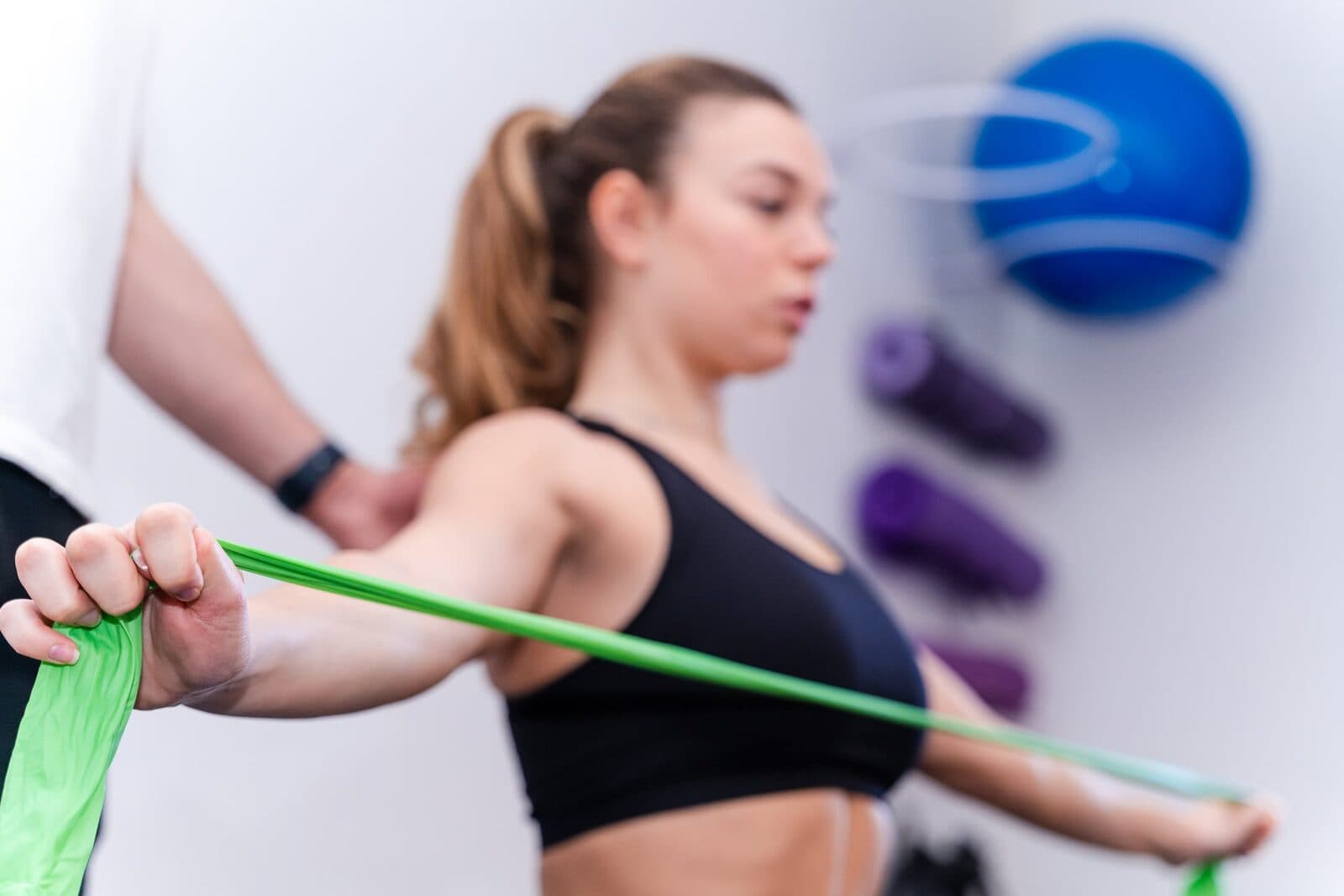
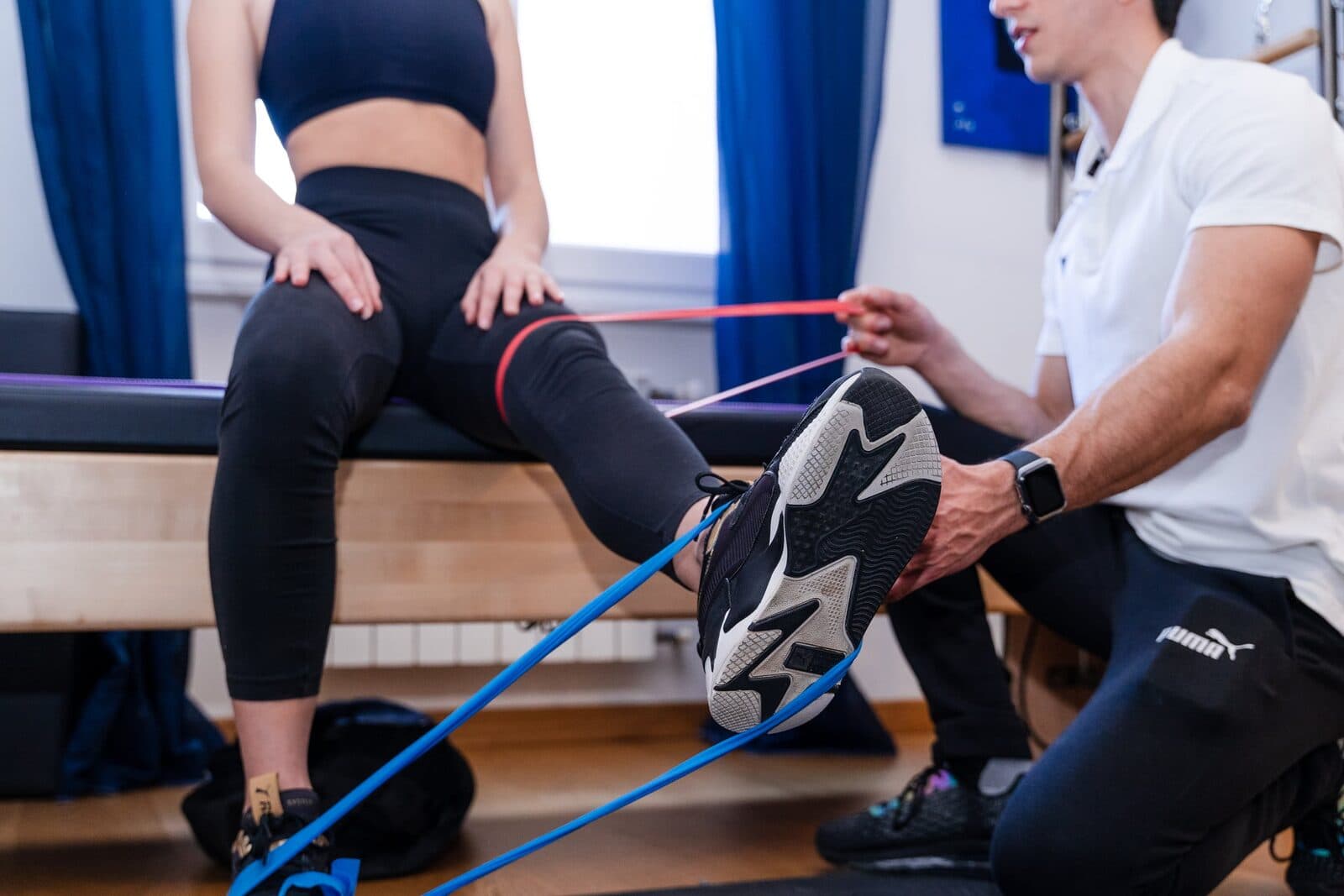
It is the basic treatment, and in the international guidelines for knee, hip and polyarticular osteoarthritis the core treatments are two: education about the condition and a structured programme of land-based exercise, with or without weight management. They come before medicines, not after.
How well does it work, in practice? The 2024 Cochrane review, with 139 randomised studies and 12,468 participants, measures, compared with a control, an average improvement of about 8.7 points out of 100 for pain and 11.3 for physical function.
It has to be read honestly in two directions. These are moderate effects: it is not a cure, and anyone who presents exercise as miraculous is exaggerating. But it is also the option with more evidence behind it than any other, and, unlike almost everything else, it does not stop working after six months.
What to include: progressive muscle strengthening, low-impact aerobic activity, mobility work. The specific knee exercises are in knee osteoarthritis.
A point that needs making: exercise reduces symptoms and improves function. That it slows structural progression is a different claim, and it is not demonstrated to the same degree. The two things are often confused.

Weight: how it was measured
Here is a study worth knowing, because it clarifies something that is usually said badly.
The IDEA study: 454 adults over 55, overweight or obese, with pain and documented knee osteoarthritis, followed for 18 months in three groups: diet plus exercise, diet alone, exercise alone.
Weight lost: 10.6 kg in the diet-plus-exercise group, 8.9 kg in the diet group, 1.8 kg in the exercise group. And the best clinical result was that of the combined group.
The correct reading is not "lose weight and the pain goes away", nor "just move more". It is that the two things together do more than each one alone, and that exercise alone does not produce a significant weight loss, which explains why many people find it disappointing on that front.
Medicines, and what they can do
None of them changes the disease. They are there to manage symptoms, and on that they can be useful.
Anti-inflammatories reduce pain and inflammation; in the international guidelines, those for topical use are strongly recommended for the knee, and it is a recommendation that is often ignored in favour of tablets. For people with stomach or cardiovascular problems the recommendations change, and that is a medical assessment.
Paracetamol can reduce pain, without an anti-inflammatory effect.
Injections give temporary relief and regenerate nothing. How long they last and what to expect is in after the injection; on ozone, which is often proposed precisely for osteoarthritis, the numbers are in ozone therapy.
The prosthesis
In advanced cases it is the option that comes closest to a solution: it removes the pain and restores function. It has a limited lifespan and requires serious rehabilitation.
The key point is when. Not "when the report looks bad", but when pain limits the things that matter despite a conservative pathway done properly: months of exercise with progression, not three weeks of gymnastics. Many people who arrive convinced they need an operation find they still have room to improve.
The therapies that promise regeneration
Stem cells, gene therapy, and the long tail of proposals that use the word "regenerative".
These are real areas of research, and preliminary results exist. But preliminary does not mean available, and the gap between the two states is exactly the space in which expensive courses of treatment get sold.
There is one criterion for finding your way, and you can use it yourself: ask which randomised trial shows the promised result, and in how many people. If the answer is a personal experience, an in-house case series, or "everyone does it", you have your answer.
In summary
Cartilage does not come back. But the question that matters is not that one: it is whether you can stop hurting and get back to doing things, and there the answer is often yes.
The basic treatment is education and structured exercise: moderate effects, but measured across more than twelve thousand people, and lasting. If there is weight to lose, doing it together with exercise works better than either one alone. Medicines manage symptoms. The prosthesis comes when the rest has really been done.
And osteoarthritis does not inevitably get worse: stopping out of fear of wearing it out is the thing most reliably making it worse.
If you want to understand what makes sense in your case, the physiotherapists at Ri-Hub can assess it by video call: a session costs 29,90 € and the twenty-minute first consultation is free.
Sources
- Exercise for osteoarthritis of the knee, Cochrane Database of Systematic Reviews, 2024
- OARSI guidelines for the non-surgical management of knee, hip, and polyarticular osteoarthritis, Osteoarthritis Cartilage, 2019
- Effects of intensive diet and exercise on knee joint loads, inflammation, and clinical outcomes among overweight and obese adults with knee osteoarthritis: the IDEA randomized clinical trial, JAMA, 2013
Last source check: September 2026.
Stay in touch with us Join our dedicated Facebook group: we answer all patients, give practical advice and clear up the most common doubts.
Need a consultation?
Start with the Ri-Hub questionnaire: a few questions about your case, you sign up, and you see who will follow you: a physiotherapist on the Italian professional register, to whom you can write in chat whenever you like. If you prefer to talk it over by voice, the first consultation is free, lasts twenty minutes and commits you to nothing: it arrives with your written message already read, and together you decide whether and how to continue.