Hip stretching: the hips are fundamental joints for movement, yet among the stiffest in the modern population. Sedentary habits, sitting for hours, and the lack of movement in all planes shorten the muscles of the hip. In this complete guide to hip stretching you will find all the exercises to recover mobility and flexibility.
The hip is a ball-and-socket joint that should move freely in every direction: flexion, extension, abduction, adduction, internal and external rotation. When these movements are limited, other joints (the back, the knees) compensate and can develop problems. Regular stretching of the hips is essential.
⚠ Important: read this before continuing
The exercises and advice in this article are general guidance and may not suit your situation. Every person has a unique clinical history: what works for others could be counterproductive for you.
Want a professional's opinion? Start from the questionnaire: you sign up and see who will follow you, a physiotherapist registered with the Register, chosen for your case, whom you write to in chat. If you would rather hear their voice, the first consultation is free and we look at your situation together.
Why the Hips Become Stiff
Modern hips suffer for several reasons:
Sedentary habits: Sitting for many hours shortens the hip flexors.
Lack of full movement: We never use the full range of motion.
Seated posture: The hips are constantly flexed, never extended.
Repetitive activities: Sports and activities that use only some movements.
Ageing: Flexibility naturally decreases with age if it is not maintained.
An important tip: before trying these exercises, make sure you have received a correct diagnosis. We often think we have one problem, but the real cause of the pain is another. Doing the wrong exercises can make the situation worse instead of better.
Hip Stretching: Hip Flexors
The hip flexors (iliopsoas, rectus femoris) are almost always shortened:
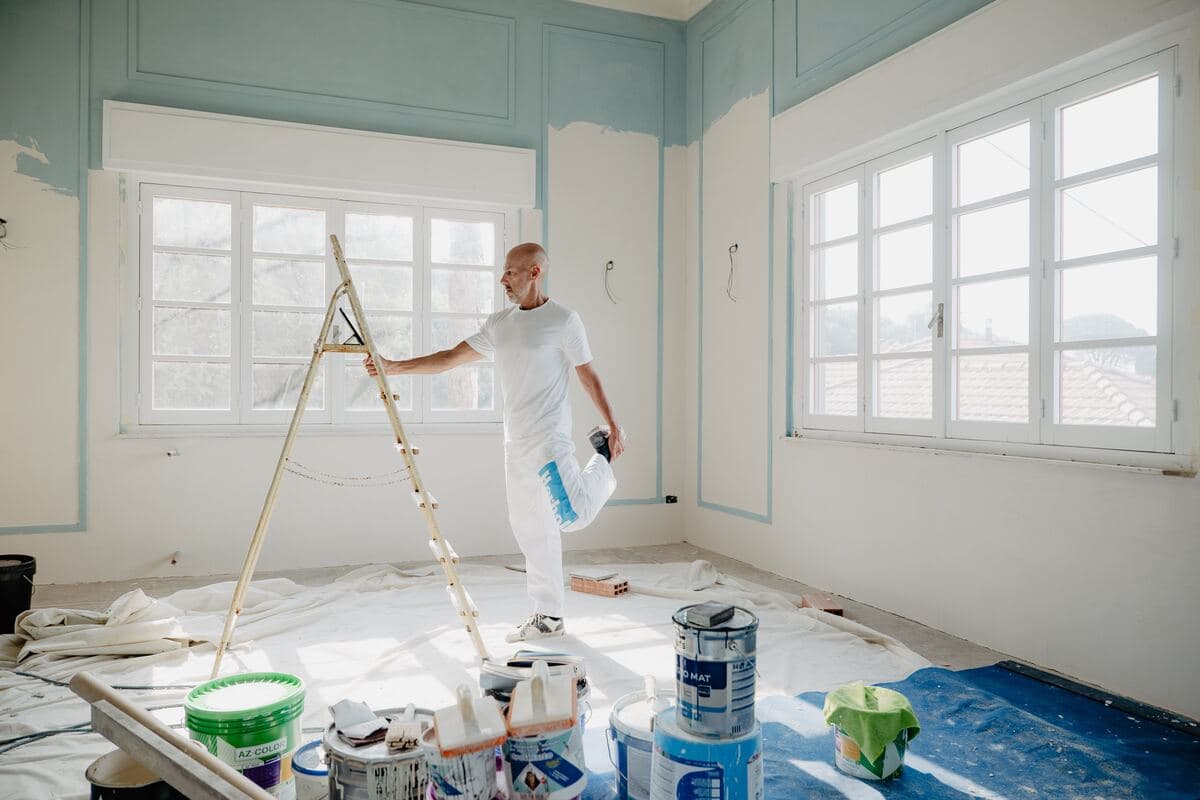
Kneeling hip flexor stretch: Kneeling on one leg, the other foot in front. Push the pelvis forward and down. 30-60 seconds per side.
Low lunge: As above with the arms raised to increase the stretch. 30-60 seconds per side.
Couch stretch: Back knee against a wall or sofa, foot upright. Very intense. 30-60 seconds per side.
Thomas stretch: On the edge of a bed, pull one knee to the chest while the other leg hangs. 30 seconds per side.
Half kneeling hip flexor with rotation: In the hip flexor stretch position, add a rotation of the trunk towards the front leg. 30 seconds per side.

External Rotators
The external rotators (piriformis, gemelli, obturators) can cause tension and pain:
Pigeon pose: One leg bent in front, the other stretched out behind. Fold forward. 30-60 seconds per side.
Figure four stretch: Lying on your back, cross the ankle over the opposite knee and pull the thigh towards you. 30 seconds per side.
Seated figure four: Seated, as above. 30 seconds per side.
90/90 stretch: Seated, front leg at 90°, back leg at 90°. Rotate the trunk towards the front leg. 30 seconds per side.
Thread the needle (hip variation): Lying on your back, cross the ankle, thread the arm through and pull. 30 seconds per side.
Adductors
The adductors (inner thigh muscles) are often neglected:
Butterfly stretch: Seated, soles of the feet together, knees towards the floor. 30-60 seconds.
Wide-legged forward fold: Seated with legs apart, fold forward from the pelvis. 30-60 seconds.
Frog stretch: On all fours, knees as wide as possible, feet turned out. Move the pelvis back. 30-60 seconds.
Half frog stretch: Frog with one leg bent, the other straight. 30 seconds per side.
Side lunge: Lateral lunge with the straight leg extended. 30 seconds per side.
Internal Rotators
Internal rotation is often limited:
90/90 stretch (back side): In the 90/90 position, lean towards the back leg. 30 seconds per side.
Seated internal rotation: Seated with knees bent, feet wide, let one knee fall inwards. 30 seconds per side.
Prone internal rotation: Lying face down, knee bent at 90°, let the foot fall outwards. 30 seconds per side.
Extension
Hip extension is often limited by sedentary habits:
Prone hip extension stretch: Lying face down, bend one knee and pull the heel towards the buttock. 30 seconds per side.
Kneeling hip extension: Kneeling, push the hips forward. 30 seconds.
Hip Stretching Routine
Quick routine (10 minutes): Hip flexor stretch 30 sec per side, Pigeon pose 30 sec per side, Butterfly 30 sec, 90/90 30 sec per side.
Complete routine (20 minutes): Hip flexor stretch 45 sec per side, Couch stretch 30 sec per side, Pigeon pose 45 sec per side, Figure four 30 sec per side, Butterfly 45 sec, Frog stretch 45 sec, 90/90 stretch 30 sec per side (both sides).
Daily office routine (5 minutes): Standing hip flexor stretch 20 sec per side, Seated figure four 20 sec per side, Seated hip circles 10 per direction.
Tips for Hip Stretching
Consistency: The hips respond well to daily stretching.
Patience: Hip flexibility improves slowly.
Warm-up: A few minutes of walking or movement before intense stretching.
Breathe: Deep breathing helps relaxation.
Do not force it: A feeling of stretch yes, pain no.
Adequate time: Hold each position for at least 30 seconds, ideally 60-90.
Common Mistakes
Compensating with the back: Keep the spine neutral, fold from the hips.
Forcing beyond pain: Respect the limits of your body.
Neglecting some directions: Work on all the movements of the hip.
Impatience: Hip flexibility takes time.
When to Consult a Professional
Consult a doctor or physiotherapist if: you have hip or groin pain during stretching, the stiffness is asymmetrical (one side much stiffer), you have clicks or locking of the hip, or mobility does not improve with regular stretching.
If you want a personalised hip stretching routine, Ri-Hub can help. Our physiotherapists offer assessments and programmes via teleRehabilitation. You will receive exercises adapted to your situation and your goals, with supervision of your technique. Contact Ri-Hub for mobile and flexible hips.
Sources
- Chronic effects of stretching on range of motion with consideration of potential moderating variables: A systematic review with meta-analysis, Journal of Sport and Health Science, 2024
- The effectiveness of exercise interventions to prevent sports injuries: a systematic review and meta-analysis of randomised controlled trials, British Journal of Sports Medicine, 2014
Last source check: September 2026.
You might also be interested in:
Cruciate Ligament Rehabilitation: Complete Guide to Recovery
30 Minutes of Exercise a Day: Benefits and How to Organise Them
Stay in touch with us
Join our dedicated Facebook group: we answer all patients, give practical advice and clear up the most common doubts.
Need a consultation?
Start from the questionnaire on Ri-Hub. A few questions about your case, you sign up, and see who will follow you: a physiotherapist registered with the Register, whom you write to in chat whenever you like. If you would rather talk it through by voice, the first consultation is free, lasts 20 minutes and commits you to nothing: they arrive having already read what you wrote, and together you decide whether and how to go on.