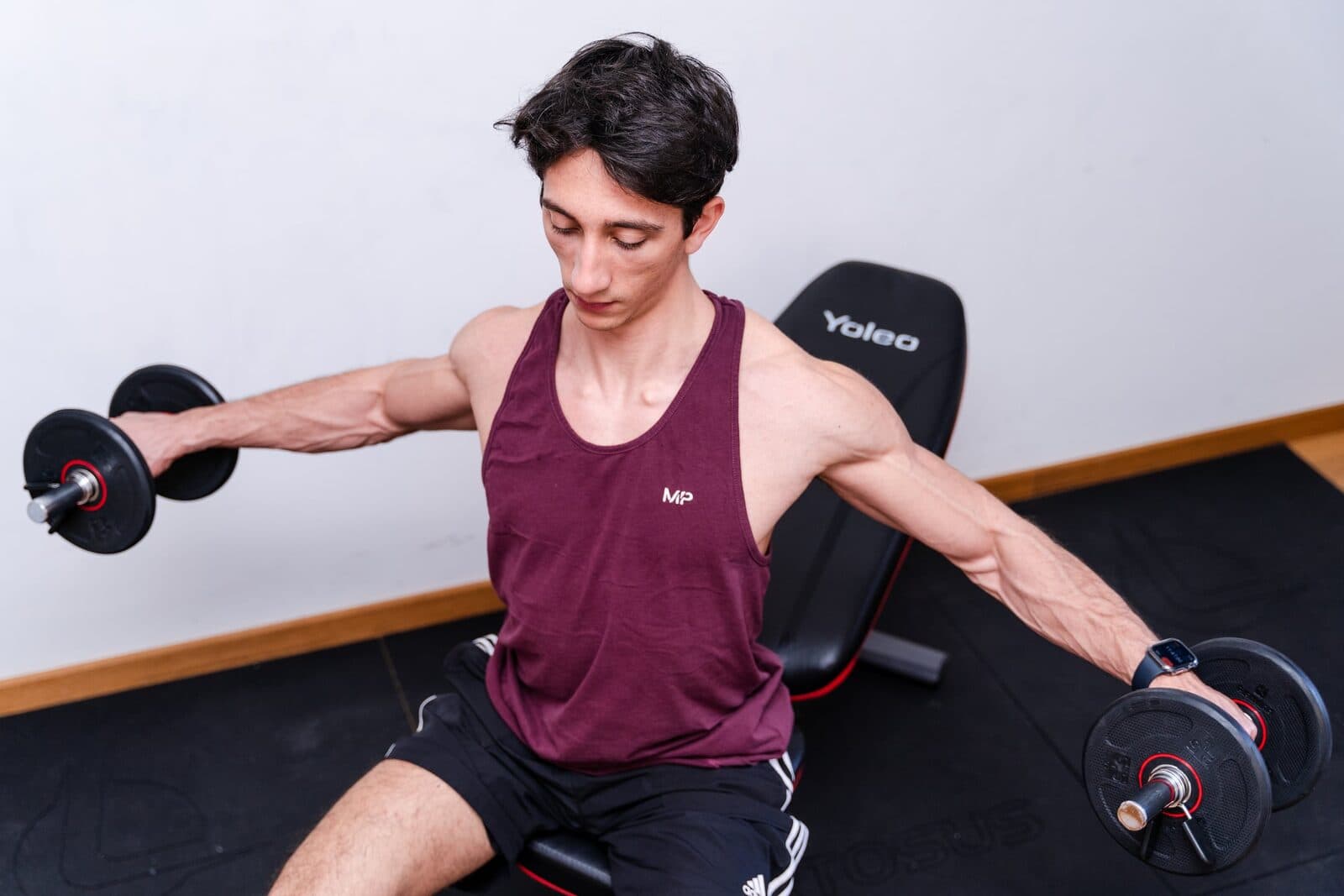

CrossFit injuries: a debated topic that deserves a balanced analysis. CrossFit injuries can occur as they do in any intense physical activity, but with the right precautions the risk can be significantly reduced.
In this guide on CrossFit injuries you will discover the most common injuries, the risk factors and, above all, how to prevent them so you can train safely and get all the benefits of this discipline.
⚠ Important: read this before continuing
The exercises and advice in this article are general indications and may not be suitable for your situation. Every person has a unique clinical history: what works for others could be counterproductive for you.
Want a professional's opinion? Start from the questionnaire: you sign up and see who will follow you, a physiotherapist on the Italian professional register chosen for your case, whom you write to in chat. If you would rather hear their voice, the first consultation is free, lasts twenty minutes and we look at your situation together.
The Most Common Injuries
Shoulder injuries are among the most frequent CrossFit injuries. Movements such as kipping pull-ups, snatches, clean and jerks and handstand push-ups load this joint intensely.
Lower back injuries are common among CrossFit injuries. Deadlifts, heavy squats and kettlebell swings are all movements that, if performed with poor technique, can stress the spine.
Knee injuries are part of CrossFit injuries. Squats, box jumps and lunges can cause problems if the technique is not correct or if there is muscular weakness.
Overuse injuries are typical CrossFit injuries. Tendinitis, bursitis and strains can result from high volume and the intensity of training.
The Risk Factors
Poor technique is the main risk factor in CrossFit injuries. Many CrossFit movements are technically complex. Performing them badly, especially under fatigue, greatly increases the risk.
Ego lifting contributes to CrossFit injuries. Lifting more than you can handle with correct technique to compete with others or beat a personal record is a recipe for injury.
An important point: before trying these exercises, make sure you have received a correct diagnosis. People often think they have one problem, but the real cause of the pain is another. Doing the wrong exercises can make the situation worse instead of better.
Fatigue is a factor in CrossFit injuries. Towards the end of an intense WOD, technique breaks down. Continuing with complex movements when you are exhausted is risky.
Insufficient recovery predisposes you to CrossFit injuries. Training every day at high intensity without adequate recovery leads to overtraining and overuse injuries.

Prevention: Technique
Learning technique before increasing the load prevents CrossFit injuries. Master each bodyweight or light-load movement before adding weight.
Qualified coaching is essential to prevent CrossFit injuries. A good coach corrects technique, scales exercises appropriately and does not push you beyond your abilities.
Listening to your body prevents CrossFit injuries. If a movement causes pain (not fatigue, pain), stop. Modify it or replace it with an alternative.
Scaling appropriately prevents CrossFit injuries. Not everyone has to do the "Rx" WOD. Scale weight, repetitions or movements according to your current level.
Prevention: Strength and Mobility
Mobility work prevents CrossFit injuries. Many CrossFit movements require a wide range of motion. If you lack it, you will compensate with poor technique. Work daily on the mobility of hips, shoulders and ankles.
Strengthening the rotator cuff prevents shoulder CrossFit injuries. Band exercises for external and internal rotation, 2-3 times a week. For specific exercises, see rotator cuff exercises.
Core strengthening prevents CrossFit injuries of the back. A strong core protects the spine during lifts. Dedicate specific time to core strengthening beyond your WODs. To go deeper, see core strengthening.
Accessory work prevents CrossFit injuries. Exercises that strengthen areas often neglected: the rotator cuff, the scapular stabilisers, the deep hip muscles.
Prevention: Programming
Smart programming prevents CrossFit injuries. Do not perform high-stress movements (snatches, kipping) every day. Alternate intense sessions with lighter or skill-based sessions.
Rest days prevent CrossFit injuries. The body needs to recover. 1-2 full rest days a week are recommended. Active recovery (walking, light swimming) is fine.
Listening to your body prevents CrossFit injuries. If you are chronically tired, have persistent pain, or your performance is dropping, you may need more rest.
Warm-Up
Adequate warm-up prevents CrossFit injuries. Do not skip the warm-up to save time. 10-15 minutes of preparation are essential.
A warm-up to prevent CrossFit injuries should include: cardiovascular activation, joint mobility specific to the WOD movements, muscle activation, and practice of the movements at low intensity.
The Signs to Stop, Not to Grit Your Teeth
Four of them, and it is worth recognising them as they happen.
Pain that increases during the WOD. A discomfort that gets worse while you train is a signal to stop, not something to push through. Continuing turns a small problem into a long one.
Technique that breaks down. When you can no longer hold good form, the risk rises quickly: stop the set or reduce the load, do not finish the round anyway.
Joint pain. Muscle soreness after training is normal; pain inside the joint during or right after it is not.
Swelling or stiffness that lasts beyond 48 hours. This is the threshold beyond which it is better to get checked rather than wait another week.
If You Have Already Been Hurt
Relative rest, not absolute rest. Stopping everything is rarely the best choice: you keep training what does not hurt, which maintains your fitness and shortens the return.
Gradual return. Modified movements and light loads first, progression afterwards. Rushing the return is the most common reason for relapse.
And the question almost nobody asks: what caused it? Technique, volume, mobility, or simply a week in which the load rose too much. Without that answer you go back to square one, a few months older.
Online Physiotherapy
A physiotherapist can help you prevent CrossFit injuries. They can assess your mobility, identify weaknesses and create a personalised accessory programme.
Remote rehabilitation is effective for CrossFit injuries. The physiotherapist can observe your movements, analyse videos of your lifts and correct any problems.
With Ri-Hub you can access online physiotherapy sessions for just 29,90€. Our sports physiotherapists can help you prevent CrossFit injuries and recover if you have already suffered one.
In Summary
CrossFit injuries are avoidable with the right approach. Technique above all, qualified coaching, scaling appropriately, mobility and accessory strength work, smart programming and adequate rest. With these precautions, you can get all the benefits of CrossFit while minimising the risks. For general injury prevention, also read sports injury prevention.
Want to train in CrossFit safely? With Ri-Hub you can start an online physiotherapy programme, for just 29,90€ per session. Our physiotherapists will create an accessory programme tailored to your needs. Book your first session and train without injuries.
Sources
- Injury in CrossFit®: A Systematic Review of Epidemiology and Risk Factors: Phys Sportsmed: 2022
- The effectiveness of exercise interventions to prevent sports injuries: a systematic review and meta-analysis of randomised controlled trials: British Journal of Sports Medicine, 2014
Last source check: September 2026.
You might also be interested in:
Knee Pain Going Downstairs: Causes and Effective Solutions Desk Ergonomics: A Complete Guide to Working Without Pain Exercises for Those Who Sit at Work: Anti-Pain Routine
Stay in touch with us Join our dedicated Facebook group: we reply to all patients, give practical advice and clear up the most common doubts.
Need a consultation?
Start from the questionnaire on Ri-Hub: a few questions about your case, you sign up, and you see who will follow you: a physiotherapist on the Italian professional register, whom you write to in chat whenever you like. If you prefer to talk it through by voice, the first consultation is free, lasts twenty minutes and commits you to nothing: they arrive having already read what you wrote, and together you decide whether and how to continue.