
Tailbone pain has a feature that makes it recognisable even before any test: it gets worse when you sit. On a hard chair, on a sofa that makes you sink backwards, in the car on a long trip. And it gives that precise jab the moment you stand up.
When this pain persists it is called coccydynia. The name sounds more serious than it is: in most cases it is a mechanical problem of a small, heavily loaded structure, not a sign of something serious.
First of all: signs that are not for the physiotherapist
Stop and ask for a medical opinion, without waiting, if the pain is accompanied by:
- fever, swelling, redness or discharge in the area: these may indicate an infection or an inflamed pilonidal cyst;
- loss of sensation in the saddle area, the part that rests on a bicycle saddle, or difficulty controlling urine and stools;
- pain that appeared without any trauma, gets worse at night, and comes with unexplained weight loss or a history of cancer;
- very intense pain after a violent fall, which does not let you put any weight on the area: a fracture needs to be ruled out.
None of these situations is managed with exercises.
What the coccyx is, and why it hurts
The coccyx is the last section of the spine: three to five small vertebrae fused together, articulated with the sacrum. It is not a useless remnant, as is often said: it is where the muscles and ligaments of the pelvic floor attach, and in the sitting position it is part of the tripod on which weight is carried, together with the two ischial tuberosities.
When the load shifts too far back, because the seat is soft, because you sit sliding forward onto your back, or because a fall has made that area sore, the coccyx receives pressure it is not built for. From there a cycle starts: it hurts when you sit, you change position to avoid it, and this loads other structures.
What causes it
The fall backwards is the classic cause: a step, a staircase, ice. The direct impact can bruise the coccyx or, more rarely, fracture or dislocate it.
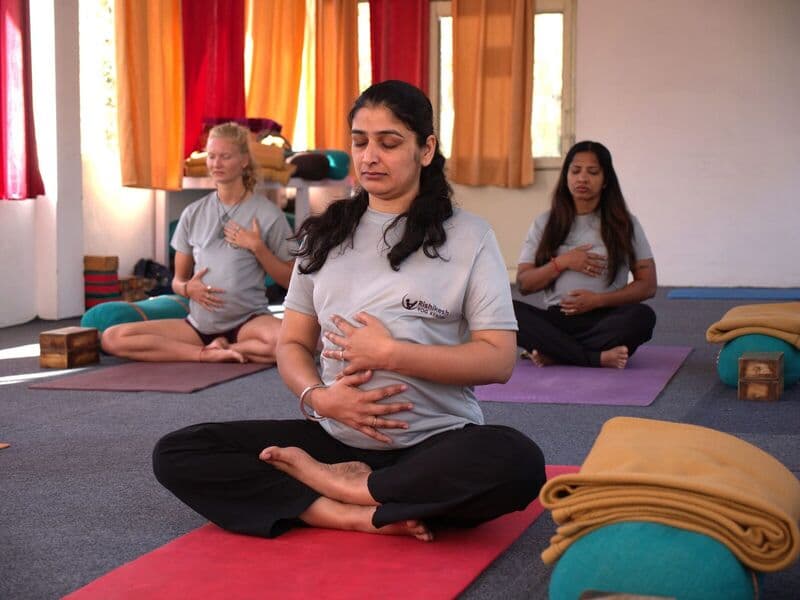
Childbirth is the other frequent cause, because during the baby's passage the coccyx is pushed back beyond its usual range. It is a coccydynia that often appears or worsens in the weeks after delivery, and that coexists with the rest of postpartum recovery. If instead the spot that burns is not the bone at the end but further forward, on the perineum, and sitting is what sets it off, the picture to know is a different one: when perineal pain does not go away in the months after childbirth. If in those same weeks sex is also painful, that is a separate topic, and much more common than people say: pain during sex after childbirth: why it happens and what helps.
Prolonged sitting, especially on hard surfaces or with a posture that pushes the weight backwards, produces a form without an initial trauma: it sets in slowly and for this reason it is noticed late.
Repeated micro-trauma affects people who spend hours on a bicycle, rowing or horse riding.
And then there is the share of cases where no cause is found: idiopathic coccydynia. It does not mean the pain is imaginary; it means there is no event to attach it to.
What the studies really say
Here we need to be precise, because online you read promises that the data do not support.
A systematic review from 2022 gathered 64 studies covering nearly 2,000 patients and compared the options available. The average improvement in pain was greatest with radiofrequency and extracorporeal shock waves, followed by surgical removal of the coccyx and by injections; it was more modest with the ganglion impar block and with stretching and manipulation. The authors' conclusion is the most useful part, though: the approach is progressive, starting with what is non-invasive, and non-surgical treatment gives relief to many patients. Surgery remains the last option, for cases that do not respond to anything else.
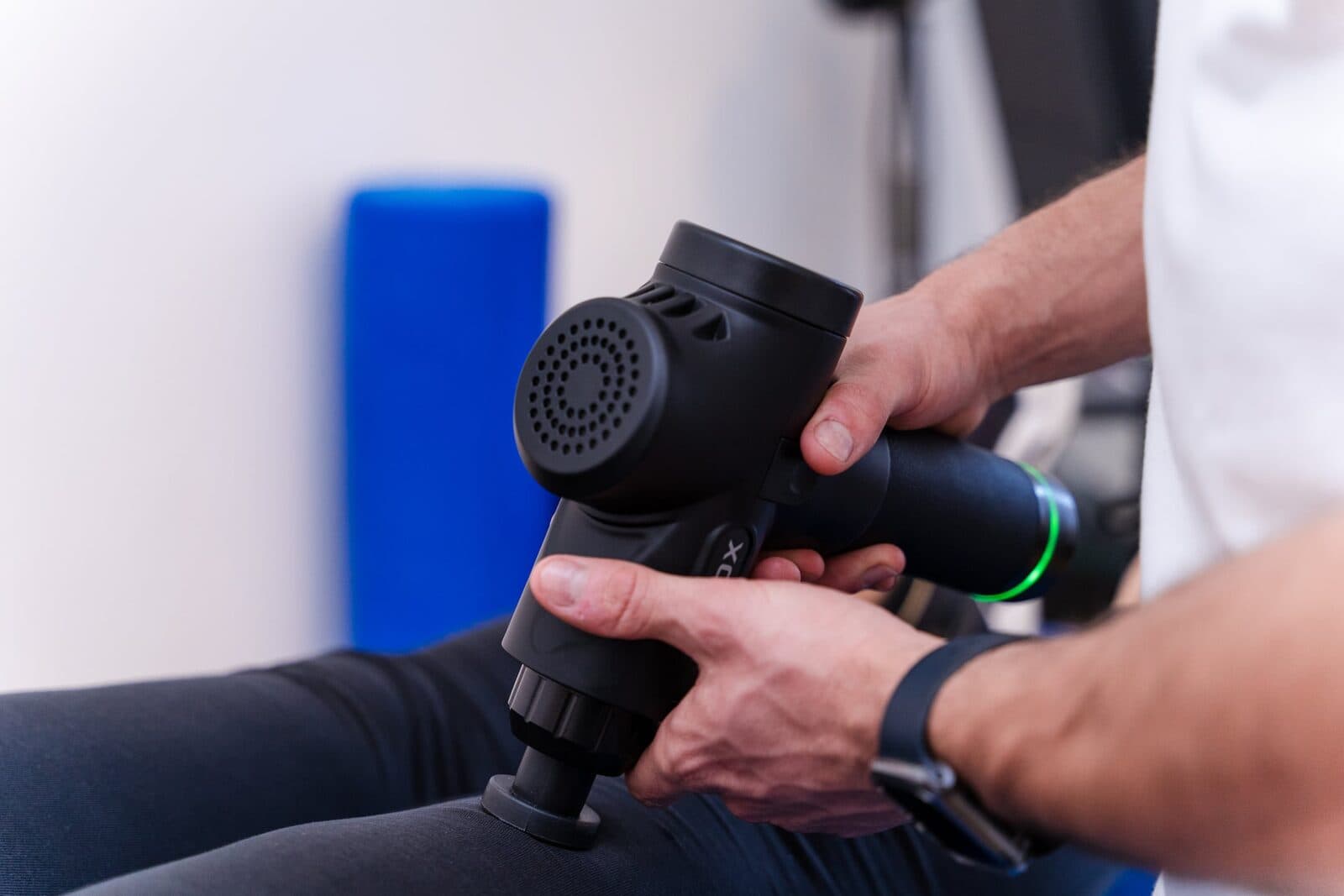
A 2025 review of nine randomised trials (532 participants) focused on physiotherapy. Shock waves showed significant reductions in pain, maintained up to six months in some cases. Kinesio taping improves how pain is perceived but has little effect on disability. And there is one result that changes how we reason: manual therapy proved particularly effective in recent-onset cases, with an effectiveness that decreases over time.
The same authors warn that the methodological quality of the studies varies and the follow-up periods are short: we are not dealing with certainties, but with reasonable indications.
The practical consequence is one thing only: waiting is not a neutral choice. The moment when manual treatment works best is the beginning, not the sixth month.
What you can do while you decide
These are low-risk measures that act on the most common cause: direct pressure.
- The right cushion, which is the thing that changes the most immediately. Both the ring and the wedge with a rear cut-out are fine: the goal is for the weight to sit on the ischial tuberosities and the coccyx to stay unloaded.
- Change position often. No posture is wrong in itself; staying in it for an hour is what makes it wrong.
- Avoid seats that are too soft. Sinking tilts the pelvis backwards, and that is exactly the load that causes discomfort.
- Do not lean back on low stools or armchairs when the pain is acute.
- Lying down, lying on your side with a cushion between your knees removes the direct load and is usually the most tolerated position.
- Regular bowel habits: constipation and straining make pain in this area worse, and correcting them is part of the treatment, not a detail. If the tailbone started to hurt after a birth, those are also the weeks when the bowel slows down most easily: why it happens and what really helps.
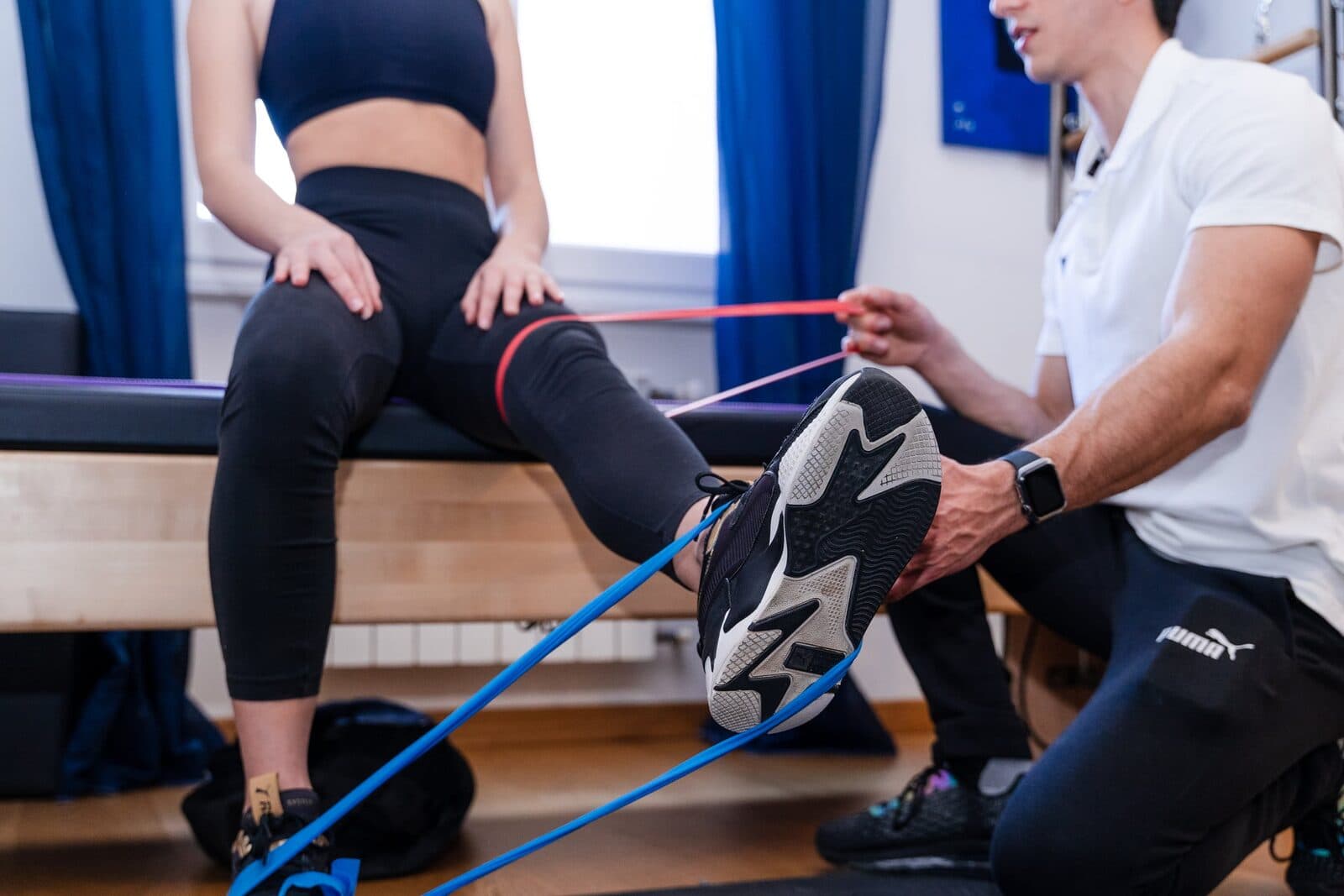
On the movement side, it makes sense to work on hip and pelvic mobility and on the ability to release the pelvic floor, which in these situations tends to stay tense as a defence. It is not intense exercise: it is a job of control and gradual progression. When that pelvic floor stays tense even at rest, the contraction exercises usually prescribed can make things worse: how to recognise this and what to do instead of Kegels is explained in pelvic floor that cannot relax.
When to get support, and from whom
It is worth getting assessed if the pain has lasted more than a few weeks, if it stops you from sitting at work, or if it appeared after a birth or after a fall. In coccydynia, the assessment serves mainly two purposes: to establish whether the problem really is the coccyx or whether the pain comes from the lower back, the sacroiliac joints or the pelvic floor, and to set the right load before the months in which manual treatment works best have passed. And if after a birth the spot that burns when sitting is not the coccyx but further forward, on the perineum, the timeline is different: how long the stitches last and when the discomfort stops being normal.
With Ri-Hub, the first consultation is free: a physiotherapist on the Italian professional register looks at your situation, works out where the pain comes from, and tells you whether the online programme suits your case. Follow-up sessions cost 29,90€.
To be clear about the limits of this channel: some techniques used for coccydynia, such as direct manipulation and internal pelvic floor treatment, require a physical presence, and if your case needs them we will tell you and refer you to a colleague in your area. What can be done well at a distance is often the part that matters most: understanding the problem, correcting loads and postures, setting up and progressing the exercises, and not leaving you stuck waiting.
Interested in the bigger picture? Also read Postpartum back pain: causes and remedies and Sacroiliitis: exercises to relieve pelvic pain.
Wondering how much it would cost to be followed? The cost depends on how many sessions are needed, not on the single rate: the figures are in How much physiotherapy for back pain costs.
Need a consultation?
Start with the questionnaire on Ri-Hub: a few questions about your case, you sign up, and you see who will follow you: a physiotherapist on the Italian professional register, whom you can message in chat whenever you like. If you prefer to talk it through by phone or video, the first consultation is free, lasts twenty minutes and commits you to nothing: they arrive having already read what you wrote, and together you decide whether and how to go on.
Sources
- Coccydynia: The Efficacy of Available Treatment Options: A Systematic Review. Global Spine Journal, 2022
- Physiotherapy approaches for coccydynia: evaluating effectiveness and clinical outcomes. BMC Musculoskeletal Disorders, 2025
- A comparison of conservative interventions and their effectiveness for coccydynia: a systematic review. Journal of Manual & Manipulative Therapy, 2013
Sources last checked: August 2026.