

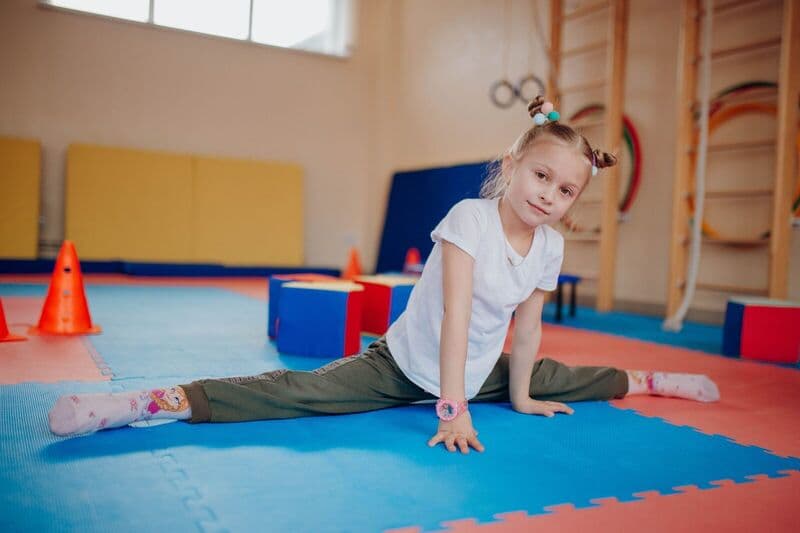
It is ten in the evening and you are standing at the door of your child's room. They are sleeping sideways, as always, but what stays with you is something else: the open mouth. Not slightly parted: open. And that sound that was not there before. Then you start noticing it during the day as well, over homework, in front of the television, in the car, and the nose never seems to take part.
You type three words into a search engine and find a list that frightens you: long face, crooked teeth, ruined posture, "adenoid face". Each of those items has something true behind it and a fair amount of exaggeration.
Let us set out the two things that matter.
The first: the cause is not found by a physiotherapist, and you will not find it tonight. Enlarged adenoids and tonsils, an allergy, a deviated septum, a rhinitis that does not go away: these are diagnoses made by looking inside the nose and throat, and they are made by the paediatrician and the ear, nose and throat specialist. If you came to this article looking for the answer to "why does it breathe like this", the honest answer is make an appointment, rather than keep reading.
The second: of all the consequences people talk about, the one that really matters is not the face and not the posture. It is sleep.
From here on we look at what the studies say, one by one, and above all how far they hold up.
How common it really is
Much more common than you might imagine, but with a major caveat that almost nobody mentions: the number depends on how "breathes through the mouth" is defined, and the definitions used are broad.
In a Brazilian study conducted in a primary school, 496 questionnaires completed by parents of children in first and fourth grade returned a prevalence of 56.8%, with a mean age of 7 and a response rate of 84.5%. In the same study, the variables that predicted mouth breathing were three: drooling, snoring and, in the opposite direction, sleeping well.
A second Brazilian study, of 1,911 children aged 9 and 10 who were also assessed by clinical examination by a trained and calibrated examiner, found a prevalence of 54.81%. The same authors found that children who breathed through the mouth reported a worse quality of life than peers who breathed through the nose (p < 0.001).
Two studies, both with more than half of the children. This should make you think not "half of children are ill", but "the instrument we use to measure it is very broad". It serves to tell you something useful: if your child keeps their mouth open, you are not in a rare case, nor in an emergency. You are in a common situation that needs to be looked at carefully, calmly, by the right person.
A reliable Italian figure does not exist, and we do not make one up.
The face: here the evidence is the best
This is the part where the research is most solid, and it is also the part where popular talk exaggerates the most.
A systematic review with meta-analysis brought together 19 cephalometric studies on children and adolescents (lateral X-rays of the skull measured with standard angles and distances), and extracted data from 18 for the actual meta-analysis, comparing mouth breathers with nasal breathers across 11 angular and 4 linear measurements. Here is what it found:
| Measure | Difference in mouth breathers | 95% CI |
|---|---|---|
| SNA angle (position of the upper jaw) | −1.33 degrees | from −2.03 to −0.63 |
| SNB angle (position of the lower jaw) | −1.33 degrees | from −2.18 to −0.49 |
| ANB angle (relationship between the two) | no difference | from −0.26 to 0.75 |
To this are added a more open mandibular plane angle, a greater total anterior facial height and lower, and a smaller posterior facial height. In plain terms: in mouth breathers the face tends to grow more vertically, with the lower jaw rotated downwards and backwards.
Now the part that is usually missing. First: we are talking about a difference of just over one degree, and these are group means. One degree is not a ruined face, and in an individual child it can be invisible. Second: the ANB angle, the relationship between upper and lower jaw, did not differ at all. The two jaws were set back together, not out of step with each other, which is different from the picture usually described. Third, and this is the point: all the included studies were cross-sectional case-control studies, that is snapshots of a single moment. They describe an association. They do not say which came first. The authors themselves conclude by calling for better-quality studies.
The reverse direction of the arrow also exists, and it is documented: in a French study of children with obstructive apnoea, the mouth breathing reported by parents was associated with real nasal obstruction, measured with acoustic rhinometry and endoscopy: hypertrophy of the inferior turbinates in 18 cases, adenoids in 15. In other words, often it is not the open mouth that shapes the face, it is a blocked nose that produces both.
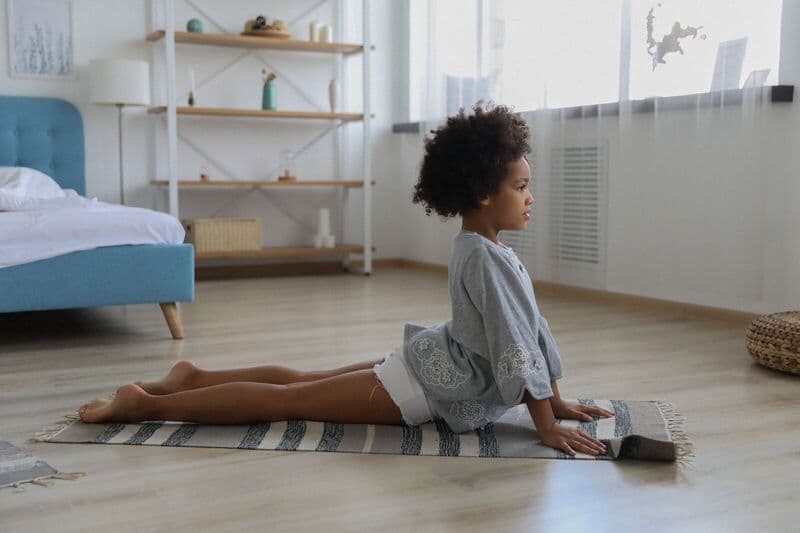
The neck and posture: here the evidence is weak, and it must be said
This is the section where, if we were salespeople, we would scare you. We do the opposite.
A systematic review published in a physiotherapy journal looked for all the studies on postural disorders in mouth-breathing children. It found 10, covering 417 children aged 5 to 14. It then rated the quality of each with a standard checklist, and the result is merciless: all the studies scored low. The recurring weaknesses were the description of participants, the description of the methods used to measure posture, the handling of confounding factors and the absence of statistical power analysis; internal and external validity were compromised by the lack of representative samples and of blinding of the assessors.
The conclusion, word for word, is that the review provides low-quality evidence that the pattern of mouth breathing in children aged 5 to 14 is associated with postural deviations.
This does not mean there is nothing there. It means that anyone who shows you a profile photo and says "see? the head forward, that is the breathing" is using as proof a body of literature that its own authors judge fragile.
And there is more, because one study on this topic reaches a conclusion that overturns common sense. Ninety-two children aged 8 to 12 (30 mouth breathers with an ENT diagnosis, 62 nasal breathers) were assessed for posture, respiratory muscle strength and the six-minute walk test. The mouth breathers had on average lower inspiratory strength, expiratory strength and distance walked. So far, as expected. But within the nasal-breathing group, children with a moderately forward head had higher inspiratory and expiratory strength than those with normal head posture (p = 0.003 and p = 0.004). The authors interpret the forward head as a compensatory mechanism that improves the function of the respiratory muscles.
If this seems counterintuitive, it is because it is. And that is exactly why "straighten it" is never a good first move: first you need to understand what that position is doing. The same reasoning applies to the discussion about tablets and phones, which you will find in Children, screens and the neck: how much posture really matters.
What really matters: sleep
Here everything changes, and this is the section we ask you not to skip.
Mouth breathing is one of the ways sleep-disordered breathing shows itself. In the review on paediatric epidemiology, the population estimates are these: snoring reported by parents as always present in 1.5-6% of children; observed breathing pauses in 0.2-4%; sleep-disordered breathing defined by combinations of symptoms reported by parents in 4-11%; obstructive apnoea diagnosed with instrumental tests in 1-4%. In the meta-analysis within the same review, snoring reported by parents, whatever the definition, came out at 7.45% (95% CI: 5.75-9.61). The disorder is more common in boys and in heavier children.
And in the opposite direction: in a study of 93 children with moderate to severe obstructive apnoea (median age 10.6 years), 41% breathed through the mouth according to the parents' judgement. Be careful how this number is read: it is not the percentage of children who breathe through the mouth and have apnoea, it is the percentage of mouth breathers within a group already selected for moderate to severe apnoea. But it says something important: the parents' judgement counts. In that study the assessment reported by mum and dad was associated with the nasal obstruction measured by acoustic rhinometry and endoscopy, and the authors consider it acceptable, although agreement between parents and doctors ranged from poor to moderate. What you see in the evening matters.
There is also a piece that parents rarely connect. A systematic review analysed 18 studies covering 890 children with primary nocturnal enuresis and sleep-disordered breathing who had undergone adenotonsillectomy: complete resolution was 51% (43-60%), with partial resolution in 20%. Restricting the analysis to studies at low risk of bias and to children aged 5 and over, complete resolution was 43% (36-49%). It must be said in full: all were observational studies, only one with a control group, with high heterogeneity. It is not proof that the operation cures the bed-wetting. And it concerns primary enuresis, that is children who have never stopped wetting the bed: these studies say nothing about bed-wetting that returns after months dry. It is nonetheless a serious reason why, if your child wets the bed and snores, the two things should be mentioned together to the paediatrician rather than treated as separate problems.
On the causes side, the picture is the same: a meta-analysis of observational studies on allergic rhinitis found associations with insomnia, nocturnal enuresis, restless sleep, sleep-disordered breathing, apnoea and snoring, as well as daytime sleepiness, difficulty waking and morning headache. The authors state that the overall quality of the evidence ranges from low to very low, so it must be handled with caution, but allergy is one of the routes the doctor checks, and morning headache is a symptom that deserves attention in its own right: if that is your situation, read Headaches in children: when to really worry.
Red flags: when to call the paediatrician
These are not nuances. If you recognise even one of these, make the call, without waiting for the next routine health check.
- Habitual snoring: snores three nights a week or more, which is the practical threshold we ask you to use, bearing in mind that definitions of habitual snoring vary considerably from one study to another, even when they do not have a cold. A cold that makes them snore for five days is not this.
- Observed breathing pauses: you have seen the breathing stop, or a gasp followed by a laboured resumption. Even just once is reason to call.
- Daytime sleepiness: falls asleep in the car on short journeys, over homework, at school; or in the morning they are impossible to wake. Note: in children disturbed sleep is often seen in behaviour more than in sleepiness; in the randomised study you will find below, behaviour and quality of life improved significantly after treatment of the apnoea.
- Wetting the bed: still wetting the bed beyond the age when peers have stopped, or starting again after months dry, especially if they snore. It is one of the sleep disorders also found to be associated with allergic rhinitis.
- Headache on waking: wakes with a splitting head, on more days of the week.
The American Academy of Pediatrics guideline is clear about what to do: ask about snoring in all children and adolescents, and proceed to polysomnography when snoring is accompanied by other signs of apnoea; where polysomnography is not available, alternative tests are used or the child is referred to a specialist. The first-line treatment, where there is adenotonsillar hypertrophy, is adenotonsillectomy; nasal corticosteroids are an option in mild cases where adenotonsillectomy is contraindicated, or for mild apnoea that persists after the operation.
Here too, however, the real numbers serve to avoid promising miracles. In the main randomised trial on the subject, 464 children aged 5 to 9 with obstructive apnoea were assigned to early intervention or to watchful waiting with support, and reassessed at 7 months. The primary outcome, attention and executive functions measured by neuropsychological tests, did not improve significantly with the intervention (mean improvement 7.1 versus 5.1; p = 0.16). What did improve significantly were behaviour, quality of life, symptoms and polysomnography parameters, with the examination normalising in 79% of those operated on compared with 46% of those who had been waiting. That 46% is the detail nobody quotes: a substantial share improves even without surgery. This is why the decision belongs to the doctor, for the individual child, and not to an article.
What physiotherapy can and cannot do
Let us say the uncomfortable part first. On the cause of mouth breathing, physiotherapy does nothing. It does not reduce adenoids, it does not shrink a turbinate, it does not straighten a septum, it does not treat an allergy. Anyone who tells you otherwise is selling you something.
On myofunctional therapy, which is training of the muscles of the tongue, lips and oropharynx, there is data, and it must be reported for what it is. A meta-analysis of 10 studies and 241 children measured a fall in the apnoea-hypopnoea index from 4.32 to 2.48 events per hour, that is a 43% reduction, with a mean difference of −1.54 events per hour (95% CI: −2.24 to −0.85), and a rise in mean oxygen saturation of 0.37%. But in the same work minimum saturation did not improve significantly, the exercises used were very heterogeneous from one study to another, and the authors conclude by describing it as an additional treatment in mild and moderate cases. Not a cure, and not something to improvise: it is a field that requires specific training.
What a physiotherapist can do, and what truly falls within their remit, is a neck that hurts. If your child has neck pain or stiffness, if they wake with a locked neck, if they complain of discomfort after school, that is a musculoskeletal symptom that is assessed and treated, regardless of how they breathe. The causal link between breathing and posture, as you have read above, remains weak; the pain, on the other hand, is a concrete fact.
And there is a third thing, which is just as important as the other two: telling you that the right place is elsewhere. A child who snores almost every night does not need postural exercises. They need a paediatrician and, probably, an ear, nose and throat specialist.
What you can do from tomorrow
Three concrete things, all free.
One: record. A thirty-second video of them asleep, taken from close by without waking them, is worth more than half an hour of descriptions. The paediatrician hears the noise, sees the mouth and sees the chest.
Two: keep a seven-night diary. Note only four things: whether they snored or not; whether you saw pauses; what time they fell asleep and what time they woke; how they were during the day. It is the information the paediatrician really needs and that nobody ever brings.
Three: make the appointment and take them. Not "let us wait for summer", not "let us see if they grow out of it". Habitual snoring is not a character trait.
If the neck hurts, that is our field
With Ri-Hub Junior you start with a free 20-minute first consultation by video call with a physiotherapist on the Italian professional register who works with children and teenagers. Together we look at the night diary, assess whether there is a neck problem physiotherapy can work on and, if what you describe resembles a sleep-disordered breathing problem, we tell you to go to the paediatrician, which is the right answer even though it is not the one that keeps us busy. Up to age 10 sessions last 50 minutes and cost 59,90 €; from age 11 to 18 the standard session at 29,90 € applies.
Sources
- Facial morphological characteristics of mouth breathers vs. nasal breathers: A systematic review and meta-analysis of lateral cephalometric data: Experimental and Therapeutic Medicine, 2020
- Postural disorders in mouth breathing children: a systematic review: Brazilian Journal of Physical Therapy, 2018
- Diagnosis and management of childhood obstructive sleep apnea syndrome: Pediatrics, 2012
- Epidemiology of pediatric obstructive sleep apnea: Proceedings of the American Thoracic Society, 2008
- A randomized trial of adenotonsillectomy for childhood sleep apnea: The New England Journal of Medicine, 2013
- Effect of myofunctional therapy on children with obstructive sleep apnea: a meta-analysis: Sleep Medicine, 2020
- Prevalence of mouth breathing, with or without nasal obstruction, in children with moderate to severe obstructive sleep apnea: Sleep Medicine, 2022
- Mouth breathing and forward head posture: effects on respiratory biomechanics and exercise capacity in children: Jornal Brasileiro de Pneumologia, 2011
- Prevalence of mouth breathing in children from an elementary school: Ciência & Saúde Coletiva, 2010
- Impact of breathing patterns on the quality of life of 9- to 10-year-old schoolchildren: American Journal of Rhinology & Allergy, 2016
- The role of adenotonsillectomy in the treatment of primary nocturnal enuresis in children: A systematic review: Journal of Pediatric Urology, 2018
- The association between allergic rhinitis and sleep: A systematic review and meta-analysis of observational studies: PLoS One, 2020
Last source check: September 2026.



